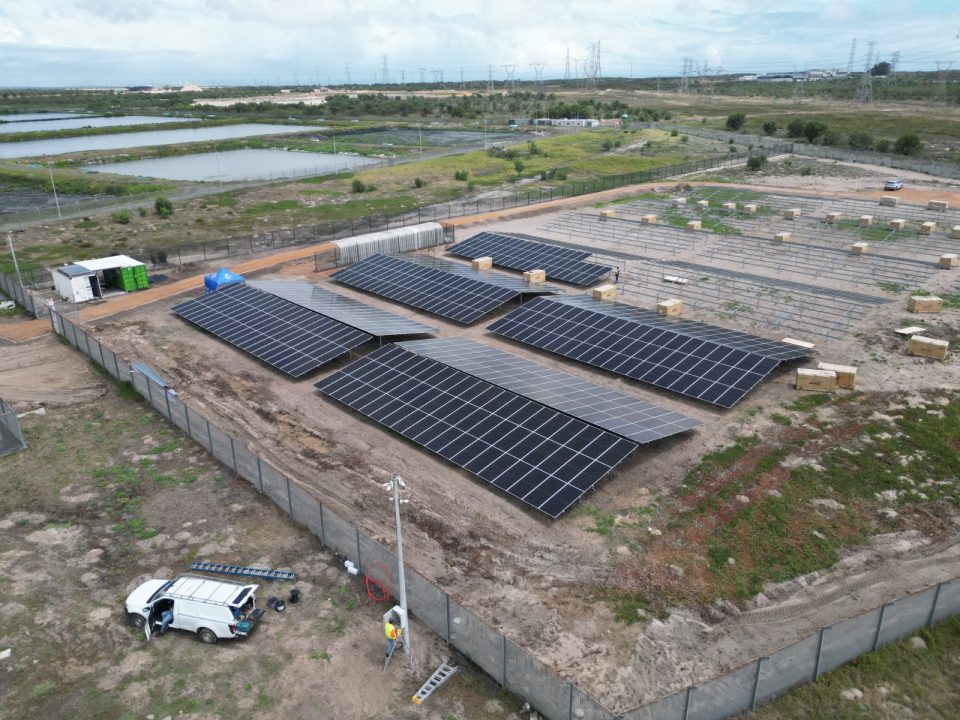
The City of Cape Town is investing R21 million in solar power at its Wesfleur Wastewater Treatment Works in Atlantis to reduce electricity costs and improve operational sustainability.
The installation will comprise 1,680 solar panels with a combined capacity of 1.04 megawatts (MW), generating an estimated 1.75 million kilowatt-hours of electricity annually. This is equivalent to the annual electricity requirements of approximately 365 households.
The project forms part of the municipality’s broader efforts to improve energy security, reduce dependence on the national electricity grid and strengthen the resilience of essential public infrastructure.
The solar panels use bifacial technology, capturing sunlight from both sides, while their east-west orientation supports electricity generation throughout the day. Six inverters will convert the solar energy into usable electricity for the wastewater treatment facility.
Beyond the environmental and operational benefits, the project has created employment opportunities for 11 local workers, demonstrating how renewable energy investment can contribute to economic participation within surrounding communities.
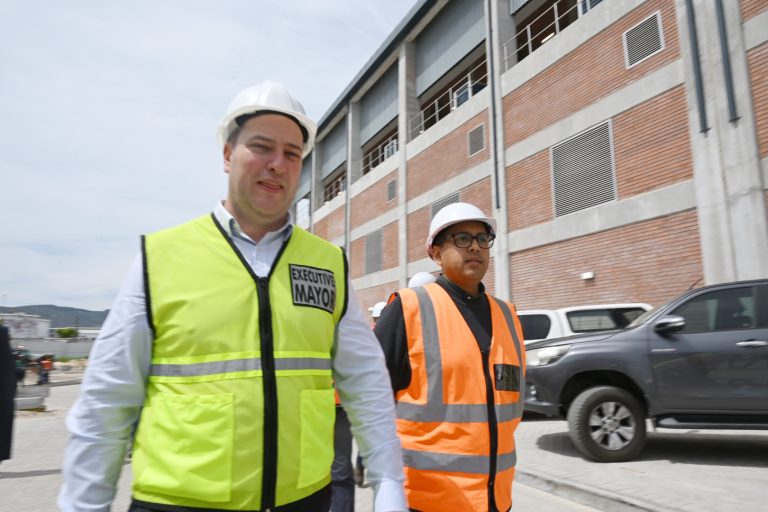
Mayoral Committee Member for Energy, Alderman Xanthea Limberg, said the investment builds on an earlier R14.6 million solar project launched at the Kraaifontein Wastewater Treatment Works in August 2024.
“Investing in state of the art renewable energy infrastructure helps the City ease reliance on the electricity grid, lowers operating costs and contributes towards a reduced carbon footprint. Projects like this support our efforts to build a more resilient and sustainable metro,” said Limberg.
The Wesfleur installation also incorporates security infrastructure, including CCTV cameras, security lighting and backup power capable of maintaining lighting for up to 6.5 hours during electricity outages.
The investment comes alongside the City’s recently launched R220 million hybrid power facility in Atlantis, described by the municipality as South Africa’s first metro-built hybrid power station.
That facility includes 12,850 solar panels and two utility-scale batteries across 15 hectares, approximately the size of 21 rugby fields.
“These projects are examples of the City’s commitment to energy security,” Limberg said.
Cape Town’s municipal energy strategy extends beyond individual solar installations to include electricity procurement, energy efficiency, private generation and mechanisms that allow residents and businesses to participate in the energy market.
According to the City, its Municipal Energy Efficiency Programme has saved more than 427 gigawatt-hours of electricity and approximately R625 million through initiatives including energy-efficient streetlighting, building retrofits and rooftop solar installations.
Municipal small-scale embedded generation projects have delivered 2.2MW of solar capacity across multiple sites, contributing towards a target of 25MW within the next two years.
Residents and businesses are also participating in the municipality’s cash-for-power programme. Since June 2024, participants have earned R67 million through municipal bill credits and cash payments for supplying 150 gigawatt-hours of excess solar electricity to the City.
More than 250 megavolt-amperes of rooftop solar capacity has been installed across Cape Town, helping reduce pressure on the electricity grid.
The municipality has also signed two independent power producer purchase agreements, which it says will secure electricity at prices up to 21% below Eskom tariffs. These form part of an initial programme to procure up to 200MW of electricity from independent suppliers.
Further procurement plans include up to 500MW from energy traders and aggregators, alongside opportunities to purchase electricity generated through waste-to-energy projects.
The City’s electricity wheeling programme has facilitated more than 1,700 megawatt-hours of electricity trading between producers and consumers since 2024.
Looking ahead, Cape Town has completed feasibility studies for a proposed 70MW municipal hybrid solar and battery storage facility in Paardevlei, with development targeted for 2029.
The municipality also reports that it successfully mitigated 24% of load-shedding during South Africa’s extended electricity crisis.
For essential services such as wastewater treatment, investments in renewable energy offer benefits beyond lower electricity bills. More reliable and affordable energy can help municipalities maintain critical infrastructure, manage operating expenditure and reduce the environmental impact of public service delivery.
The Wesfleur project illustrates how municipal infrastructure investment can combine environmental sustainability, local employment and improved service resilience, supporting the transition towards more sustainable urban development.