South Africa’s green transition will only deliver meaningful social impact if young people gain access to its jobs, skills, entrepreneurship opportunities and emerging economic pathways.
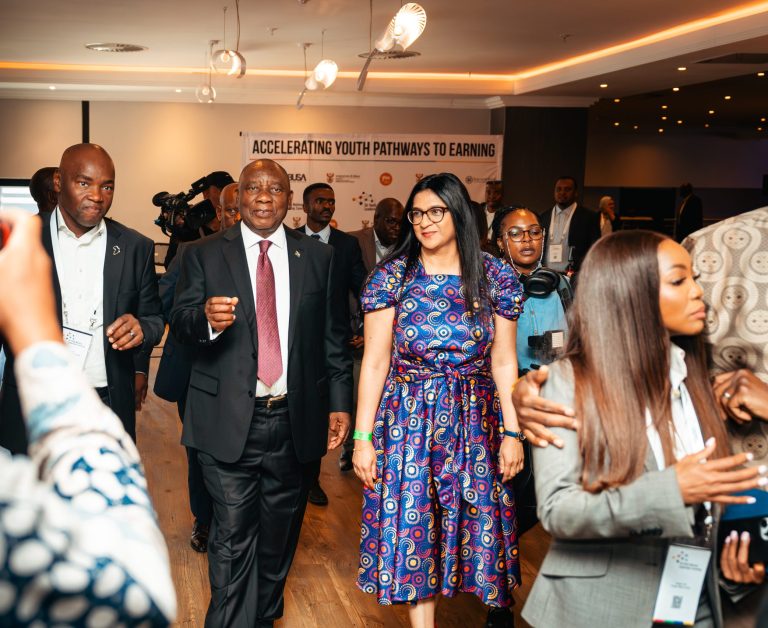
That was one of the central messages emerging from the Green Livelihoods Summit in Johannesburg, where government, business, education and skills-development stakeholders gathered to confront a fundamental question: as South Africa builds a greener economy, who gets to participate in it?
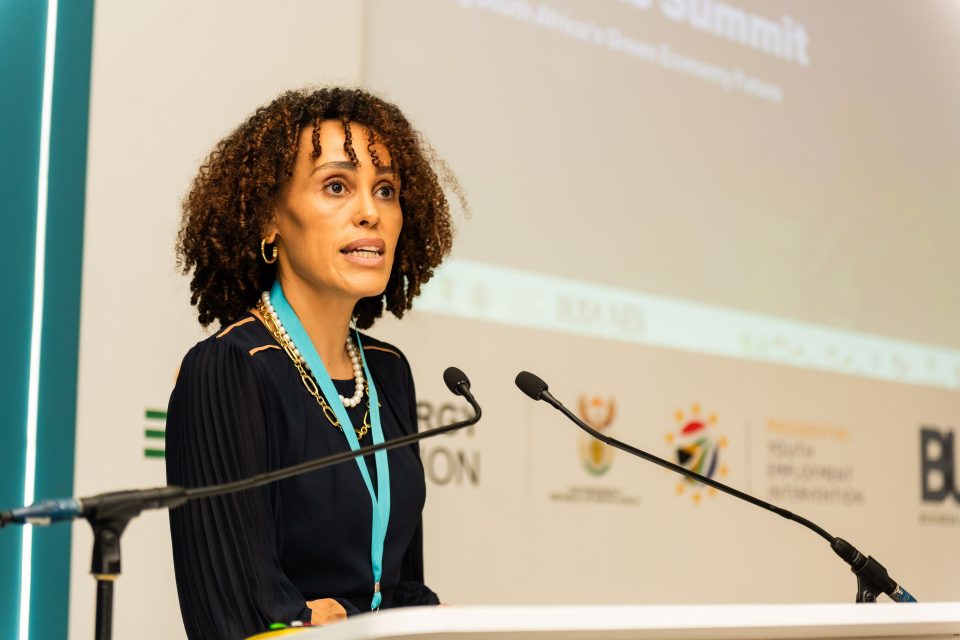
For Gugu McLaren-Ushewokunze, Head of Economic Inclusion at the National Business Initiative (NBI), this is precisely why the word “just” matters in the Just Energy Transition.
McLaren-Ushewokunze argued that inclusion and access cannot be secondary considerations. The transition is happening within a country already confronting severe unemployment, inequality and barriers preventing many young people from entering the economy.
“If we don’t quickly understand that, we are going to disaster,” she said while discussing the consequences of pursuing economic transition without adequately addressing inclusion.
The social impact opportunity is significant. New industries, technologies and investment associated with the green economy could create pathways into employment for thousands of young South Africans. But those opportunities will have limited impact if people cannot acquire the required skills, identify where opportunities exist or move successfully from training into work.
That makes acceleration particularly important.
McLaren-Ushewokunze said South Africa is not starting from nothing. Numerous initiatives, projects and programmes are already being implemented across government, business and other organisations.
The challenge is connecting them.
“Acceleration is coming from the fact that there is a lot happening,” she explained. The next step is understanding how existing initiatives fit together and how effective interventions can be brought into the wider system.
This distinction is particularly important in a country where high unemployment exists alongside shortages of particular skills.
For young people, the system needs to become easier to navigate. They should be able to understand where jobs are developing, which skills are required and in which geographic areas those opportunities are likely to emerge.
The JET Skills Desk is intended to contribute to that coordination, creating a mechanism through which stakeholders can better align skills development with the requirements of the changing economy.
But the Green Livelihoods Summit is also attempting to move the conversation beyond repeatedly diagnosing South Africa’s challenges.
McLaren-Ushewokunze said the intention is to produce something tangible: a roadmap for getting young people into green economic opportunities.
“If we want to get 100,000 young people into green jobs in five years, this is how we’re going to do it,” she said, describing the purpose of bringing different stakeholders together.
That ambition introduces an important element of accountability.
A summit can be measured by attendance, speakers and discussions, but social impact ultimately has to be measured by what happens afterwards: how many young people are trained, whether those skills correspond with actual economic demand and whether people ultimately move into sustainable livelihoods.
McLaren-Ushewokunze pointed to interventions that bring employers, Technical and Vocational Education and Training institutions and government together around that pathway.
One approach involves training young people in skills identified by industry, providing workplace-based learning and then connecting participants with opportunities.
It represents a shift from training people simply because programmes are available towards developing skills because there is a clearer pathway for those skills to generate economic opportunity.
That distinction matters.
A qualification or training certificate may represent educational achievement, but its social and economic value becomes substantially greater when it improves someone’s ability to earn an income, enter employment or build an enterprise.
Universities and colleges therefore have an important role, but formal employment cannot be the only destination.
Entrepreneurship emerged as another critical component of an inclusive green economy.
McLaren-Ushewokunze said entrepreneurial thinking should increasingly underpin skills development so young people do not complete training believing their only possible next step is waiting for somebody to employ them.
“Maybe I should start a business, maybe I can be self-employed,” she said, describing the alternative thinking that skills programmes should help cultivate.
However, encouraging entrepreneurship without building an environment in which entrepreneurs can succeed risks simply transferring responsibility for unemployment onto young people themselves.
Young entrepreneurs need access to mentorship, facilities, networks, markets and opportunities to test ideas, make mistakes and develop businesses capable of generating sustainable income.
There is also an opportunity to identify young people who are already demonstrating entrepreneurial ability. Across universities, colleges and communities, young South Africans are running small businesses and side hustles, sometimes with limited resources and little institutional support.
Helping those entrepreneurs move from survival-level activity towards sustainable enterprises could become another important pathway into the green economy.
This creates a broader definition of employment and economic participation.
Success does not necessarily mean placing every young person into a traditional salaried position. It can also mean enabling people to become self-employed, establish businesses, employ others and participate in new value chains created by South Africa’s changing economy.
For NBI, coordination is central to making that possible.
Asked what the organisation believes it is getting right, McLaren-Ushewokunze identified its ability to convene businesses and organisations and help move stakeholders towards a shared vision.
That matters because fragmented interventions can produce individual successes without necessarily changing the broader systems responsible for exclusion.
Collective action offers the possibility of something larger: government identifying priorities, businesses articulating skills demand, educational institutions preparing people for those opportunities, development organisations supporting implementation and young people gaining clearer routes into the economy.
The real test will come after the summit.
When stakeholders assess progress a year from now, success cannot simply be another conference or another conversation about the same challenges.
It should be visible in progress towards the 100,000-person ambition, young people acquiring relevant skills, workplace opportunities being created, entrepreneurs building viable businesses and stronger connections developing between education and economic demand.
South Africa’s green transition is frequently measured through energy infrastructure, investment and climate targets. Its social impact requires another measure alongside them.
It will be whether young South Africans previously excluded from economic opportunity can find a meaningful place in the new economy being built.