
Cape Town is championing stronger African trade partnerships, calling for improved connectivity and manufacturing to unlock new markets, investment opportunities and sustainable economic growth continent-wide.
The City of Cape Town has called for greater action to ensure the African Continental Free Trade Area (AfCFTA) delivers meaningful opportunities for businesses by improving trade connectivity, expanding manufacturing and reducing barriers to commerce across the continent.
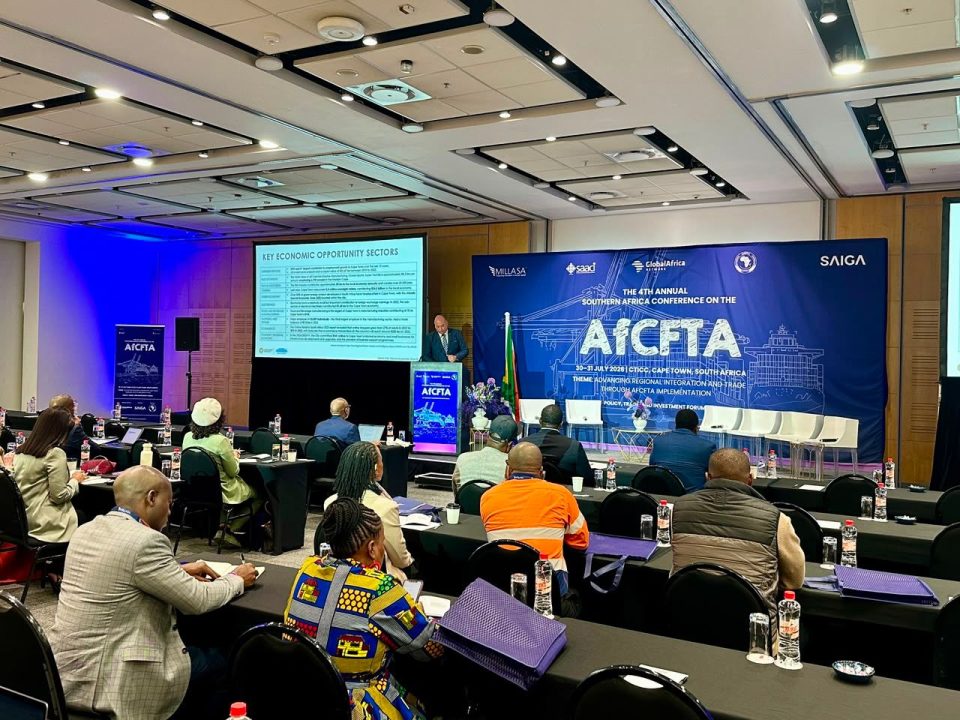
Speaking at the 4th Southern Africa Conference on the AfCFTA, the City’s Mayoral Committee Member for Economic Growth, Alderman James Vos, said the agreement should become a practical tool that helps African businesses access new markets rather than remaining a policy commitment on paper.
“The AfCFTA cannot simply be a document that sits on a shelf. It must become the vehicle that gets more African products onto African shelves,” said Vos.
The AfCFTA, which has been signed by 54 African countries and brings together the 55 member states of the African Union, aims to strengthen regional trade, encourage investment and stimulate economic growth by creating a more integrated continental market.
Vos said one of the biggest opportunities lies in increasing trade between African countries, noting that intra-African trade remains significantly lower than in many other regions of the world despite the continent’s growing manufacturing and entrepreneurial potential.
“We have incredible businesses producing world-class goods and services. The question is: how do we make it easier for those businesses to reach customers across Africa?” he said.
Cape Town and the Western Cape already have a strong export foundation, with provincial exports increasing from R160.9 billion in 2021 to R219.7 billion in 2025, demonstrating the region’s growing role in international trade.
Vos said achieving the ambitions of the AfCFTA will require more than trade agreements. He called for greater liberalisation of Africa’s aviation sector through an Open Skies policy, arguing that improved air connectivity is essential for exporters, investors and businesses seeking access to new markets.
“Trade agreements create opportunity, but connectivity creates access. If we want African businesses to trade with each other, we must remove the barriers that stand in the way,” he said.
He also highlighted Cape Town’s recently approved Manufacturing Support Policy, saying stronger local manufacturing and resilient supply chains are essential if African countries are to increase the production of goods for regional markets.
“If we want to trade more with Africa, we must produce more in Africa. That means supporting manufacturers, strengthening supply chains, and creating the conditions for businesses to invest and grow,” Vos said.
According to the latest International Air Transport Association (IATA) passenger market analysis for June 2026, African airlines recorded a 6.7% year-on-year increase in passenger demand while global demand declined by 1.7%. Despite this growth, Africa still accounts for only 2.2% of global passenger traffic.
Vos said these figures demonstrate the need for South Africa to implement an effective Open Skies policy to unlock greater tourism, trade, investment and job creation across the continent.
