
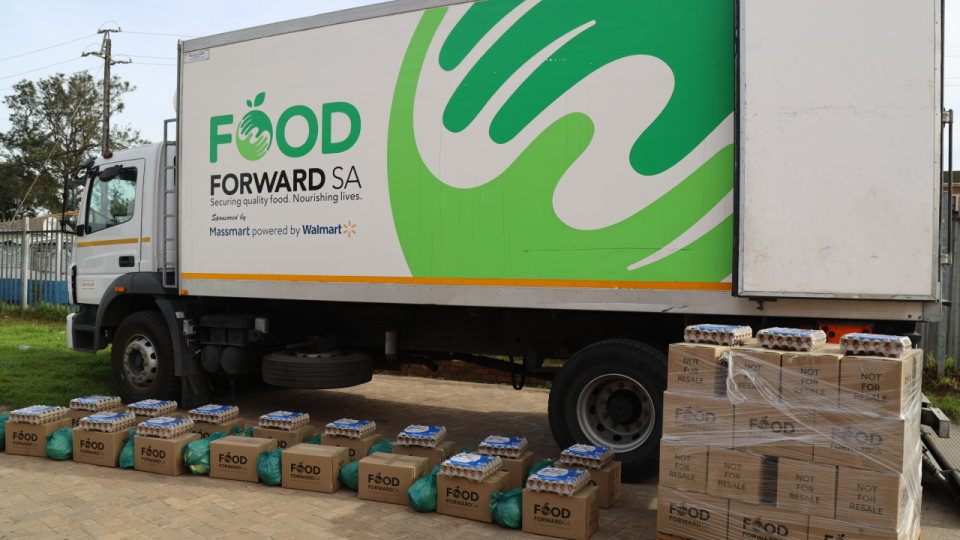
FoodForward SA is expanding its Mother and Child Nutrition Programme to reach 70 more mothers, young children and their families in two underserved Cape Town communities.
The expansion into Bloekombos and Wallacedene in Kraaifontein strengthens the organisation’s work to tackle malnutrition and food insecurity during the first 1,000 days of a child’s life — a critical period for physical and cognitive development.
Working in partnership with the City of Cape Town Health Department, the programme combines nutritional support with community-based healthcare to identify and assist mothers and children at risk of malnutrition.
Local clinics identify underweight mothers and malnourished children and monitor their growth and development. Participants receive nutrition education, while FoodForward SA provides monthly nutritious food parcels to participating families.
The latest expansion builds on a programme that has already seen 535 patients successfully complete the full nutrition intervention.
“The first 1,000 days of life offer a unique, irreplaceable window of opportunity to shape a child’s future,” said FoodForward SA Managing Director Andy Du Plessis.
“Our programme combines nutritious food support with community-based healthcare to ensure children do not just survive but thrive. By extending our footprint into Bloekombos and Wallacedene alongside our local government and community partners, we are scaling a proven model that builds healthier, more resilient households.”
The intervention comes against a wider challenge of food insecurity and childhood malnutrition.
FoodForward SA’s Household Food Insecurity Report indicates that the number of food-insecure people in South Africa reached 17.8 million in 2023, including eight million experiencing severe food insecurity.
FoodForward SA also estimates that more than 1.5 million children experience malnutrition annually, increasing the risk of stunting and longer-term developmental consequences.
Everin Van Rooyen, Head of Personal Primary Health Care at the City of Cape Town, welcomed the partnership and the additional support it provides to mothers.
“We are grateful for this collaboration; despite our best efforts, there are still challenges, and this initiative is an opportunity; mothers can now have more,” Van Rooyen said.
At community level, healthcare workers play an important role in identifying families requiring intervention.
“We identify at-risk mothers and children and do nutrition education at the clinic, but we are not able to provide them with food; that is where FoodForward comes in,” said Wallacedene Clinic Facility Manager Sr. Carlin November.
HewLin Compassion NPO will support FoodForward SA with the distribution of food parcels to mothers participating in the programme.
“Food is a powerful connector; this will restore dignity and hope in the community, and the children’s lives will be positively impacted,” said HewLin Compassion founder Hewitt De Jager.
Chantal Naidoo, Coordinator of Health Programmes for Nutrition at the City of Cape Town, said the intervention creates an opportunity to support healthier pregnancies and childhood development.
“Moms now have the opportunity to have a healthier pregnancy and healthy babies, who will grow into healthy children,” Naidoo said.
FoodForward SA Board Member Namhla Skweyiya also acknowledged healthcare workers for their role in supporting participating families and encouraged mothers to recognise the importance of helping their children reach their potential.
The programme is supported by a wider network of community partnerships, including Philani Nutrition Centre in Crossroads, Philani Eastern Cape and Grow Great in the Breede Valley and Witzenberg.
FoodForward SA’s broader approach involves recovering nutritious surplus food from supply-chain partners and redirecting it to communities experiencing food insecurity.
By combining this food recovery model with healthcare interventions and partnerships between government and civil society, the organisation aims to address both immediate nutritional needs and the wider factors contributing to childhood malnutrition.
The additional 70 participating families in Kraaifontein represent another step towards extending that support to mothers and children during one of the most important periods of a child’s development.
