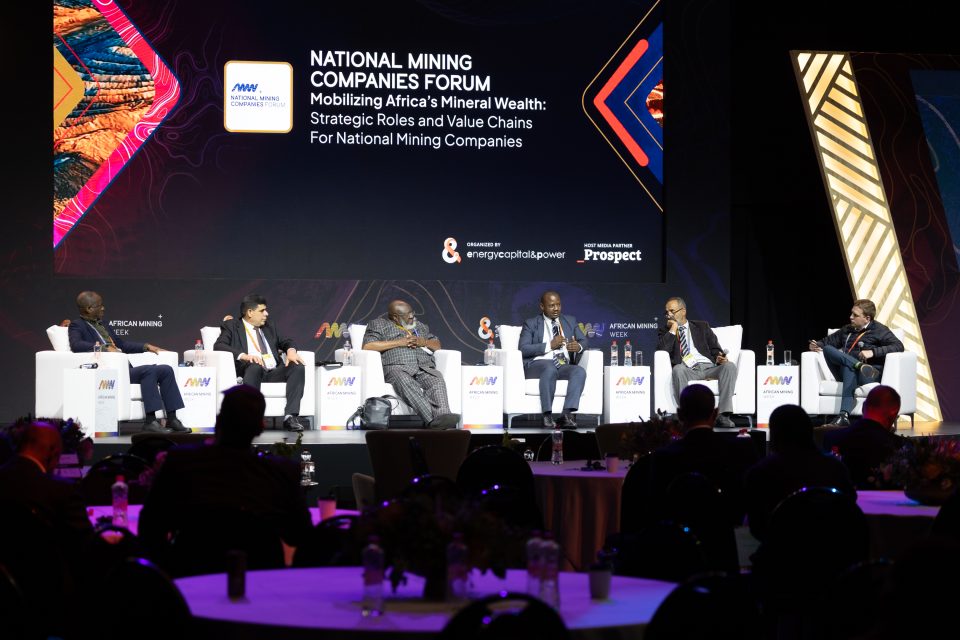
Africa’s mineral wealth must translate into lasting economic prosperity through local processing, industrialisation and skills development, speakers at African Mining Week 2026 said as the three-day conference opened in Cape Town on 14 October.
Held from 14 to 16 October, the conference brought together government representatives, mining industry leaders, investors and development partners to discuss how African countries can capture greater value from their mineral resources instead of relying primarily on the export of raw materials.
Discussions focused on the growing global demand for critical minerals and the need to strengthen investment, infrastructure, technology, beneficiation and regional cooperation to build sustainable industries across the continent.
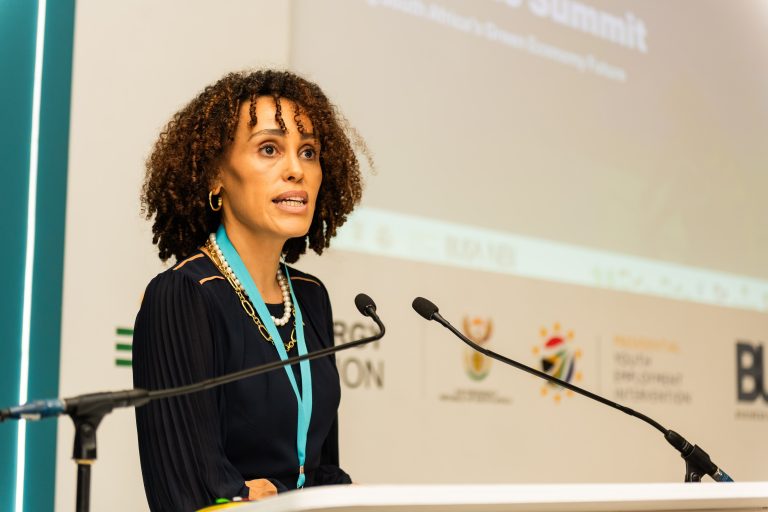
Uganda’s Minister of Energy and Mineral Development, Dr Monica Musenero, delivered a keynote address calling on African countries to rethink their relationship with mineral resources and focus on the entire value chain, from extraction to finished products.
Drawing on her background in epidemiology, Musenero said Africa needed to examine why its substantial mineral wealth continued to exist alongside widespread poverty.
She argued that mining alone would not deliver the full economic benefits of the continent’s resources, emphasising that countries needed to develop the capacity to process minerals and manufacture higher-value products locally.
“Africa must heal her relationship with minerals,” she said, urging governments to look beyond extraction and consider how mineral resources could support industrial development, infrastructure, education and national security.
Musenero highlighted the potential for countries to develop industries around minerals such as iron ore, coal, phosphates and tin. She questioned why countries should export raw materials only to import finished products, including fertilisers and materials needed for infrastructure development.
She also stressed the importance of developing local skills and institutions, arguing that mineral resources should be used to build productive capacity that remains long after deposits have been depleted.
Musenero defined mineral industrialisation as the “deliberate knowledge-driven conversion of a nation’s mineral endowments into domestically owned productive systems”.
Her address reinforced the conference’s central message: Africa’s mining future must be closely linked to its industrial future.
Patrick Molinda, Chief of Staff at the Africa Mineral Strategy Group (AMSG), echoed this call, saying that increasing global demand for African minerals did not automatically translate into prosperity for African communities.
Speaking at the conference, Molinda pointed to rising demand for copper used in power grids, cobalt, lithium and graphite used in batteries, as well as rare earth elements and gold.
He said the key question was not whether the world needed Africa’s minerals, but how the continent could convert that demand into industries, jobs, skills and economic opportunities for its people.
“The value of our minerals must therefore be measured by the industries they build and the jobs they create, the skills we develop and the prosperity we keep at home,” Molinda said.
According to Molinda, closer collaboration could help countries identify opportunities to combine mineral resources, energy supplies and transport infrastructure to establish regional value-addition corridors.
He said this approach could inform decisions about where processing facilities should be located and how countries could work together to develop their mineral industries.
Molinda also called for greater support for artisanal and small-scale miners, arguing that efforts to formalise the sector should focus on making mining safer, more productive, environmentally responsible and commercially viable.
He highlighted the importance of national mining companies, which he said could enable governments to participate more directly in the industry and work with private-sector partners to advance mineral beneficiation.
The discussions at African Mining Week took place amid intensifying global competition for resources, with African governments increasingly considering measures such as export restrictions, local processing requirements and greater state participation to retain more value from their mineral wealth.
However, realising this potential will require investment-ready projects, reliable energy supplies, efficient transport networks, access to finance, predictable regulatory frameworks, technological innovation and a skilled workforce.
As the conference concluded its three-day programme, the challenge facing African governments and industry stakeholders remained clear: mineral wealth must become a foundation for productive industries and long-term economic development.
The message from Cape Town was that the continent’s mining future should not be measured solely by how much it extracts or exports, but by how effectively it transforms those resources into local businesses, employment, expertise and lasting prosperity.
by Jos-lene Benekema