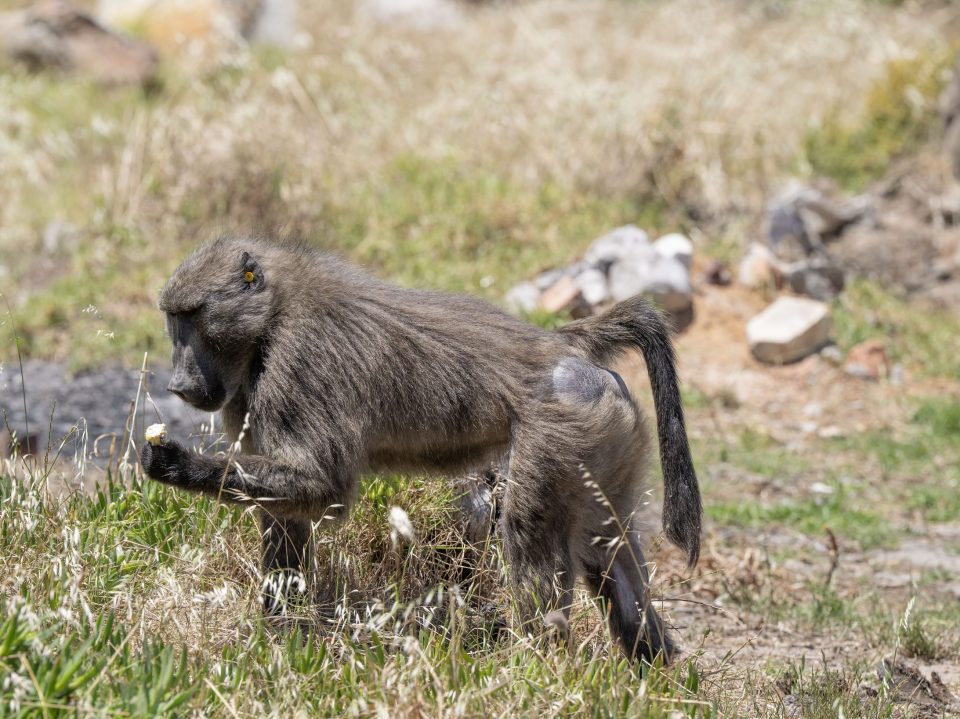
A troop of 44 baboons has been relocated from Simon’s Town to a wildlife centre near Table Mountain National Park, reducing their exposure to urban dangers.
The relocation, undertaken over the weekend of 14 November 2026, was coordinated by the Cape Peninsula Baboon Management Joint Task Team, comprising SANParks, CapeNature and the City of Cape Town.
The Waterfall troop had spent more than a decade navigating the dangers associated with living close to residential and commercial areas, including vehicle collisions, dog attacks and injuries caused by pellet guns.
The baboons had also been scavenging from rubbish bins, entering homes and businesses, and roosting at the Simon’s Town Naval Base.
According to the task team, the decision to relocate the troop followed an assessment of alternative interventions, including proposals for a privately funded fence.
Authorities concluded that these options would not provide an immediate or sustainable solution to the risks facing the animals.
The 44 baboons have now been transferred to the Urban Wildlife Centre at Kogelfontein, situated in a natural environment adjoining Table Mountain National Park.
The centre provides a 2.31-hectare enclosure featuring vegetation, rocks, sandy areas, climbing structures, shelters and water ponds.
According to the task team, the enclosure exceeds the minimum space requirements set by the Global Federation of Animal Sanctuaries for Old World primates by approximately five and a half times.
The facility has been designed to accommodate natural baboon behaviours, including foraging, climbing, digging, resting and social interaction.
Initial observations indicate that the animals are exploring their new surroundings, playing, foraging and using the water ponds and specially designed sleeping structures.
Staff are monitoring the troop around the clock, while their natural diet is supplemented through feeding activities intended to encourage exploration and environmental enrichment.
The relocation represents a significant intervention in managing human-wildlife conflict along the Cape Peninsula, where expanding urban activity has brought residential communities into closer contact with baboon populations.
However, the decision also raises broader questions about balancing wildlife conservation, animal welfare and the management of free-ranging species in areas experiencing increasing human development.
The task team maintains that the relocation was necessary to protect the Waterfall troop from ongoing injuries and fatalities associated with the urban environment.
More than 530 free-ranging baboons remain across the Cape Peninsula, where they continue to fulfil important ecological functions.
Conservation authorities emphasise that protecting these populations requires ongoing wildlife management, habitat conservation and interventions that support the health and long-term sustainability of baboon troops.
The Waterfall relocation illustrates the challenges of protecting wildlife where natural habitats and urban environments intersect, while highlighting the importance of cooperation between conservation agencies and local government.