
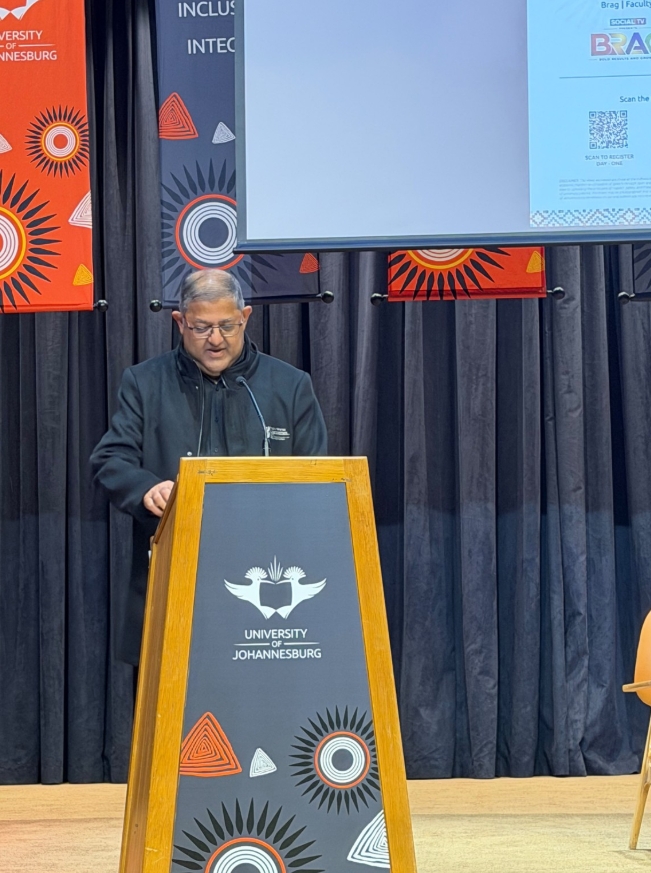
South Africa’s environmental programmes are creating thousands of work, training and enterprise opportunities, positioning the green economy as an increasingly important pathway for young people.
Addressing the Best Results and Achievements Gathering (BRAG), the Department of Forestry, Fisheries and the Environment highlighted how environmental investment is translating into employment, skills development, entrepreneurship and economic participation.
The message to young South Africans was that environmental protection should not be viewed only through conservation. It is also an economic sector capable of creating careers, businesses and livelihoods.
Through the Department’s Youth Empowerment and Development Programme, more than 5,000 environmental graduates have already secured placements, mainly within municipalities and partner organisations. The programme gives graduates practical experience while helping municipalities address shortages in environmental-management skills.
Employment opportunities are also being created at community level.
During the first quarter of the 2026/27 financial year, the Department’s Expanded Public Works Programme portfolio generated 24,548 work opportunities. Young people accounted for 81% of these opportunities, while women represented 72%.
A further 22,703 work opportunities were created through local-government initiatives including coastline cleaning, waste management, veldfire suppression, wetland rehabilitation and the removal of invasive plants.
These programmes demonstrate how environmental investment can simultaneously provide income, restore ecosystems and strengthen communities.
The circular economy is creating another source of opportunity.
South Africa’s Extended Producer Responsibility system has diverted and recycled almost 68,000 tonnes of electronic waste from landfill, while approximately 150 additional tonnes have been collected through the national E-waste Imbizo programme.
Waste pickers and small businesses have been incorporated into the value chain, while the Recycling Enterprise Support Programme has helped create and sustain more than 1,000 jobs. Supported enterprises have also achieved environmental savings exceeding 3.4 million tonnes of carbon dioxide equivalent.
Innovation is expanding the types of businesses emerging from the green economy.
Through a partnership with P4G, South African start-ups are developing technologies including solar-powered electric-vehicle charging, e-bikes for last-mile delivery and solar-powered refrigeration for cold chains. Ikhala Impact is also using forest biomass to produce biochar alongside digital technology that measures climate benefits.
Forestry is similarly being used to connect environmental assets with community economic participation.
Through 36 Community Forestry Agreements, more than 9,200 hectares of plantations are covered by arrangements enabling communities to participate in their management and value chains.
During 2025/26, 358 beneficiaries across KwaZulu-Natal, the Eastern Cape and Limpopo received training in areas including forestry, harvesting, chainsaw operation, firefighting, planting, pruning, business management and first aid. The programme achieved a 95.8% completion rate.
Investment in workplace learning is also helping young people bridge the gap between education and employment.
The Department has invested more than R75 million in workplace learning for students from universities, universities of technology and TVET colleges who require practical experience to complete their qualifications. Since 2019, more than 1,200 students supported through the initiative have graduated.
Opportunities extend into biodiversity and conservation.
South African National Parks created 3,095 full-time equivalent work opportunities, with approximately 63% benefiting young people, while 78 biodiversity enterprises received support.
Through the SANParks–Sanlam Fund, 242 applications had received funding by June 2026, with R51.76 million disbursed. The support sustained 519 jobs, while youth-owned businesses represented 39% of funded MSMEs.
The South African National Biodiversity Institute’s Groen Sebenza Graduate Development Programme has meanwhile recruited more than 1,250 young graduates through partnerships involving over 70 government and non-governmental organisations.
Participants received workplace training, mentorship and practical experience, with 600 having secured full-time employment by 2026.
At a broader economic level, South Africa’s biodiversity sector already supports more than 418,000 jobs across areas including ecotourism, fishing, ecological restoration, biodiversity protection, game meat and professional services.
Government expects further expansion through initiatives including the Biodiversity Megahub Initiative, which is projected to create 130,000 new jobs, while the National Game Meat Strategy is projected to support 2,400 MSMEs and generate more than R3.1 billion in annual economic value.
The scale of these initiatives reinforces an increasingly important connection between environmental sustainability and economic inclusion.
Rather than treating conservation, employment and economic development as separate objectives, the programmes demonstrate how environmental investment can simultaneously create skills, businesses, jobs and stronger community assets.
For young South Africans in particular, the message delivered at BRAG was that the green economy represents a growing field of opportunity encompassing far more than traditional environmental careers.
It needs lawyers, economists, scientists, communicators, educators, researchers, data analysts, entrepreneurs, policymakers and community leaders.
As the Department told students at the gathering, environmental challenges can themselves become opportunities for innovation and participation.
“The green economy is not waiting for somebody else. It needs you—and the opportunities are already being created.”
