Deputy Minister Narend Singh has led a multi-agency assessment in Durban aimed at turning recent anti-poaching enforcement into habitat restoration, plastics removal and environmental employment.
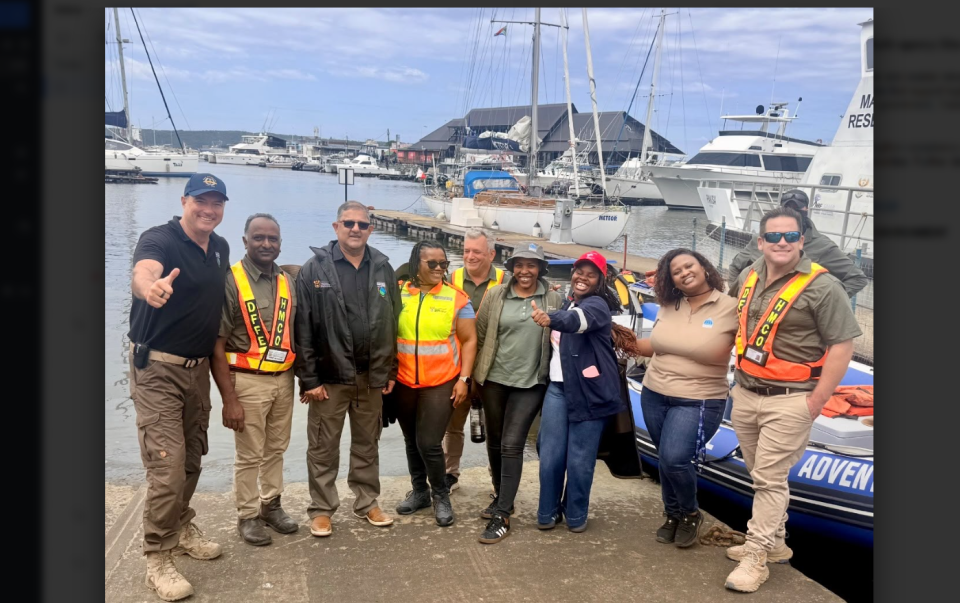
The Deputy Minister of Forestry, Fisheries and the Environment visited the Bayhead Natural Heritage Site in the Port of Durban alongside officials from the Department of Forestry, Fisheries and the Environment (DFFE), SAPS, Expanded Public Works Programme (EPWP), Transnet, eThekwini Municipality and members of the Coastal Marine Taskforce.
The assessment follows enforcement operations conducted over the previous weekend targeting illegal gillnetting and associated poaching.
These activities threaten fish stocks and estuarine ecosystems, while placing additional pressure on protected mangrove habitats.
Attention is now shifting from enforcement to environmental recovery, with plans to deploy EPWP teams to remove plastics and other pollution accumulating within the mangrove forest, intertidal areas and surrounding environment.
The work will be undertaken in partnership with Transnet, which manages the site as part of the Port of Durban.
The Bayhead site represents an important remnant of the once extensive mangrove system of Durban Bay.
Despite being situated within an industrial harbour environment, the ecosystem supports biodiversity including aquatic birds, crabs and mudskippers.
Singh said protecting these environments requires authorities to combine enforcement against illegal activity with practical interventions that restore damaged habitats.
“Protecting our marine and coastal resources requires both decisive action against those who break the law and hands-on efforts to restore the habitats that support legitimate livelihoods and biodiversity,” Singh said.
“The collaboration between national enforcement agencies, local government, Transnet, and EPWP teams shows how we can move from operations to tangible environmental recovery.”
The involvement of EPWP also introduces an employment component to the environmental intervention, linking pollution removal and ecosystem restoration with job-creating programmes in coastal communities.
The initiative forms part of broader efforts to combat marine pollution and strengthen compliance with the Marine Living Resources Act.
The multi-agency approach brings together environmental enforcement, policing, municipal government, port management and public employment resources around the same ecosystem.
Authorities are expected to continue monitoring the area as the cleanup progresses, with further information on the amount of pollution removed and the outcomes of the intervention to be released as the work advances.
The Bayhead initiative demonstrates how enforcement against environmental crime can extend beyond an operation itself, combining compliance with practical restoration to protect vulnerable coastal ecosystems.