
Cape Town’s beaches have secured international recognition, with eight earning full Blue Flag status and four pilot sites strengthening accessibility, safety and environmental standards across the city.
The recognition for the 2026/27 season extends Cape Town’s 25-year involvement in the international Blue Flag programme and marks the fifth consecutive season in which eight City beaches have achieved full status.
The successful beaches were announced at the annual Blue Flag and Green Coast Awards ceremony at Grotto Beach in Hermanus on 8 October, as coastal municipalities prepare for the summer season.
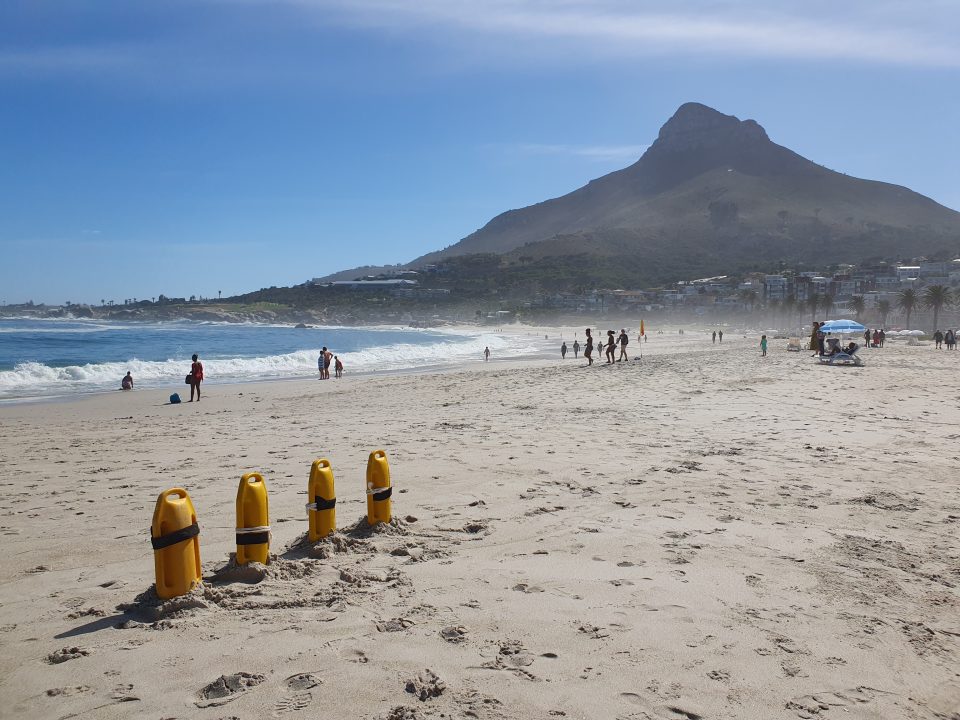
Bikini Beach, Camps Bay Beach, Clifton 4th Beach, Fish Hoek Beach, Llandudno Beach, Melkbosstrand, Muizenberg Beach and Silwerstroomstrand were awarded full Blue Flag status.
A further four beaches — Chapman’s Peak in Hout Bay, Big Bay, Strand and Strandfontein — have been selected as Blue Flag pilot sites.
Pilot status gives beaches an opportunity to enter a feasibility period during which their ability to comply with the programme’s international requirements is assessed.
The expansion means Cape Town is not only maintaining established Blue Flag beaches but potentially creating a pathway for more parts of its coastline to achieve the international standard in future.
The Blue Flag programme operates in more than 50 countries and assesses beaches against criteria covering water quality, environmental management and education, public amenities, accessibility and safety.
For residents, the designation provides an independent benchmark against which the management of public beaches can be measured.
For visitors, it offers a recognisable international indicator of the environmental and recreational standards they can expect when choosing a beach destination.
The South African programme is facilitated by the Wildlife and Environment Society of South Africa, which is celebrating its centenary this year.
WESSA has coordinated the Blue Flag programme locally since its introduction in South Africa in 2001, making the 2026 season significant for both the programme and the organisation behind its national implementation.
Cape Town has participated throughout that 25-year period, while several individual beaches have built particularly long records within the programme.
Clifton 4th, Bikini Beach and Muizenberg are among the City’s longest-serving Blue Flag participants.
Maintaining the certification requires ongoing work rather than a once-off achievement, with beaches expected to continue meeting the programme’s standards throughout the season.
This includes managing water quality, maintaining public facilities, implementing environmental initiatives and ensuring that appropriate safety measures are available to beach users.
The City is also using the new season to broaden physical access to its coastline.
Several beaches, including most of Cape Town’s Blue Flag beaches, will receive new amphibious wheelchairs designed to enable people with mobility impairments to reach and enter the ocean.
The intervention expands the meaning of beach accessibility beyond infrastructure such as parking areas and walkways by enabling more residents and visitors to participate directly in recreational activities.
Mayoral Committee Member for Community Services and Health Councillor Francine Higham said the eight Blue Flags and four pilot sites reflected work undertaken throughout the year.
“Eight full Blue Flags and four pilot sites are significant recognition of the year-round work that goes into maintaining our beaches and preparing them for residents and visitors,” Higham said.
She thanked frontline teams responsible for maintaining the beaches and said improving access would form an important part of preparations for the summer season.
“With our lifeguards already deployed at designated swimming beaches, we urge residents and visitors to take the necessary precautions when enjoying our coastline,” she said.
Higham also called on beachgoers to play their part in protecting Cape Town’s coastal environment and keeping public beaches clean and safe.
The international recognition carries particular importance as Cape Town enters its busiest tourism period.
Beaches form an important part of the city’s tourism offering, with internationally recognised environmental standards helping strengthen confidence among domestic and international travellers.
That connection between environmental management and tourism demonstrates how maintaining natural public assets can contribute to a wider visitor economy while continuing to serve local communities.
The inclusion of pilot beaches also provides an opportunity to extend these standards into additional coastal areas and encourage improvements that benefit residents regardless of whether they are tourists.
The City’s Recreation and Parks Department will continue working with other municipal departments and partners to maintain the standards required for existing Blue Flag beaches while supporting the four pilot sites through their assessment process.
For Cape Town, the 2026/27 awards therefore represent more than recognition of eight beaches.
They reflect an ongoing effort to combine environmental protection, public safety, accessibility and tourism development while ensuring that more people can enjoy one of the city’s most valuable natural resources.
