
South Africans will soon be able to see which entities have faced enforcement for water pollution, strengthening public accountability and pressure to protect vital water resources.
The Department of Water and Sanitation is preparing to launch a National Pollution Register on 1 October, giving communities greater visibility over municipalities, companies and other entities that have faced formal action for contaminating the country’s water resources.
The register is expected to include entities issued with departmental directives, those convicted of pollution-related offences and cases where courts have ordered damages linked to water pollution.
For communities affected by sewage spills, contaminated rivers and deteriorating dams, the significance is straightforward: information previously difficult to access will be brought into a public-facing system.
The initiative also represents a move from simply measuring water quality towards identifying where formal enforcement has already taken place.
A national pollution register has been part of the Department of Water and Sanitation’s broader water-quality strategy for several years. Its eutrophication management strategy specifically called for the development and publication of a register showing compliance and pollution-related enforcement information.
Ahead of the launch, Deputy Minister of Water and Sanitation Dr Jack Bloom is expected to visit two Gauteng facilities demonstrating how pollution in one municipality or catchment can affect communities further downstream. Bloom has served as Deputy Minister of Water and Sanitation since July 2026.
The first visit will be to the Hartebeestfontein Wastewater Treatment Works, which the department says was issued with a directive in August 2025 relating to pollution.
Water from the surrounding system ultimately flows towards Rietvlei Dam, an important water resource within Tshwane.
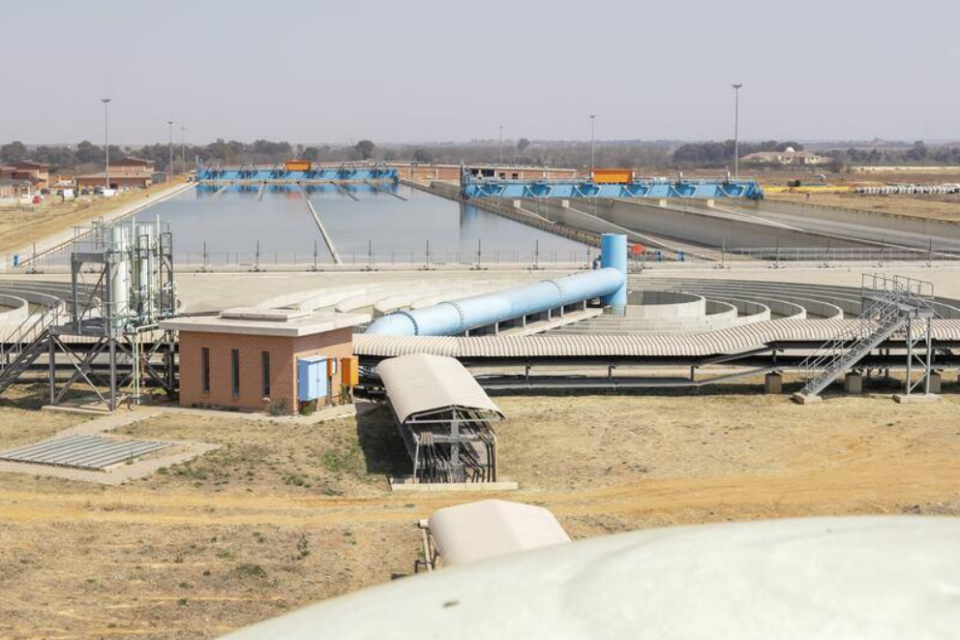
The second stop will be the Rietvlei Water Treatment Plant, where deterioration in raw-water quality has affected the city’s ability to use the dam as a drinking-water source.
The connection demonstrates why pollution cannot always be treated as a problem contained within the boundaries of one municipality.
Wastewater released upstream can move through rivers and dams before reaching treatment plants serving communities kilometres away.
The City of Tshwane has previously emphasised that heavily polluted river water can restrict its ability to produce potable water and that functioning wastewater-treatment systems upstream are critical to protecting its own drinking-water sources.
Rietvlei is one of Tshwane’s own water-treatment sources and forms part of a broader supply system that reduces the city’s dependence on bulk purchases from Rand Water.
That gives pollution an immediate social and economic cost.
When local water resources cannot be safely treated, municipalities can become more dependent on alternative bulk supplies, while communities face greater pressure on already constrained water networks.
Pollution also affects farmers, businesses, recreation, tourism and ecosystems dependent on healthy rivers and dams.
Recent oversight visits by the Water and Sanitation Department have highlighted wastewater failures in several parts of the country, including Gauteng, KwaZulu-Natal and Mpumalanga. In Ermelo, for example, the department linked pollution to wastewater-treatment failures that allowed sewage to enter surrounding water resources.
The National Pollution Register therefore has the potential to add another layer of accountability by showing the public where authorities have already determined that enforcement action was necessary.
For residents, civil-society organisations and environmental groups, it could also provide a starting point for monitoring whether directives and court orders eventually lead to cleaner water.
Transparency alone will not repair failing wastewater infrastructure or stop illegal discharges.
Its value will depend on whether information remains current, whether enforcement is followed through and whether repeat offenders face meaningful consequences.
But making enforcement information publicly accessible changes the relationship between communities and institutions responsible for protecting water resources.
Residents will be better able to see where action has been taken, who has been held responsible and whether pollution problems continue despite intervention.
For a country where safe water underpins health, food production, economic activity and basic dignity, greater public visibility over pollution could become an important tool in protecting one of South Africa’s most important resources.
