
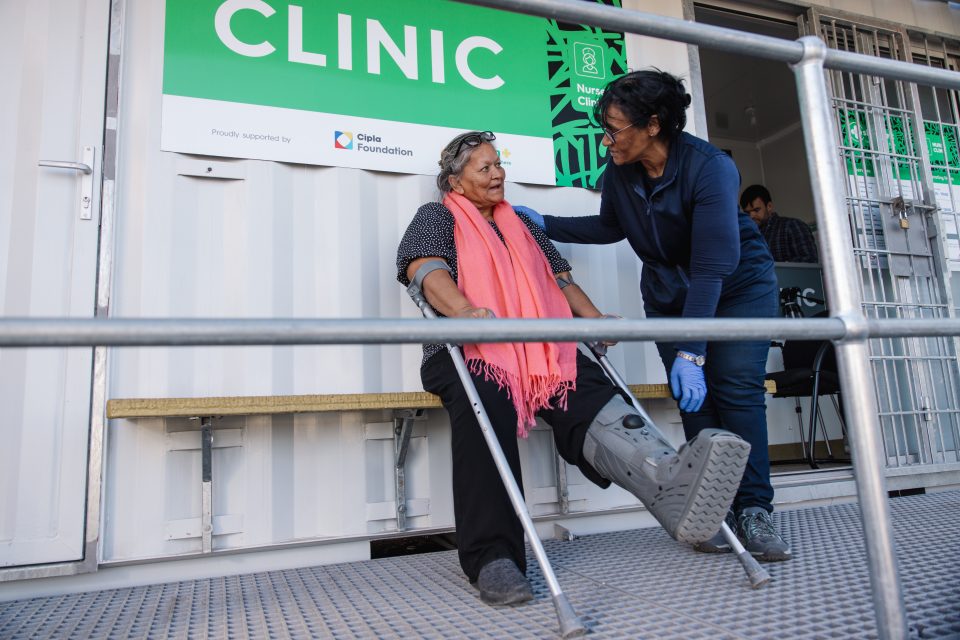
A new nurse-led clinic in Macassar is expanding affordable primary healthcare access while creating an entrepreneurial pathway for experienced nurses to serve their communities locally directly.
Residents of the Western Cape community now have access to a new Sha’p Left clinic established through a partnership between Dis-Chem’s Better Tomorrow programme and the Cipla Foundation.
The initiative is designed to address some of the practical barriers that can prevent people from accessing routine healthcare, including transport costs, time away from work and long queues at public facilities.
Macassar is home to approximately 52,400 people living across around 14,000 households, with many residents relying on the local Community Health Centre for primary and maternity healthcare.
The new clinic is expected to complement those existing services by providing another local option for routine primary healthcare and the management of conditions including HIV, tuberculosis, diabetes and hypertension.
At the centre of the initiative is Clinical Nurse Practitioner Patricia-Ann Smith, who brings 37 years of nursing experience to the practice.
The clinic operates as a fee-for-service primary healthcare practice and is licensed to dispense medication up to Schedule 4.
This means patients can be assessed, diagnosed and, where appropriate, receive treatment and prescriptions during a single visit, reducing the need to travel between different healthcare providers.
For Dis-Chem, the project forms part of its Better Tomorrow programme’s focus on expanding access to practical and preventative healthcare solutions.
“Better Tomorrow is about finding practical ways to bring quality care closer to communities,” said Joshila Shiba, Dis-Chem’s Head of Health Equity and Sustainability.
She said the partnership approach allows the organisation to support healthcare models that have already been developed around community needs rather than creating entirely new systems.
Macassar will also provide an opportunity to measure whether the clinic model can remain financially sustainable while delivering meaningful improvements in healthcare access.
Beyond improving access to services, the initiative is creating an entrepreneurship opportunity for an experienced healthcare professional.
The Sha’p Left model helps qualified nurses establish independent practices by providing infrastructure, training, compliance support and operational systems.
For Smith, that support has enabled her to combine decades of clinical experience with a long-held ambition to operate her own healthcare business.
“I have always wanted to own a healthcare business, but nursing has always been about putting people first and building trust,” Smith said.
She believes community-based primary healthcare can play an important role in preventing illness, encouraging healthier choices and improving quality of life before patients require more intensive medical intervention.
The model also highlights the potential role of nurses as both healthcare providers and entrepreneurs within South Africa’s broader primary healthcare system.
Affordable nurse-led practices could offer communities additional points of access to healthcare while easing some of the pressure carried by heavily used public facilities.
Paul Miller, CEO of Cipla Africa, said qualified nurses are well positioned to provide services within the communities they already understand and serve.
“By bringing essential services closer to communities, we can help ease pressure on overburdened public health facilities while empowering qualified nurses to become healthcare providers and entrepreneurs in their own communities,” Miller said.
The Cipla Foundation designed Sha’p Left as a model capable of becoming self-sustaining rather than remaining permanently dependent on philanthropic funding.
That approach seeks to combine social impact with economic sustainability by enabling nurse-led practices to generate their own income while providing affordable healthcare services.
For South Africa, where demand for primary healthcare remains significant, the model could provide another mechanism for expanding community-level access while making greater use of experienced nursing professionals.
The Macassar clinic will therefore serve as more than an additional healthcare facility.
It will also provide an opportunity to test whether community-rooted nurse entrepreneurship can deliver sustainable healthcare access while strengthening local livelihoods and supporting the wider health system.
Shiba said Dis-Chem hopes the experience in Macassar can provide evidence for how similar approaches might contribute to primary and preventative healthcare elsewhere.
“Macassar is our starting point,” she said.
If the model demonstrates sustainable impact, the partnership could offer a pathway for bringing affordable primary healthcare closer to more communities while creating new opportunities for nurses to build independent practices of their own.
