
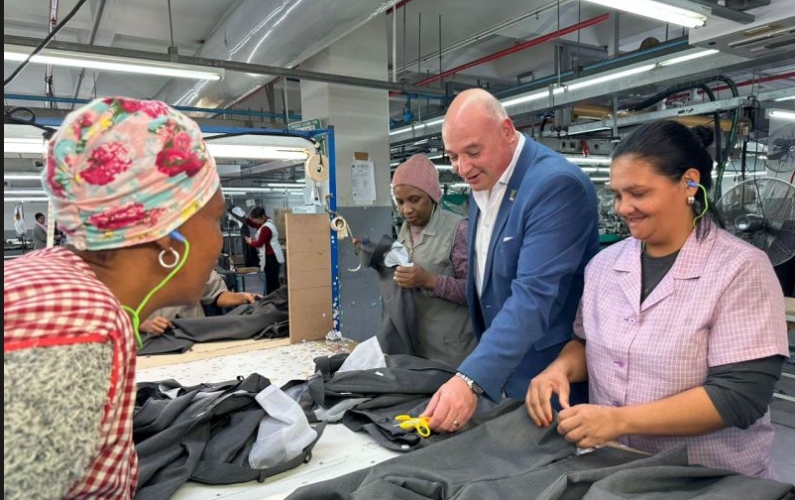
Forty Cape Town clothing and textile businesses have completed the Cape Acceler8 programme, collectively securing R1.35 million in new and repeat orders during the initiative.
The businesses graduated from the 12-month capacity-building programme on Wednesday, 26 August, after receiving support aimed at improving competitiveness, strengthening operations and positioning manufacturers to attract new business.
Delivered by the Cape Clothing and Textile Cluster and funded by the City of Cape Town, the programme combines industry expertise with practical business development support.
The 40 participating businesses collectively employ more than 600 people, while 70% are based in the Cape Flats.
The R1.35 million in orders provides an early indication of whether the business-development intervention is translating into commercial opportunities for participating manufacturers.
Cape Town’s clothing and textile manufacturing sector forms part of a significant Western Cape industry. In 2025, the sector contributed R17.6 billion to the provincial economy and recorded a R3.4 billion trade balance.
Alderman James Vos, the City’s Mayoral Committee Member for Economic Growth, said clothing and textile production remains one of Cape Town’s priority sectors for employment and economic growth.
“The City has built a wider economic development model where we work alongside industry specialists who understand their sectors inside out,” Vos said.
Through its Special Purpose Vehicle model, the City works with sector organisations to combine industry knowledge with public-sector resources and support.
“We can’t create every job ourselves. What we can do is work with industry, businesses and the private sector to remove some of the barriers to growth and help businesses become more competitive,” Vos said.
The scale of Cape Town’s existing manufacturing base also creates opportunities for local businesses.
City estimates indicate that approximately 140 million garments supplied through retailer supply chains are manufactured in Cape Town. This represents more than a quarter of the 402 million garments reported as locally sourced through the R-CTFL Masterplan’s Aggregator Process.
For Vos, measuring the commercial outcomes generated by business-support programmes is particularly important.
“These commercial results provide a more meaningful measure of impact than simply counting how many businesses received support,” he said.
For participating entrepreneurs, Cape Acceler8 also focused on the internal capabilities required to compete for and successfully deliver new business.
Nomgcobo Tukulula, Creative Director and founder of Gcogco Clothing Studio, said the programme had changed how she approaches growth.
“It has equipped me with practical tools to refine our business processes, enhance our customer experience, and make more informed decisions,” Tukulula said.
She said access to mentorship and networks had also increased her confidence in growing the company sustainably while creating additional local employment opportunities.
Glendzodesigns owner Glenda Mbeyiya said the programme strengthened her understanding of the manufacturing process and the importance of following procedures throughout production.
“I have gained a lot of knowledge on steps to follow when manufacturing my product. Every action is important before my product goes out to the customer,” Mbeyiya said.
The programme also influenced how she approaches waste management and productivity, including more structured planning of her working day.
With the 12-month programme now completed, attention shifts from training to whether the participating businesses can convert their improved capabilities into sustained commercial growth.
For the 40 manufacturers and their more than 600 employees, securing R1.35 million in new and repeat orders provides an important starting point. The longer-term impact will depend on whether those gains lead to continued orders, stronger businesses and additional employment across Cape Town’s clothing and textile sector.
