
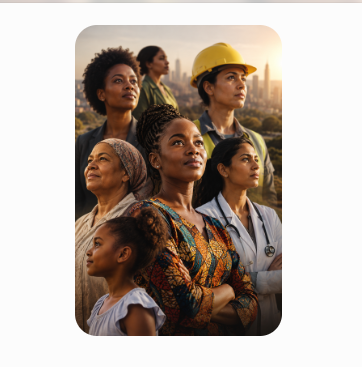
“Empowered Women Empower the Nation” is the theme at the heart of South Africa’s National Women’s Day in 2026, as the country marks 70 years since the historic Women’s March.
For many South Africans, 9 August is familiar as a public holiday and a celebration of women. This year, however, the theme gives the commemoration a particular purpose: connecting the courage of the women who marched in 1956 with the economic, social and political power of women shaping South Africa today.
On 9 August 1956, more than 20,000 women gathered at the Union Buildings in Pretoria to protest against the extension of apartheid pass laws to women.
Led by Lilian Ngoyi, Helen Joseph, Rahima Moosa and Sophia Williams-De Bruyn, the march became one of the defining demonstrations of collective resistance in South African history. Its rallying cry, “Wathint’ Abafazi, Wathint’ Imbokodo” — “You strike a woman, you strike a rock” — would become inseparable from the story of women’s activism in the country.
Seventy years later, the message has evolved from resistance to empowerment.
The 2026 theme, “Empowered Women Empower the Nation”, recognises that women’s advancement cannot be separated from South Africa’s broader development. When women have greater access to education, employment, healthcare, entrepreneurship and leadership, the benefits extend beyond individuals to families, communities and the economy.
This year’s commemoration also carries the message “Honouring the Past, Delivering the Future”, placing the achievements of previous generations alongside the responsibility to address the barriers women still face.
That distinction matters.
South African women have made enormous advances since 1956. Women today lead businesses, universities, government institutions and non-profit organisations. They are entrepreneurs creating employment, educators shaping future generations, healthcare professionals serving communities, activists demanding accountability and innovators developing solutions to some of the country’s most persistent challenges.
Women are also central to South Africa’s social impact landscape.
Across the country, women lead shelters supporting survivors of gender-based violence, feeding programmes, early childhood development centres, healthcare initiatives, environmental organisations and community development programmes.
Much of that work happens without national recognition, yet its impact is experienced every day in homes and communities.
But celebrating progress cannot mean ignoring what remains unfinished.
Women continue to face unemployment, economic inequality, gender-based violence and unequal access to opportunities. For many, particularly those in vulnerable communities, constitutional equality has not yet translated into equal economic and social opportunity.
That is where the word “empowered” in this year’s theme becomes important.
Empowerment is more than representation. It is not simply having women present in boardrooms, government or leadership structures.
It means ensuring women have the skills and education to compete for opportunities. It means opening access to markets and finance for women entrepreneurs. It means workplaces where women can advance into senior leadership. It means healthcare that responds to women’s needs and communities in which women and girls can live without fear of violence.
It also means recognising women as economic actors rather than simply beneficiaries of development programmes.
Women are business owners, employers, taxpayers, professionals, caregivers and breadwinners. Investing in their economic participation strengthens households, creates employment and contributes to more resilient communities.
The same applies to decision-making.
When women participate meaningfully in decisions about businesses, communities and government, their experiences and priorities become part of determining how resources are allocated and how the country responds to its challenges.
This is perhaps where the connection between 1956 and 2026 is strongest.
The women who walked to the Union Buildings 70 years ago were not asking simply to be recognised. They were asserting their right to influence the direction of their country.
Their march was against pass laws, but its legacy became much bigger.
It was about agency. It was about dignity. It was about equality. And it was about women refusing to allow decisions about their lives and futures to be made without them.
Seventy years later, South African women continue that journey in boardrooms and classrooms, businesses and communities, hospitals and universities, government and civil society.
“Empowered Women Empower the Nation” therefore cannot simply be a Women’s Day slogan.
It is a challenge to South Africa to ensure that the progress represented by the women of 1956 continues through the opportunities created for the women of 2026 and the generations that follow.
From 1956 to 2026, women have not simply been part of South Africa’s story.
