
South Africa is positioning artificial intelligence as a tool for inclusive development while pushing for stronger international safeguards to ensure rapidly advancing technology remains under human control.
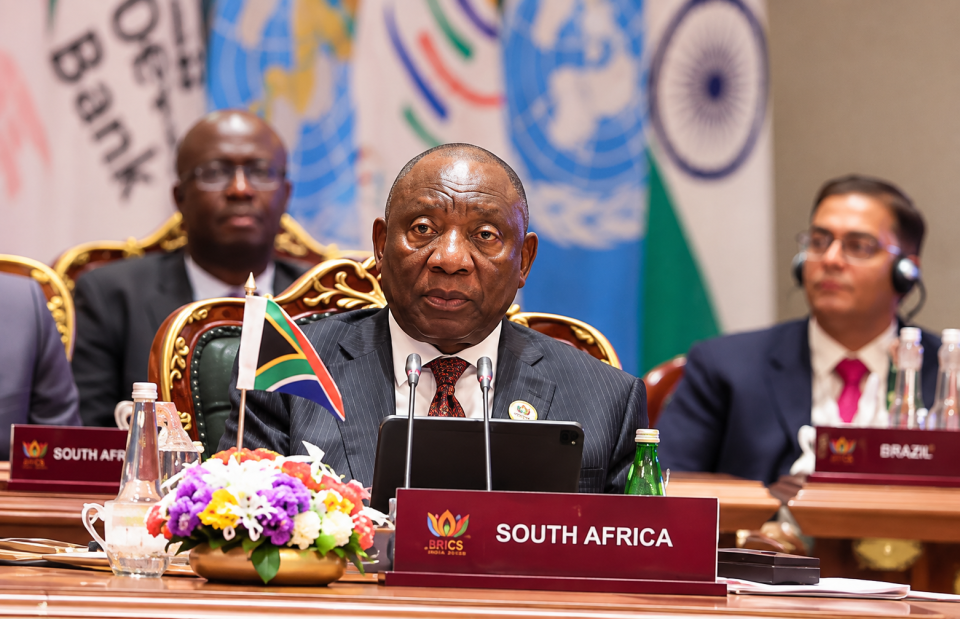
President Cyril Ramaphosa told the 18th BRICS Summit in New Delhi that AI could help address inequality, poverty and underdevelopment, provided countries build the governance systems needed to manage its risks.
Speaking during a session on Shaping the Future for Inclusive Growth, Ramaphosa said AI was already demonstrating its potential to transform medicine, education, scientific discovery, agriculture, productivity and development.
“We should therefore neither fear AI nor approach it recklessly. Our responsibility is to ensure that human governance advances as rapidly as artificial intelligence itself,” he said.
The President argued that developing economies should not simply be consumers of technologies created elsewhere. Investment in sovereign AI capabilities would be important if countries in the Global South were to benefit meaningfully from the emerging technological economy.
At the same time, Ramaphosa warned that increasingly powerful AI systems bring significant risks, including advanced cyber operations, manipulation, mass surveillance, employment disruption and autonomous systems that could become increasingly difficult to control.
South Africa is supporting greater independent oversight of companies developing advanced AI systems, including formal external checks, audits and government supervision.
Ramaphosa compared such oversight to safeguards already applied in industries including aviation, pharmaceuticals, nuclear power and financial services.
“We must never reach a situation where technological capability has moved beyond our capacity to understand it, supervise it and control it,” he said.
South Africa has proposed that BRICS establish an international mechanism for the independent scientific evaluation of artificial intelligence.
The proposed approach would include human-control principles, mandatory reporting of serious incidents and progressively stronger safeguards as AI capabilities increase.
Importantly for developing economies, the proposal would combine these safeguards with investment in sovereign AI capacity, helping countries build their own technological capabilities rather than becoming increasingly dependent on systems developed elsewhere.
Ramaphosa also called for continued scientific cooperation through initiatives including the BRICS Intelligent Telescope and Data Network and the BRICS Vaccine Research and Development Centre.
He said greater cooperation could strengthen medical sovereignty, vaccine development, genomic surveillance and diagnostic capabilities across the Global South, while innovation could also help transform agriculture.
Technology formed part of a broader call for BRICS countries to deepen economic and development cooperation as the grouping marks its 20th anniversary.
South Africa supports greater use of local currencies, stronger cross-border payment systems, deeper financial interconnectivity and a gradual expansion of the New Development Bank.
Ramaphosa said cooperation with BRICS Partner Countries should also expand in areas including public health, education, science and technology, finance and trade.
Climate resilience and the global energy transition were also identified as critical components of inclusive growth.
The President argued that vulnerable countries need equitable access to technology, finance and capacity to withstand climate-related shocks, while the energy transition should protect livelihoods, support reskilling and create new industries capable of generating quality employment.
He also reiterated South Africa’s position that developing economies should capture greater value from their natural resources.
“To ensure inclusive growth in Africa and other regions of the world, beneficiation of minerals must take place at source,” Ramaphosa said.
The message from South Africa at the summit places technology, skills, scientific cooperation and industrial development at the centre of its vision for inclusive growth.
For AI specifically, the approach seeks to balance two priorities: ensuring developing economies have access to the opportunities created by rapidly advancing technology while building safeguards capable of protecting people as those systems become more powerful.
