
Field Band Foundation is reaching 5,470 young people in 2026, using music, movement and inclusion to build confidence, discipline, belonging and opportunity across South African communities.
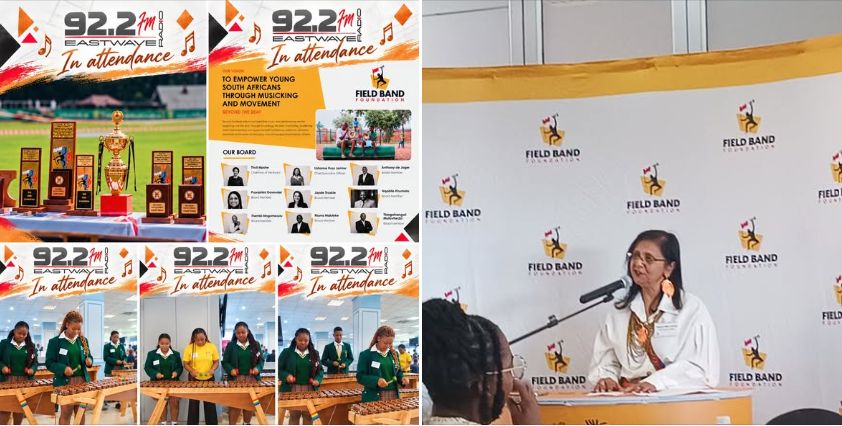
At the Field Band Foundation National Championships at Wanderers Stadium in Johannesburg, around 1,250 young people came together from communities across the country for a celebration that demonstrated how the creative arts can become part of a much wider youth-development intervention.
The Foundation has built its model around music, movement and structured participation, but CEO Ushama Ross Jerrier says the longer-term objective is to change how young people see themselves and the circumstances into which they were born.
For many participants, particularly those growing up in communities with limited recreational, cultural and educational opportunities, being part of a band creates an environment where they can experience achievement, discipline and belonging while working towards a shared goal.
Jerrier told Social TV that creating an exciting and joyful space where young people can connect with others is an important part of helping children recognise that their immediate circumstances do not have to determine what comes next.
Her assertion that a child’s postal code should not determine their future is reflected in the Foundation’s work in communities such as Danielskuil in the Northern Cape, where young people may have far fewer extracurricular opportunities than children growing up in larger urban centres.
In these environments, the value of the programme is not limited to learning an instrument or performing on a field. It can begin with something much more fundamental: giving a child an opportunity to discover that they are capable of doing something well.
That experience can help build self-confidence while teaching the discipline required to rehearse, perform as part of a team and take responsibility for a collective result.
The Foundation recorded more than 1,300 rehearsals and 189 public performances during the year, providing repeated opportunities for young people to practise those skills beyond a single annual event.
Most participants are between 10 and 13 years old, placing the intervention at an age when confidence, identity, social connection and attitudes towards possibility are still being formed.
Inclusion has also become an important part of the Foundation’s approach. More than 500 participants in the wider programme are persons with disabilities, participating alongside their peers rather than being placed in a separate programme.
Jerrier said that approach has been intentional. The focus is on ensuring that children are able to participate, develop confidence and demonstrate capability rather than allowing disability to become the defining feature of their experience.
That philosophy was reinforced by Phuthi Mabelebele, a Chief Director in the Department of Women, Youth and Persons with Disabilities, who spoke to Social TV at the event about disability inclusion as a human-rights issue.
Mabelebele stressed that persons with disabilities are members of society first and should therefore be included across education, arts, culture and other areas of public life.
She also highlighted the importance of language in shaping attitudes towards disability. How people are described can influence the expectations placed on them, she said, and can either challenge or reinforce stigma.
Mabelebele emphasised the use of the term “persons with disabilities” and said awareness around acceptable disability terminology remains an important part of the Department’s work.
She pointed to South African Sign Language as one example of why accessibility needs to be built into ordinary public life rather than treated as something required only at events specifically focused on disability.
The Department works throughout the year with organisations representing persons with disabilities, while also undertaking awareness, training and capacity-building initiatives aimed at strengthening inclusion across different sectors of society.
For Marc Lubner of Afrika Tikkun, the Field Band Foundation’s work also demonstrates why youth development cannot be divided neatly into separate categories.
Reflecting on the organisation’s journey and its recovery following the disruption of the COVID-19 period, Lubner said the significance of the programme extends beyond participant numbers.
The deeper question is what kind of environment is being created around a young person and whether that environment allows them to develop socially, emotionally and practically.
His view is that organisations working with young people need to consider the whole child rather than treating education, employment preparation, sport, creativity and social development as unrelated interventions.
For a child growing up in poverty or disadvantage, exposure to music, sport, outdoor activity or other new experiences can help develop confidence and introduce possibilities that may not previously have formed part of that child’s world.
Afrika Tikkun has applied similar thinking through activities including sport, paddling and hiking, creating opportunities for young people to experience different environments while learning responsibility and discovering new capabilities.
Lubner said this kind of work also requires organisations to experiment, learn and adapt. Not every idea succeeds, but sustained social development depends on being willing to test interventions and retain those that create meaningful value.
Long-term partnerships have been central to Field Band Foundation’s ability to sustain its work.
Connie Masaba of Black Like Me was among the corporate partners present at the championships, with the company having supported the Foundation for approximately 20 years.
That longevity is significant in a social-impact environment where many programmes depend on relatively short funding cycles. Sustained corporate involvement gives organisations the ability to develop programmes over time, maintain relationships with communities and invest in the infrastructure required long before young people arrive at an event such as the National Championships.
The Foundation’s work requires coaches, instruments, transport, rehearsal spaces, training and programme management across multiple communities, making the championship itself only the visible end of a much longer process.
Established in 1997, Field Band Foundation is now approaching its 30th anniversary in 2027. It estimates that close to 250,000 young South Africans have been reached through its programmes since inception.
Its model has developed from the marching-band tradition into a distinctly South African combination of brass, percussion, dance, traditional rhythms and contemporary influences, with bands representing communities from different parts of the country coming together on the same national stage.
For some participants, the journey to Johannesburg can itself represent an important experience, particularly for young people who have had limited opportunities to travel beyond their home communities.
Jerrier believes the next phase must involve reaching more children and finding ways to take the model further into communities and the education system.
That ambition comes at a time when social-impact organisations are competing for limited resources, making collaboration between civil society, business and government increasingly important.
The National Championships showed what those partnerships can produce when they are sustained over time.
The music may be the most visible part of the programme, but the larger intervention is about helping young people develop the confidence, discipline, relationships and exposure required to imagine opportunities beyond the circumstances in which they started.
previous post
