
World Environment Day often arrives with familiar reminders. Recycle. Save water. Plant trees. Reduce waste. Take better care of the planet. These messages matter, but they do not go far enough.
Every generation learns what to protect by what it is taught to notice, respect and value long before crisis forces the lesson.
South Africa does not only have an environmental crisis. We have an environmental education crisis.
Too many people are asked to act responsibly towards the environment without ever being taught how deeply it is connected to their own lives. The environment is still too often spoken about as something outside of us. A landscape. A school topic. A conservation issue. A government responsibility. A corporate campaign. A matter for scientists, activists or policy makers.
That distance is part of the problem.
For many South Africans, the environment is not abstract. It is the water in their taps. The air their children breathe. The waste collected or left outside their homes. The heat in classrooms without shade. The flooding after heavy rains. The difference between a clean suburb and a neglected township. It is the dignity of living in a place that tells you, every day, whether your life is valued.
When environmental education is reduced to slogans, we miss the opportunity to build understanding. We tell people what to do without helping them understand why it matters. We say “do not litter” without explaining what waste does to water systems, public health, animals, soil and human dignity. We say “save water” without teaching the scarcity, infrastructure and inequality behind every drop.
The issue is not that people do not care. Often, it is that people have not been meaningfully included in the conversation.
A child who grows up surrounded by illegal dumping learns something about the world. A learner in a school with no trees, no shade and broken sanitation learns something about public value. A community that reports blocked drains, unsafe waste sites or polluted streams and receives no response learns something about power.
These are also forms of education. They teach neglect. They teach resignation. They teach people that some places are worth protecting and others are not.
That is the lesson we should be most concerned about.
Environmental education cannot begin and end with awareness days. It has to be built into how we understand citizenship, leadership and responsibility. It should be present in classrooms, but also in homes, local government, business practice, media, faith communities and public life.
People protect what they have learned to value. Value is not automatic. It is taught through language, example, access and experience.
If a child never experiences a clean park, how do they learn that public space can be beautiful? If a young person only sees rivers used as dumping grounds, how do they learn that water carries life? If a community is excluded from decisions about land, waste, development and infrastructure, how do we expect them to feel ownership of the outcome?
We need a more honest conversation about what environmental education should mean in South Africa.
It must include climate literacy, but it must also include justice. It must teach the science, but it must also teach the social reality. It must explain emissions, but also why the poorest communities often carry the greatest environmental burden. It must speak about biodiversity, but also about housing, sanitation, food security, public transport, energy and urban planning.
Most importantly, it must speak in a language people can use.
One of the failures of environmental communication is that it can sound technical, distant and moralising. It can make people feel blamed instead of invited. It can create the impression that environmental responsibility belongs only to those who can afford solar panels, organic food, electric cars and reusable lifestyle products.
That version of environmentalism does not speak to the majority.
In South Africa, environmental education must be practical, local and rooted in lived experience. It must connect the plastic bag in the street to the blocked stormwater drain, the blocked drain to the flood, the flood to the family that loses everything. It must connect the absence of trees to heat, heat to health, health to learning, learning to opportunity.
When people see the chain, they begin to understand the cost.
This is also a leadership issue.
Environmental responsibility cannot be carried by ordinary households while systems continue to fail them. It is not enough to tell communities to keep their areas clean if waste collection is unreliable. It is not enough to tell citizens to save water while leaks go unrepaired for months. It is not enough to ask children to plant trees if schools do not have the resources to maintain them.
Education without systems becomes frustration. Systems without education become fragile.
We need both.
Business also has a role to play beyond polished sustainability reports. If companies want to speak credibly about environmental responsibility, they must make it visible in how they operate, what they fund, how they educate employees, how they treat communities and how they measure impact.
The same is true for media and public communicators. We need to tell environmental stories in ways that make people care without overwhelming them. We need to move from fear alone to agency. From crisis language to human understanding. From global terminology to local meaning.
That does not mean softening the truth. It means making the truth usable.
World Environment Day should not only ask whether we are doing enough for the planet. It should ask whether we have taught people to see the planet in the first place.
Have we taught children to notice the spaces they occupy? Have we taught communities that clean, safe environments are not privileges, but rights? Have we taught leaders that environmental neglect is also social neglect? Have we taught businesses that impact is not a marketing line, but a responsibility?
The environment is not somewhere else. It is the ground beneath our daily lives. It is where inequality becomes visible. It is where leadership is tested. It is where dignity is either protected or eroded.
If we want people to act differently, we must begin by teaching differently.
We do not need more slogans that disappear after one day. We need sustained education that connects knowledge to behaviour, behaviour to responsibility, and responsibility to the future we claim to want.
We cannot protect what we were never taught to value.
The work now is to teach value before loss becomes the only teacher we have left.
ABOUT THE AUTHOR:
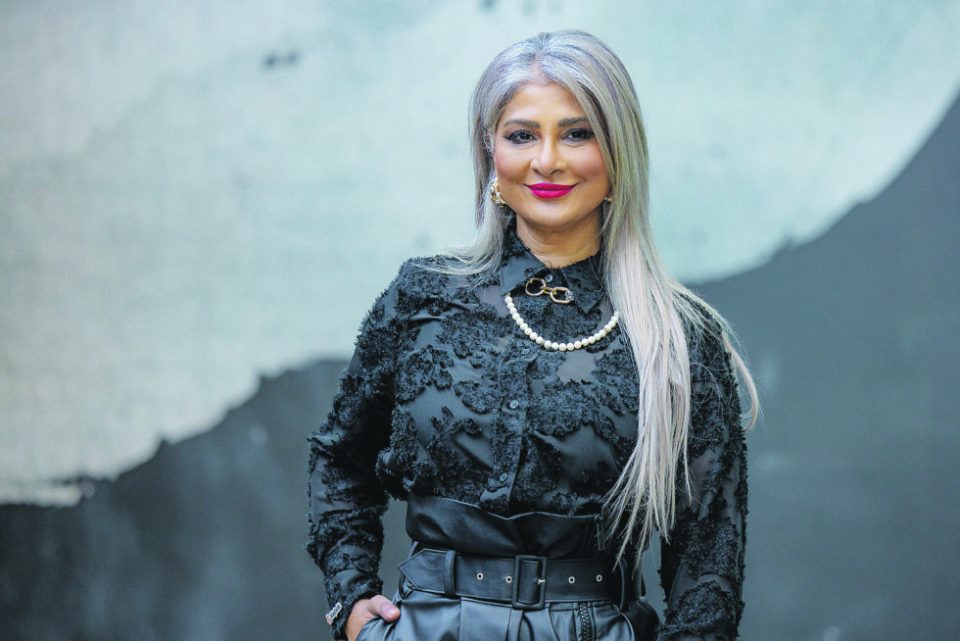
Katie Mohamed is the CEO of BrandFusion, W-Suite, and ChangeHub. A storyteller, strategist, and advocate for women’s empowerment, she uses her platforms to advance dialogue, shift narratives, and drive social transformation. Her award-winning book Brave Today explores courage, identity, and healing, reminding women that even in silence, their stories matter.
