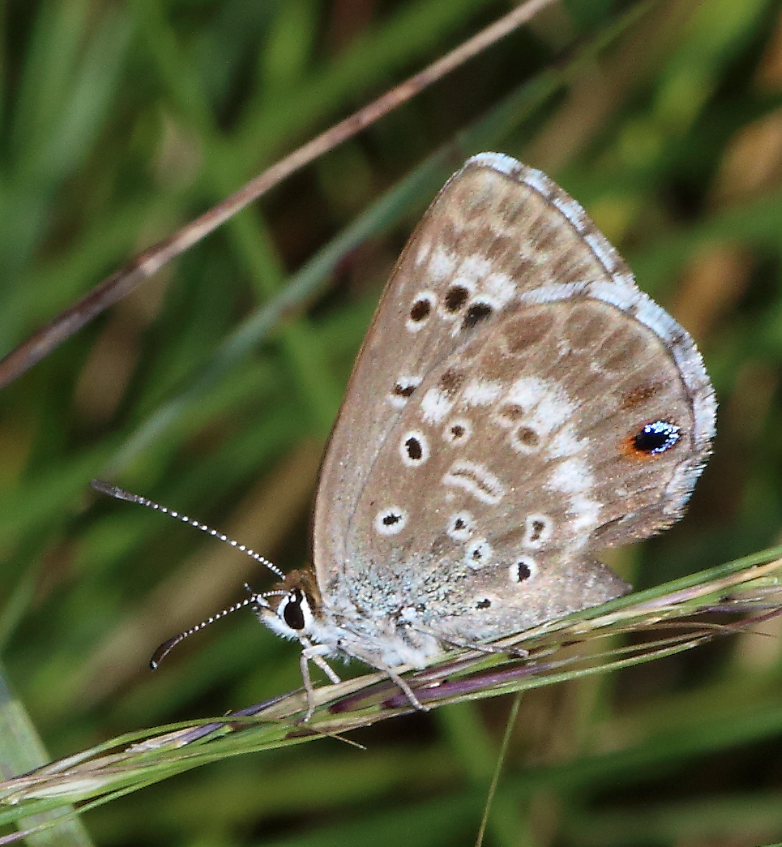
Sappi has established a new KwaZulu-Natal nature reserve to protect one of the last known breeding grounds of the endangered Karkloof Blue Butterfly for long-term protection.
The 26-hectare Karkloof Blue Butterfly Nature Reserve, situated in the Karkloof Valley north of Howick, was officially gazetted on 15 October 2026.
Formal declaration as a nature reserve significantly restricts future development on the land, helping to secure the biodiversity and natural ecosystems that support the endangered Karkloof Blue Butterfly (Orachrysops ariadne).
The declaration marks Sappi’s eighth self-established nature reserve and its fourth in KwaZulu-Natal, extending the company’s long-term conservation work in areas surrounding its operations.
The butterfly is particularly vulnerable because its survival depends on a very specific combination of plants and insects within its natural habitat.
To complete its lifecycle, the Karkloof Blue Butterfly depends on the Wood’s indigo pea (Indigofera woodii), several nectar plants and a symbiotic relationship with the Natal sugar ant (Camponotus natalensis).
This delicate ecological relationship means that disturbance to any one of these elements can threaten the butterfly’s ability to survive and reproduce.
The conservation initiative is being led by the Sappi Forests Environmental team with support from Dr Adrian Armstrong of Ezemvelo KZN Wildlife.
Armstrong, who has monitored the butterfly for many years, said its survival demonstrates how closely connected species within natural ecosystems can be.
“It continues to strike me just how finely balanced their existence is – remove the host plants or nectar plants, disturb the Natal sugar ant colonies, and the butterfly cannot survive. There are no substitutes and no shortcuts,” he said.
“This rich and complex interdependence in our natural ecosystems is precisely why a protected reserve like this one and its appropriate management are so important.”
While the Karkloof Blue Butterfly is the flagship species of the reserve, the protected area is also home to other threatened and highly localised species.
These include the endangered Natal black millipede, Brown’s wingless grasshopper and Burnup’s tail-wagger snail, all of which are restricted to central KwaZulu-Natal.
Armstrong commended Sappi for taking steps to protect both the butterfly and the endangered mistbelt grassland habitat on which these species depend.
Giovanni Sale, Head of Sustainability at Sappi Southern Africa, said protecting the area forms part of the company’s broader commitment to biodiversity and responsible land stewardship.
“The Karkloof Blue Butterfly is part of this region’s unique natural heritage, and its survival depends on continued protection of the habitat around it,” Sale said.
“The declaration of this reserve aligns closely with Sappi’s commitment to the bioeconomy and to conserving the natural ecosystems on which our operations depend.”
Sappi’s network of formally protected areas dates back to 2012, when the company declared the 223-hectare Karkloof Nature Reserve.
This was followed by the 1,010-hectare Clairmont Nature Reserve in 2013 and a further four reserves in 2017, including Ngodwana Valley, Angle Ridge, Oosterbeek and Mount Morgan.
The 114-hectare Roelton Nature Reserve was formally declared in 2020.
The latest Karkloof Blue Butterfly Nature Reserve extends that conservation footprint while supporting Sappi’s commitment to protect an additional 2,000 hectares by 2030.
However, formal protection of the land is only one part of ensuring the long-term survival of the species.
Wesley Evans, Environmental Officer for Sappi, said the reserve will require continued monitoring, research and active environmental management.
“As a business, we must continually challenge ourselves to better understand our environmental impact,” Evans said.
“This declaration is a continuation of our journey, requiring agile management by foresters and a willingness to go beyond the call of duty, as well as detailed research and strong oversight, all of which are essential to the long-term health of this reserve.”
The project also demonstrates how collaboration between business and conservation authorities can help protect biodiversity while supporting responsible use of land and natural resources.
For Sappi, that relationship between economic activity and environmental stewardship forms part of its approach to the bioeconomy and the sustainable management of the landscapes in which it operates.
Sale said the new reserve represents conservation being translated into practical action.
“The Karkloof Blue Butterfly Nature Reserve reflects Sappi’s commitment to conservation in action – this forms part of our commitment to protect an additional 2,000 hectares by 2030,” he said.
“Protecting the habitats surrounding our operations is central to how we do business, and we hope this reserve shows what is possible when industry leads with intention.”
The declaration gives one of South Africa’s endangered species a better chance of survival while protecting the wider ecosystem on which the butterfly and several other rare species depend.