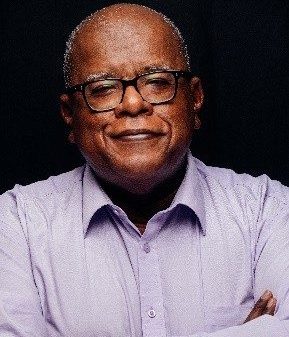
South African universities must restore critical inquiry, independent thinking and deep reading to higher education, Professor Jonathan Jansen told an Academy of Science lecture audience.
Speaking at the Academy of Science of South Africa’s (ASSAf) Annual Humanities Lecture on 22 October 2026, Jansen challenged universities to reconsider how they develop intellectual independence in an increasingly performance-driven academic environment.
The online lecture, titled The withering intellectual and the decline of the humanities in South Africa, marked the tenth anniversary of the lecture series and coincided with ASSAf’s 30th anniversary.
Jansen, a professor at Stellenbosch University, argued that the decline of the humanities extends beyond shrinking departments or academic programmes. Instead, he described a broader weakening of the intellectual habits that encourage people to question assumptions, engage with unfamiliar perspectives and exercise independent judgement.
“Humanities thinking is not something that can or should be contained within traditional humanities departments,” he said.
He questioned education systems that prioritise examinations, memorisation and institutional performance measures over curiosity and understanding.
According to Jansen, these pressures begin in schools and continue into universities, where publication targets, compliance requirements and financial incentives can discourage academics from challenging established thinking.
Recalling an interaction with a student, Jansen described how she eventually recognised the purpose behind his teaching approach.
“Professor, I can now see what you’re trying to do,” she told him, before explaining: “You require us to think.”
The exchange illustrated what Jansen believes should remain central to education: developing students who can reason independently rather than simply reproduce information.
He also emphasised the importance of rebuilding a culture of reading. Engaging deeply with books and different perspectives, he argued, helps students develop intellectual curiosity and resist simplified explanations of complex issues.
During the discussion, Jansen encouraged educators to make reading meaningful by connecting texts to relevant questions and contemporary challenges.
Academic freedom was another central concern. He warned that political deference, institutional conformity and financial pressures can weaken universities’ willingness to accommodate dissent and uncomfortable questions.
Jansen advocated integrating humanities thinking into scientific, technological and professional education, arguing that challenges such as pandemics and climate change cannot be understood through technical knowledge alone.
He suggested that introductory courses and broader university curricula could expose students to ethical reasoning, social questions and critical inquiry before they specialise in individual disciplines.
Artificial intelligence also featured in the discussion. Jansen acknowledged that AI tools can assist students with initial understanding but cautioned against allowing automated summaries to replace sustained reading and original thought.
He encouraged universities to rethink assessments so that students must demonstrate independent reasoning, apply knowledge across different contexts and develop their own intellectual voices.
Questions from the audience explored empathy in teaching, relationships between academics and the responsibilities of university leaders towards emerging scholars.
Jansen described effective teaching as a relationship grounded in trust, recognition and a willingness to engage students as individuals.
Despite his concerns about the direction of higher education, he expressed optimism about the willingness of school learners, university students and younger academics to engage with difficult ideas.
His message positioned the humanities not simply as a collection of academic subjects, but as an essential approach to education that helps develop thoughtful, questioning and socially responsible citizens.