Students facing gender-based violence, mental health challenges and other personal crises will now have access to a dedicated support facility at Majuba TVET College’s Dundee Campus in KwaZulu-Natal.
The newly launched Comfort Room provides a private environment where students can report abuse, seek emotional support and receive referrals to professional services without having to navigate multiple institutions on their own.
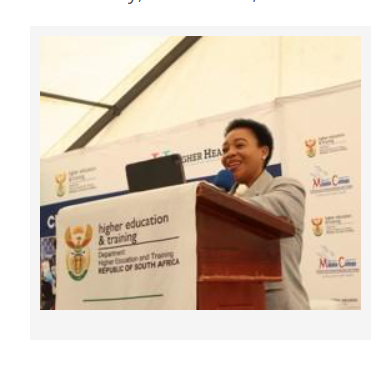
Officially unveiled by Higher Education and Training Deputy Minister Dr Nomusa Dube-Ncube, the facility is described as the first of its kind in KwaZulu-Natal’s post-school education and training sector.
Developed through a partnership involving Higher Health, Majuba TVET College and the KwaZulu-Natal Department of Health, the initiative seeks to address barriers that prevent young people from accessing help, particularly survivors of gender-based violence (GBV).
For students experiencing trauma, the process of seeking assistance can involve visits to police stations, healthcare facilities, social workers and other institutions, sometimes requiring survivors to repeatedly recount their experiences.
The Comfort Room is intended to provide a central point of support, connecting students to counselling, healthcare, police assistance and psychosocial services while reducing the risk of secondary victimisation.
“This is a safe, private space on campus where a young person can pause, open up, learn, and be connected to the right help, without having to work out the whole system alone,” Dube-Ncube said.
The initiative comes against a concerning backdrop of violence in KwaZulu-Natal. According to figures cited by the Deputy Minister, 1,820 rapes were reported in the province between April and June 2026, alongside the murders of 124 women during the same period.
These figures reflect reported cases, with fear, stigma and difficulties accessing support continuing to discourage some survivors from coming forward.
Beyond responding to abuse, the facility will support student-led programmes designed to promote prevention, awareness and peer assistance.
Survivor clubs will provide opportunities for affected students to connect with others and access professional support, while Transforming Mentalities Clubs will encourage young men to challenge harmful attitudes and behaviours associated with GBV.
The Comfort Room will also accommodate peer support forums for students living with HIV and discussions addressing mental health challenges.
The scale of demand for such services is reflected in Higher Health’s student support programmes.
Over the past four years, more than 394,000 students have completed GBV self-risk assessments, with over 20,000 subsequently requesting assistance.
Mental health programmes have also identified more than 188,000 young people as needing or actively seeking psychosocial support.
These figures highlight the importance of creating accessible support systems within educational institutions, where students can seek help without fear of judgement or stigma.
Higher Health Chief Executive Officer Professor Ramneek Ahluwalia and his team are working alongside the college and its partners to strengthen access to support services.
Dube-Ncube urged college management and student leaders to ensure the facility becomes a trusted and accessible resource rather than simply a physical space.
She emphasised the need for appropriate staffing, strong referral relationships with healthcare providers, police and social workers, and follow-up mechanisms to ensure students receive assistance.
The Deputy Minister also challenged young men to take responsibility for confronting abusive behaviour and promoting respect and consent.
“The solution must also come from men,” she said.
The launch forms part of broader efforts to strengthen the country’s response to GBV, following its classification as a national disaster in November 2025.
“What begins in this room today must become part of how the whole country protects its young people,” Dube-Ncube said.
The Comfort Room offers a model that could inform similar student support facilities at other colleges, although its longer-term impact will depend on sustained staffing, accessible services and effective referrals.
Students requiring immediate assistance can contact Higher Health’s 24-hour helpline on 0800 36 36 36 or send an SMS to 43336. The national GBV Command Centre is available on 0800 428 428, while Childline can be reached on 116.
In emergencies, students can contact the South African Police Service on 10111.