South Africa has cut child road deaths by nearly 80% since 2012, but 1,034 children still died on the country’s roads during 2025 nationwide last year.
As South Africa marks Transport Month this October, new research from non-profit organisation Wheel Well is drawing attention to the safety of children travelling to school, walking through communities and using the country’s roads.
Wheel Well’s Status of Child Road Safety: 2025 Report shows a significant long-term reduction in child road fatalities, from 5,087 deaths in 2012 to 1,034 in 2025.
While the decline demonstrates that sustained road-safety interventions can make a difference, the organisation warns that progress is beginning to slow.
“The progress we have made since 2012 is important, but the figure we need to focus on now is the 1,034 children who did not make it home in 2025,” said Wheel Well founder Peggie Mars.
“The data tells us that we have moved forward, but we are now facing a different challenge. We need to understand where children remain most exposed and put practical measures in place to address those risks.”
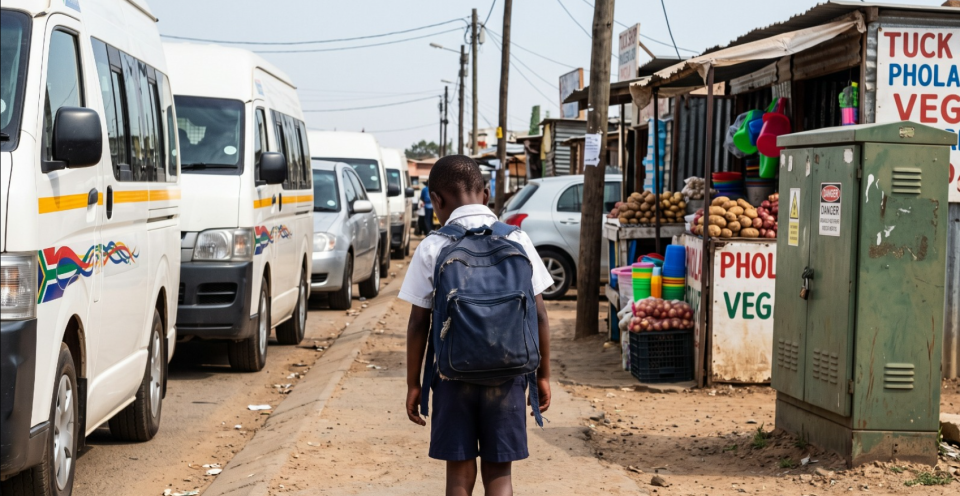
The report shows that children remain particularly vulnerable as pedestrians.
Pedestrians accounted for 690 child deaths in 2025, representing 66.7% of all child road fatalities. This was more than double the 343 children who died while travelling as vehicle passengers.
For many children, the most dangerous part of a journey may therefore happen before they enter a vehicle.
Walking to school, crossing busy roads and travelling through communities with limited pedestrian infrastructure continue to place children at risk.
Visibility is another major concern.
Wheel Well’s analysis found that 75% of fatal child pedestrian crashes happen around dawn, dusk or during hours of darkness.
The findings highlight the potential impact of relatively simple interventions, including improved street lighting, reflective clothing, safer pedestrian crossings and stronger traffic-calming measures around schools.
Age also plays an important role.
Children aged four and younger accounted for 404 deaths in 2025, or 39.1% of all child road fatalities, while children aged five to nine accounted for a further 379 deaths.
As children become older and more independent, their exposure increasingly shifts towards walking routes, road crossings, commuter traffic and scholar transport.
The impact of road crashes also extends far beyond fatalities.
Using clinical ratios established by the Red Cross War Memorial Children’s Hospital, Wheel Well estimates that the 1,034 child deaths recorded in 2025 were accompanied by more than 5,000 serious injuries and approximately 15,400 slight injuries.
These injuries can include traumatic brain injuries, fractures, amputations and concussions, with potentially lifelong consequences for children and their families.
“The road safety conversation often ends with the number of people who die,” Mars said.
“But every serious injury changes a child’s life and can affect an entire family for years. Prevention therefore has to happen before the crash, not only after it.”
Wheel Well has focused much of its work on practical interventions designed to reduce children’s exposure to road risks.
Its Car Seats for Kids initiative promotes safer child restraint, while the Halo Beanie Project incorporates retro-reflective materials into beanies to make children more visible to motorists.
The organisation believes the next phase of child road safety will require a combination of these interventions with safer school zones, stronger pedestrian infrastructure, better protection for children using scholar transport and improved data about how children are travelling when crashes happen.
Vehicle maintenance is also part of the broader safety conversation.
Supa Quick, a supporter of Wheel Well’s road-safety work, is encouraging motorists and scholar transport operators to regularly check tyres, brakes and shock absorbers to ensure vehicles carrying children can respond safely to hazards.
“Protecting children on our roads requires us to look at the whole journey,” Mars said.
“That includes how a child is restrained, whether they can be seen by approaching drivers, the safety of the road they are travelling on and whether the vehicle carrying them is properly maintained.”
Wheel Well is calling for greater use of 30 km/h school zones supported by physical traffic-calming measures, reflective elements in school uniforms and bags, improved child passenger protection in scholar transport and more detailed crash data.
The almost 80% reduction in child road deaths since 2012 shows that meaningful progress is possible.
For Wheel Well, however, the next milestone is not simply maintaining that improvement, but ensuring that fewer South African families experience the devastating consequences of preventable road crashes.
“The goal cannot simply be to maintain the progress we have made,” Mars said.
“We need to make sure that the next generation of children grows up with safer ways to move through their communities. The evidence tells us where the risks are. The responsibility now is to act on it.”