
A US$36 million investment will test new malaria prevention tools designed to protect families, infants and communities facing mosquito-borne disease across high-risk regions worldwide more effectively.
Global health organisation Unitaid is investing US$36 million in two programmes designed to help countries determine how new malaria prevention technologies can be used effectively at scale.
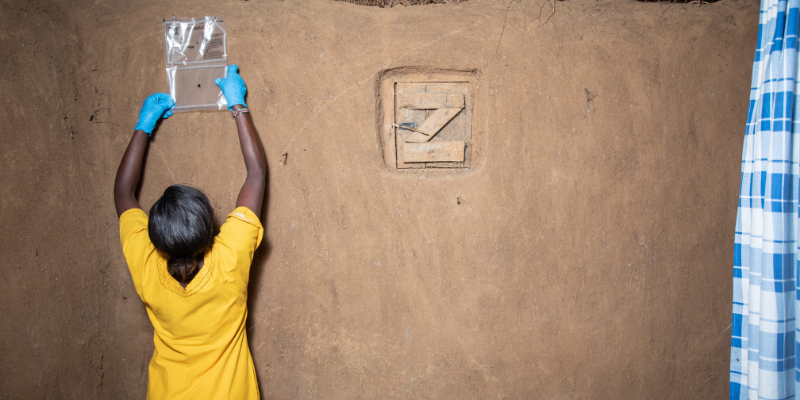
The investment focuses largely on spatial emanators, devices that release insecticide into the air to reduce mosquitoes entering homes, biting people and transmitting malaria.
Unlike mosquito nets, which protect people while they sleep, spatial emanators can provide continuous protection within indoor spaces when correctly installed and replaced as required.
The technology could become particularly important in communities where mosquito-net coverage is low, where people remain exposed outside sleeping hours or where traditional malaria-control approaches are becoming less effective.
A previous Unitaid-supported trial in Kenya found that spatial emanators reduced new malaria infections by 32%, contributing to the World Health Organization issuing a conditional recommendation for their use alongside insecticide-treated mosquito nets in 2025.
The new funding is intended to move the technology from controlled research environments into real communities.
Projects led by the Swiss Tropical and Public Health Institute and Cameroon’s Centre for Research in Infectious Diseases will examine how spatial emanators perform across different malaria transmission environments, mosquito populations and communities.
Researchers will also investigate where the technology provides the greatest benefit for the money invested, helping governments decide which communities should receive it first.
That evidence will become increasingly important as malaria programmes prepare for much larger deployment.
The United States Government, Global Fund and SC Johnson have announced plans aimed at reaching at least 60 million people with spatial emanators across priority countries by 2029.
Unitaid Executive Director Dr Philippe Duneton said decisions made during the first years of deployment could determine how much impact the technology ultimately delivers.
“Unitaid’s investments are designed to generate the practical evidence countries need to deliver the greatest possible benefit for people impacted by malaria,” he said.
One area of particular interest will be urban communities.
Malaria prevention strategies have traditionally focused strongly on rural settings, but rapidly growing African cities present different housing conditions, mosquito environments and population movement patterns.
The programmes will therefore investigate whether spatial emanators can complement existing prevention methods in urban areas and in communities where access to insecticide-treated nets remains limited.
Researchers will also examine whether the same technology could help protect people against Aedes mosquitoes, which spread dengue and other diseases.
Dengue has become an increasingly important public-health concern in parts of Africa, creating pressure for technologies capable of targeting more than one mosquito-borne disease.
The investment also includes research into a very different intervention designed specifically to protect babies.
Insecticide-treated baby wraps are traditional cloth carriers treated with insecticide to help shield infants from mosquito bites while they are being carried.
A randomised trial in Uganda found that the wraps reduced malaria cases among infants by 66% when used alongside insecticide-treated mosquito nets.
The result is significant because infants and young children are among the populations most vulnerable to severe malaria.
The next challenge is determining whether similar protection can be delivered consistently across different countries and communities.
The Centre for Research in Infectious Diseases will study the practical use of treated baby wraps in Cameroon, Kenya and a humanitarian setting on the Myanmar border.
Researchers will examine how communities use the wraps, whether families accept them, how they can be incorporated into existing malaria programmes and what would be required for wider rollout.
The findings are expected to contribute to future WHO guidance.
The social impact of the investment therefore extends beyond introducing new products.
Countries need evidence showing whether technologies remain effective when used by millions of people outside tightly controlled clinical trials.
They also need to understand cost, distribution, replacement schedules, community acceptance and whether health systems can realistically maintain programmes over time.
Swiss TPH Project Leader Nakul Chitnis said the research would help determine how spatial emanators can complement existing malaria prevention measures under real-world conditions.
The investment arrives as malaria programmes continue searching for additional ways to protect communities while mosquito behaviour, insecticide resistance and changing environments challenge existing prevention strategies.
Mosquito nets, indoor spraying, testing and treatment remain central to malaria control.
The new technologies are being developed as additional layers of protection rather than replacements for those established interventions.
For families living in malaria-affected communities, that could eventually mean protection extending beyond the bed net.
For infants, it could mean turning an everyday piece of clothing into an additional barrier against infection.
And for governments, the evidence generated through the US$36 million programme could help determine which new tools provide enough health impact to justify large-scale public investment.
The ultimate goal is straightforward: fewer mosquito bites, fewer infections and fewer families losing children and loved ones to a preventable disease.
