
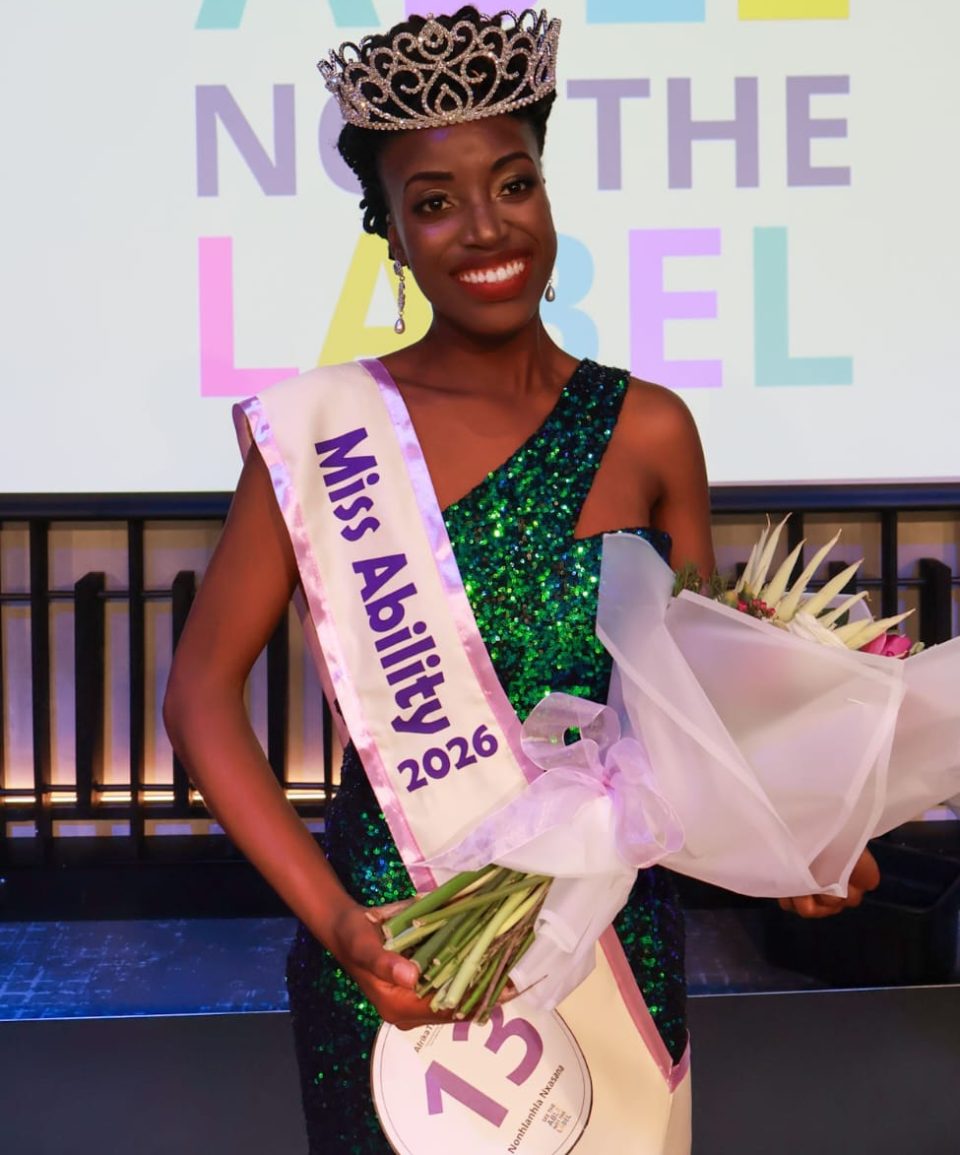
Twenty young South Africans with intellectual disabilities took to the stage in Rosebank, highlighting the barriers that continue keeping thousands excluded from meaningful employment opportunities.
Twenty young people were crowned at Afrika Tikkun’s second annual Beauty in Ability pageant on Friday, but organisers say the real issue wasn’t who won the titles – it was why so few people with intellectual disabilities ever get the opportunity to compete in the workplace.
Held at The Venue at Nine Yards in Rosebank, the event crowned Yanga Gongwana as Mr Ability 2026, Nonhlanhla Nxasana as Miss Ability 2026, while Njabulo Vincent Mthembu and Ayanda Mncube were named Prince and Princess. The four will serve as Disability Inclusion Ambassadors for the next year.
Behind the celebrations, however, was a stark reminder of South Africa’s ongoing disability inclusion challenge.
According to the Commission for Employment Equity, people with disabilities account for just 1.3% of employees at organisations with 50 or more staff, despite Employment Equity Regulations setting a five-year target of 3%. Organisers argue that people with intellectual and learning disabilities remain among the least represented in formal employment.
“This isn’t a talent problem,” said Lana Roy, Afrika Tikkun’s Head of Disability and Inclusion. “It’s a structural one.”
Roy said many young people leave special schools with practical skills in areas such as beauty, carpentry and gardening, only to encounter recruitment processes requiring matric certificates, online assessments and hiring systems that fail to accommodate different learning needs.
“They are not unable,” she said. “They are unaccommodated. The moment you change the environment, the assessment and the expectation, you find capability that was always there.”
Afrika Tikkun’s Disability Project Manager, Latchean Mhlanga, said the pageant forms part of a broader programme aimed at preparing young people with intellectual disabilities for employment while working with businesses to make recruitment more inclusive.
“What brings us here today is not this stage. It’s not the lighting. It’s not the venue,” she told the audience. “It’s the contestants.”
The event followed months of preparation across Afrika Tikkun’s Centres of Excellence in Alexandra, Braampark, Diepsloot and Orange Farm, where auxiliary social workers helped finalists build confidence, develop communication skills and prepare for public speaking and performance.
For many contestants, Friday marked the first time they had addressed a large audience.
Afrika Tikkun Group Chief Executive Marc Lubner said disability inclusion benefits everyone, adding that integrating children with disabilities into mainstream programmes had improved participation and educational outcomes across the organisation.
Disability advocate Esihle Mhluzi challenged attendees to move beyond viewing inclusion as charity.
“Inclusion is not charity. It is justice. Accessibility is not a favour. It is a right,” she told finalists, encouraging them to see their crowns not as an end goal but as the beginning of their advocacy journeys.
Beyond celebrating confidence and achievement, organisers hope the event will encourage employers to examine whether their recruitment practices genuinely create opportunities for people with intellectual disabilities.
Supported by Afribrands, FNB, Legends Barber, Clothes to Good and The Venue at Nine Yards, the event forms part of Afrika Tikkun’s broader cradle-to-career model, which combines work readiness, life skills, employer engagement and disability inclusion initiatives to create pathways into meaningful employment.
