
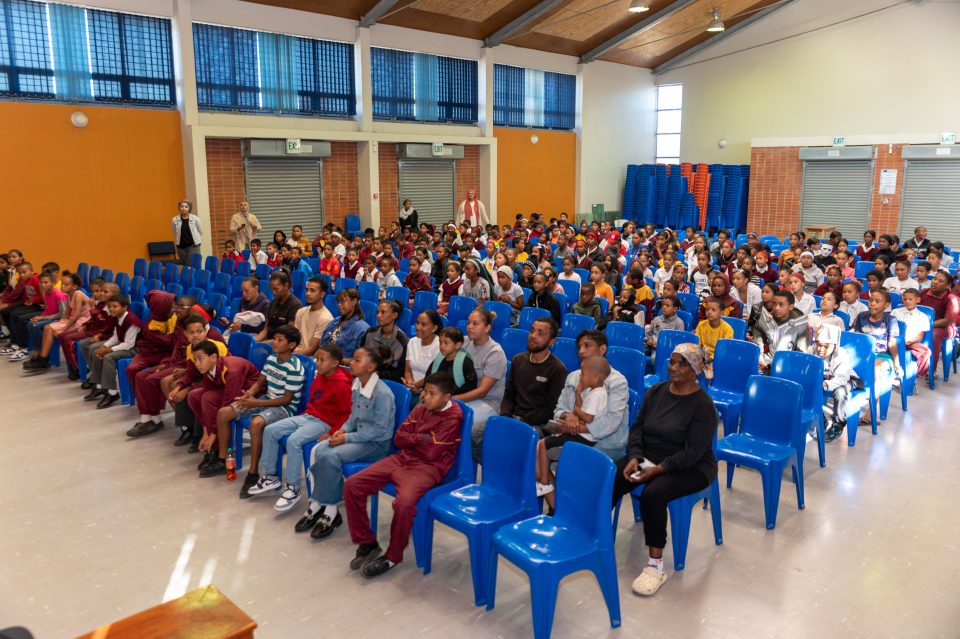
Learners are stepping into environmental leadership roles as the Junior River Wardens programme celebrates its first graduates across three primary schools, strengthening local conservation efforts.
The Junior River Wardens programme is gaining momentum as young learners take an active role in protecting local waterways, with three primary schools marking a major milestone through graduation and induction ceremonies.
The City of Cape Town’s Biodiversity Management Branch recently hosted ceremonies at Floreat, Ysterplaat and Red River primary schools, celebrating learners who have completed a year of environmental training while welcoming a new intake of participants.
The programme, launched just a year ago, is designed to bridge the gap between classroom learning and real-world conservation, equipping learners with the knowledge and tools to monitor river health and protect biodiversity in their communities.
Deputy Mayor and Mayoral Committee Member for Spatial Planning and Environment, Alderman Eddie Andrews, said the programme highlights the importance of youth participation in environmental stewardship.
“Just one year ago… it gives me a great sense of pride to have witnessed our very first batch of Grade 6 graduates stand tall as confident eco-warriors,” he said.
“These learners have demonstrated that environmental stewardship is not just about the future; it is about active citizenship right now.”
Each school’s ceremony reflected both achievement and continuity. At Red River Primary, learners were recognised for their year-long commitment, while new recruits received welcome packs to begin their journey. Ysterplaat Primary brought together learners, parents and officials to emphasise collaboration, and Floreat Primary set the tone with strong community engagement and participation.
Beyond environmental awareness, the programme focuses on building leadership and responsibility. Learners engage in hands-on conservation activities, develop public speaking skills and grow their sense of civic duty as custodians of their local ecosystems.
Some graduates will continue their journey through the Nature Connect Conservation Leaders Programme, extending their development through to high school, while others carry their knowledge into new environmental pathways.
“These graduations are more than just a ceremony; they represent a sharing of responsibility,” Andrews added.
“By equipping our youth with educational resources and a sense of ownership over their local rivers, we are contributing to the long-term resilience of biodiversity.”
As environmental challenges continue to grow, initiatives like the Junior River Wardens programme highlight the role young people can play in building sustainable, community-driven solutions.
