
A total of 2,307 young South Africans are entering a 12-month accredited training programme combining formal learning with practical workplace experience through a major partnership.
The programme brings together the Department of Higher Education and Training, CATHSSETA, McDonald’s South Africa and Harambee Youth Employment Accelerator, connecting skills development, workplace learning and access to employment opportunities.
The first intake comprises 500 young people, forming part of the total 2,307 learners who will join the programme through a staggered intake process. The final group is expected to enter the programme in January 2027.
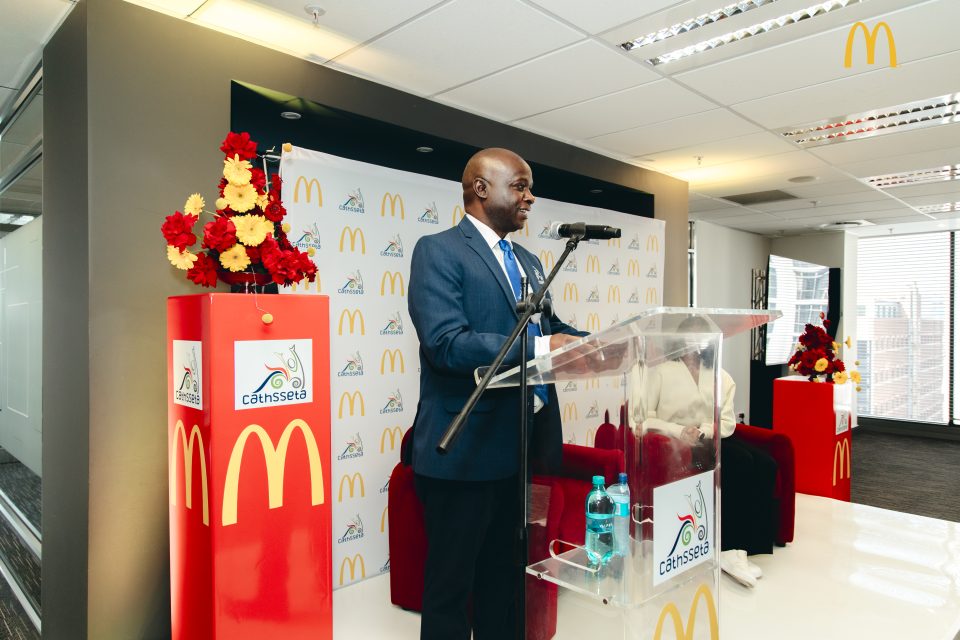
The new intake was formally welcomed on Friday as the partners reflected on lessons from the previous programme and the importance of creating stronger pathways between training and employment for young South Africans.
Central to the programme is its combination of formal education and practical experience. Approximately 30% of the training takes place through formal learning, while 70% is workplace-based.
Higher Education and Training Minister Buti Manamela said greater cooperation between government and industry is essential if South Africa is to expand workplace-based learning and strengthen occupational training.
He emphasised that government and training institutions cannot create sufficient workplace learning opportunities on their own. Employers need to open their workplaces to learners and become active participants in developing the skills required by the economy.
Manamela said the programme should not be viewed as an isolated intervention, but as an approach that can be expanded through partnerships with employers across different sectors.
Importantly, the qualification is industry-recognised and is not designed exclusively to prepare participants for employment at McDonald’s.
CATHSSETA CEO Marks Thibela stressed this distinction at the launch, explaining that successful participants will leave with an accredited qualification that can support their pursuit of opportunities across the broader industry.
Thibela also reflected on lessons from the previous cohort, particularly learner attrition and the financial pressures that can make completing a 12-month programme difficult for unemployed young people.
Those lessons have resulted in additional support for the latest programme. The learner stipend has been increased, while McDonald’s is contributing additional resources including uniforms and transport support.
The interventions are intended to reduce some of the practical financial pressures facing participants and improve the likelihood that young people who enter the programme remain through to completion.
Dr Mamello Masia, Chief People Officer at McDonald’s South Africa, said the partnership represents an opportunity to create meaningful pathways into the economy while giving young people practical exposure to the world of work.
McDonald’s participation includes providing its restaurants as workplace learning environments, allowing participants to develop practical experience alongside the formal component of their qualification.
The impact that this combination of learning and workplace exposure can have was demonstrated by Frans Mahlaba, a graduate of the Class of 2024, who returned to share his experience with the incoming learners.
Mahlaba recalled being unemployed when he first discovered the opportunity.
“When I saw the McDonald’s learnership advertised, I saw more than just a job. I saw a door into the working world,” he said.
He told the new learners that adjusting to the pace and pressure of a working environment was initially challenging, but the experience ultimately helped him discover new strengths.
“I learned that I’m a very disciplined person that can lead, and I actually love working with people,” Mahlaba said.
For him, the value of the experience ultimately extended beyond obtaining a qualification.
“This learnership did not just give me a certificate. It gave me confidence, skills and hope for the future.”
Harambee Youth Employment Accelerator plays a key role in connecting young jobseekers to the opportunities through the SAYouth platform.
The organisation helped connect the first intake of 500 young people to the programme in less than a month, demonstrating both the demand for opportunities and the importance of making them visible and accessible to unemployed youth.
Women account for approximately 67% of this first group of 500 learners.
Harambee also highlighted some of the barriers young people face before they even reach the workplace, including transport costs, distance and difficulty accessing reliable information about available opportunities.
The SAYouth network has more than five million registered young people and has connected young people to more than 2.3 million opportunities across formal employment, self-employment and public employment pathways.
McDonald’s is also using its restaurant footprint to direct young jobseekers towards SAYouth. This means young people looking for work can access opportunities beyond McDonald’s and this particular programme once they enter the wider network.
The partnership brings together different capabilities around a common challenge: government leadership, accredited skills development through CATHSSETA, workplace learning through an industry partner and Harambee’s ability to connect young people to opportunities.
By January 2027, the final intake will bring the total number of participants entering the programme to 2,307.
Each learner will then face their own 12-month journey through formal training and workplace experience. The longer-term measure of success will be how many complete the programme and are able to turn their qualification, experience and newly developed skills into sustainable employment.
