
Cape Town is saving more than eight billion litres of drinking water every year through the growing use of treated effluent for irrigation, industry and other non-drinking purposes.
With dam levels currently below 50% and rainfall patterns becoming increasingly unpredictable, the City is encouraging residents, businesses and institutions to adopt alternative water sources where possible.
Treated effluent is wastewater that has undergone a rigorous purification process at wastewater treatment plants, making it suitable for environmental discharge and safe for non-potable uses such as irrigation, landscaping and certain industrial processes.
The City’s Water and Sanitation Directorate has expanded its treated effluent reuse (TER) infrastructure, helping reduce pressure on potable water supplies while also offering a more affordable alternative for users.
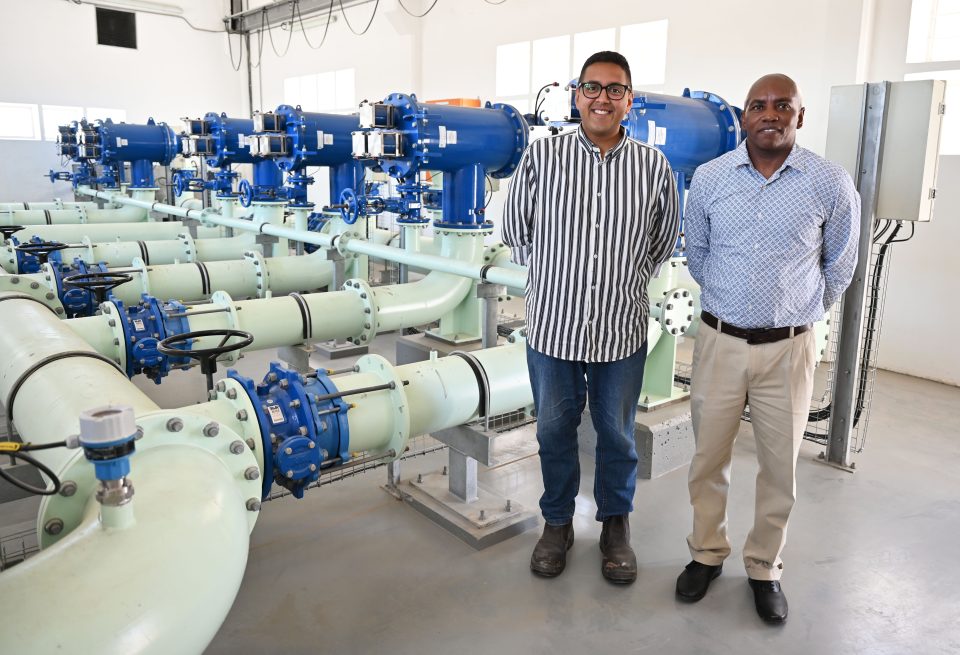
The Mayoral Committee Member for Water and Sanitation, Councillor Zahid Badroodien, recently visited TER pump stations in Bellville and Scottsdene to review the progress of the programme and its growing impact.
Expanding water reuse infrastructure
Treated effluent is currently supplied from nine wastewater treatment plants across Cape Town, including Athlone, Bellville, Cape Flats, Kraaifontein, Macassar, Potsdam, Scottsdene, Zandvliet and Melkbosstrand.
The Bellville TER pump station, commissioned in March 2025, currently supplies approximately 4.3 million litres of treated effluent per day through a network spanning roughly 15 kilometres.
The Scottsdene TER pump station, completed in December 2025 and expected to be fully operational by April 2026, will be capable of supplying up to six million litres per day once fully commissioned. The network associated with this facility is expected to extend approximately 14 kilometres.
Industries, sports facilities, parks, schools and developments in areas including Bellville Industria, Bellville South, Stikland, Glenhaven, Kuils River, Scottsdene, Northpine, Wallacedene, Brackenfell and Protea Heights are encouraged to consider using treated effluent where appropriate.
Building a water-sensitive city
The City continues to invest in water reuse infrastructure, including the R36 million Zandvliet TER pump station, which is currently 85% complete and on track for completion by September 2026.
Network expansion projects in Scottsdene and Kuils River are also under way, improving accessibility and enabling more end-users to connect to the treated effluent system.
Currently, 345 users make use of treated effluent through a network that spans approximately 330 kilometres. This number is expected to grow as infrastructure expands and awareness increases.
Councillor Badroodien emphasised that drinking water should primarily be used for essential needs, while alternative water sources should be adopted where suitable.
The initiative forms part of Cape Town’s long-term strategy to become a water-sensitive city that protects water resources, improves efficiency and encourages sustainable water use.
For more information on accessing treated effluent, visit: https://bit.ly/48ZUbck
