
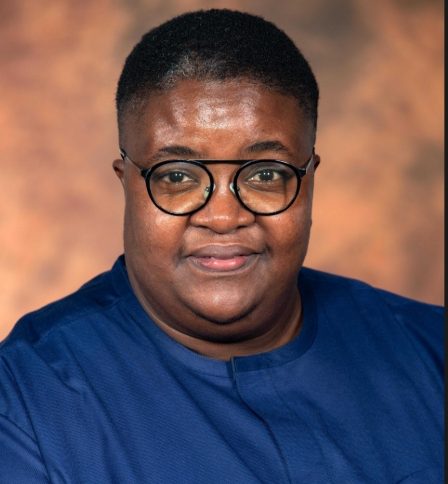
Deputy Minister in the Presidency for Women, Youth and Persons with Disabilities Mmapaseka Steve Letsike has called on South African churches to become safer spaces for survivors of gender-based violence, child abuse and discrimination.
Addressing the Central District Young Women’s Manyano 21st Annual Convention in Soweto, Letsike said faith communities that played a role in confronting racial oppression should demonstrate similar resolve in responding to violence and injustice today.
“If the church could find its voice against racial oppression, it must find its voice against gender-based violence. If our church halls could become spaces in which oppressed communities organised for freedom, they must become safe spaces for survivors today,” Letsike said.
She described some of society’s most difficult “unmapped territories” as challenges found within homes, communities and, in some cases, churches.
These include violence against women, child abuse, poverty, unemployment, discrimination and the vulnerability and isolation experienced by some persons with disabilities.
Letsike said women entering places of worship may simultaneously be dealing with unemployment, single parenthood, disability, financial dependence on an abusive partner or trauma resulting from sexual violence.
“These realities do not disappear when the hymn begins. Our religion must therefore be capable of responding to the deepest social needs of the people who practise it. There is no justification for silence when abuse is taking place.”
She also cautioned faith communities against allowing the principle of forgiveness to prevent perpetrators from being held responsible for their actions.
“Forgiveness cannot be manipulated into immunity from accountability.”
According to Letsike, survivors can face an additional struggle after experiencing abuse when they have to convince families or communities to believe them.
Women and children with disabilities can face additional vulnerabilities when they depend on other people for transport, communication, finances, personal assistance or care.
“The very relationship that should provide safety can become the relationship through which power is abused. That is why our approach must be intersectional,” she said.
Letsike also called for churches and communities to protect the dignity of lesbian, gay, bisexual, transgender and intersex people.
“Lesbian, bisexual and transgender women are women. They experience the same economic pressures, violence and insecurity that other women experience, while sometimes also confronting discrimination because of who they are,” she said.
She stressed that equality should not depend on sex, disability, sexual orientation, gender identity, race, class or where a person lives.
Drawing on the Young Women’s Manyano’s emphasis on prayer and service, Letsike argued that faith must translate into practical support for people facing social challenges.
“Not prayer alone. Prayer and service. The conjunction matters. Prayer turns us towards God. Service turns us towards one another.”
While South Africa has established policies and institutions to address gender-based violence and femicide, including the National Strategic Plan on GBVF, Letsike said government action alone cannot address the problem.
“The success is determined in homes, churches, schools, clinics, police stations and communities.”
She urged churches not to treat matters requiring legal and social intervention solely as spiritual issues.
“A child who has been sexually abused requires protection. A woman whose life is threatened requires safety. A person with a disability who reports violence requires accessible justice,” Letsike said.
Reflecting on 70 years since the 1956 Women’s March, 50 years since the 1976 Student Uprising and 30 years of constitutional democracy, Letsike challenged South Africans to consider what courage requires from the present generation.
For faith communities, she said this could mean confronting difficult conversations about abuse, creating churches where women can disclose violence without fear, enabling persons with disabilities to assume leadership roles and challenging homophobia and the exclusion of LGBTI people.
