
Indigenous midwives have assisted generations of rural women to give birth safely. Yet they continue to operate on the margins of South Africa’s healthcare system with little formal recognition or support.
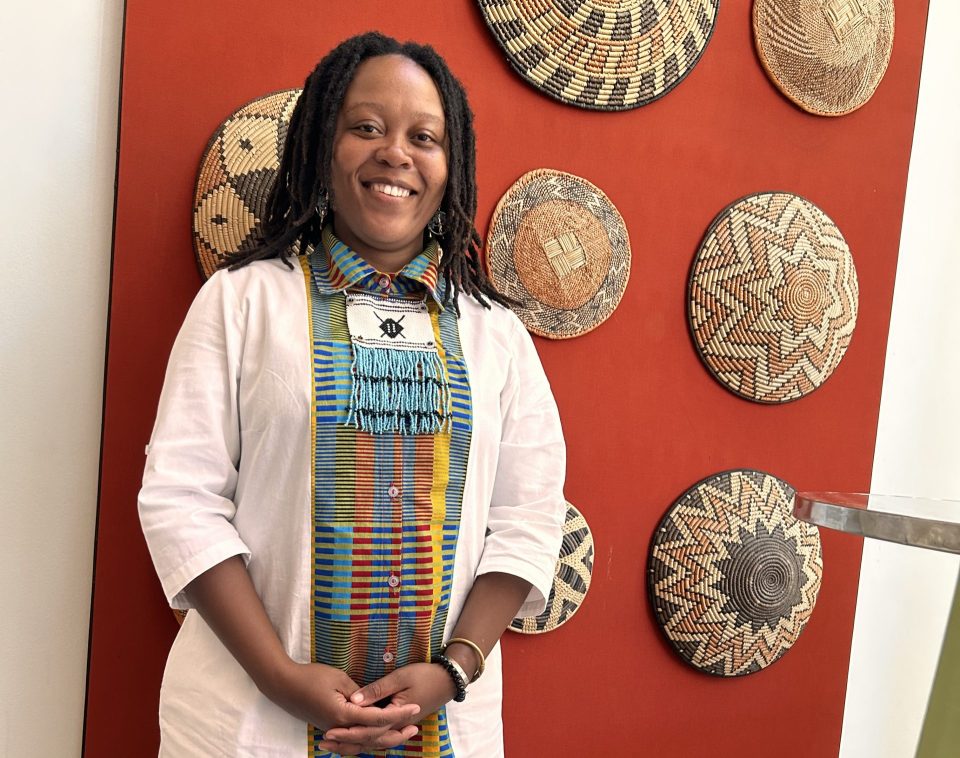
This is according to University of the Western Cape researcher Happyness Nokwatu Raselabe, a master’s student in forensic linguistics, who states that despite their credible indigenous knowledge and long-standing contributions to maternal care, these traditional birth attendants continue to be viewed with suspicion by the country’s formal healthcare sector.
Speaking at the recent inaugural Scholarship of Learning and Teaching (SoLT) Conference held at UWC between 1 and 3 December, Raselabe argued that the discrimination faced by indigenous midwives and other traditional health practitioners is rooted in South Africa’s policy framework, which she described as “half-heartedly recognising these community practitioners while simultaneously demonising them”.
One such legislation is the outdated colonial law, the Witchcraft Suppression Act 3 of 1957, which criminalises aspects of traditional healing and casts traditional health practitioners as witches and calls them derogatory terms such as “witch doctors”, implying harm rather than recognising them as legitimate healers. Despite calls for its repeal, the discriminatory legislation remains in the country’s statute books, more than 30 years into democracy.
Raselabe explored healthcare access in rural villages of the Eastern Cape. She discovered that even though indigenous midwives played a crucial role in supporting and saving the lives of pregnant women who had to walk long distances of up to 15km before reaching the nearest prenatal and postnatal care facility, their contribution is largely unacknowledged by the formal healthcare system.
She documented cases in the Wild Coast where women were forced to travel under dangerous conditions, including crossing overflowing rivers, in search of healthcare. In one case, a woman gave birth to twins on the side of the road after being assisted by a local indigenous midwife. The first twin had a normal birth, and the second was in a breech position with the umbilical cord around her neck. Despite the successful delivery of the twins, Raselabe said the indigenous midwife was reprimanded by healthcare workers when she arrived at the clinic with the mother. She was allegedly warned “not to do it again”, a response that implied the life-saving intervention was treated as an illegal act rather than an act of ca
The integration of traditional and Western medicine is supported by the World Health Organisation (WHO), which has outlined guidelines through its Traditional Medicine Strategy 2025–2034. The strategy aims to promote universal access to safe, people-centred traditional, complementary and integrative medicine, with a strong focus on evidence-based integration and cultural respect through national health policies to strengthen universal health coverage.
In South Africa, even though the National Health Act of 2003 promotes a unified healthcare system and guarantees patients’ rights to access treatment, including free services for pregnant women and children at clinic level, Raselabe said this legislation still falls short when it comes to recognising indigenous healthcare practitioners, and only gives formal recognition to Western-trained professionals such as doctors and nurses.
“This effectively places traditional health practitioners outside the mainstream healthcare system, and unless we actively encourage collaboration between the two sectors or repeal laws such as the Witchcraft Suppression Act, and formalise and regulate the Traditional Practitioners Act, we will continue to see policy gaps and face ongoing challenges in the recognition of indigenous midwives and other traditional practitioners,” said Raselabe.
She added: “If we speak of decolonisation and, as a country, claim to recognise indigenous knowledge systems, why do we still have laws that contradict each other? And why does the National Health Act still fail to recognise indigenous midwives?”
Although the Traditional Health Practitioners Act of 2007 finally provides legal recognition for traditional practitioners, including indigenous midwives, Raselabe warns that the absence of properly functioning regulatory councils remains a significant concern. She notes that the single Interim Traditional Health Practitioners Council tasked with overseeing the diverse categories of traditional practitioners is inadequate given various disciplines of traditional healing.
Raselabe recommends closer collaboration between traditional health practitioners and Western-trained healthcare workers, rather than the two sectors operating in silos.
“That collaboration should also address the one-sided referral system, where only traditional practitioners refer patients to Western doctors. This imbalance reflects the lack of trust in traditional practitioners by some healthcare workers, which is deeply problematic, especially in rural areas where hospitals are often 30 to 50 kilometres away and difficult to access,” she said.
Caption: Happyness Nokwatu Raselabe, a masters student in forensic linguistics.
Image: Sipokazi Fokazi/UWC
