
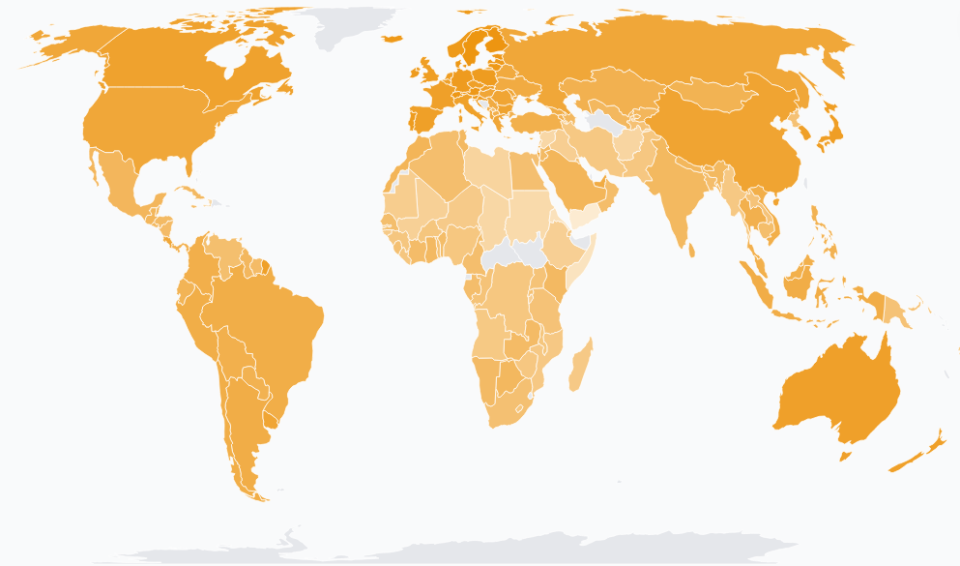
The Global Sustainable Competitiveness Index 2025 reveals that a country’s success is no longer measured only by economic growth, but by its ability to build inclusive wealth while protecting its future. Governments, investors and policymakers are now being judged on sustainability, resilience and long-term impact — not short-term gains.
First published in 2012, the GSCI has become one of the world’s most comprehensive measures of national performance, assessing countries using more than 250 quantitative indicators drawn from institutions such as the World Bank, International Monetary Fund and multiple UN agencies. Today, the Index is officially used by four national governments as a benchmark for sustainable and competitive development, offering a credible alternative to GDP-focused assessments.
A global leaderboard reshaped by sustainability
The 2025 findings confirm that sustainability-led strategies are delivering results. Finland tops the global rankings for the first time, reinforcing Scandinavia’s continued dominance in sustainable competitiveness. Four of the top five countries are Scandinavian, while Northern Europe fills much of the top 20.
Beyond Europe, Japan stands out as the only non-European country in the top 20, underlining the growing importance of innovation-driven competitiveness.
Asia, however, is emerging as the global leader in intellectual capital and innovation. China, South Korea, Singapore and Japan now dominate the Intellectual Capital Index, reflecting a decisive shift in technological leadership. Notably, China ranks 34 overall, outperforming the United States, which sits at 42, largely due to weaker performance in resource efficiency and social capital.
What sustainable competitiveness really measures
Sustainable competitiveness is defined as the ability to generate and sustain inclusive wealth without diminishing the capacity to do so in the future. The GSCI evaluates this through six core foundations:
Natural Capital, measuring environmental endowments;
Resource Efficiency, assessing how effectively resources are used per capita and per unit of economic output;
Social Capital, including health, equality, freedom and social cohesion;
Intellectual Capital and Innovation, covering education and innovation performance;
Economic Sustainability, examining long-term economic frameworks and resilience;
Governance Performance, focusing on infrastructure, transparency and fiscal effectiveness.
Together, these pillars provide a multidimensional picture of national resilience, risk and opportunity.
Progress, but far from the finish line
While the Index highlights encouraging momentum, it also reveals how far the world still has to go. The highest score achieved in 2025 is 60.4 out of a possible 100, while the global average stands at 47.0. This leaves a global gap of 53 points between current performance and best-practice sustainability.
Just over half (52%) of all measured trends show positive development. However, trends in Natural Capital continue to deteriorate in many countries, signalling ongoing environmental decline despite improvements in technology and efficiency. The data suggests that without stronger action, ecological pressures will continue to undermine long-term competitiveness.
Untapped potential for win-win outcomes
One of the strongest signals from the GSCI 2025 is the scale of untapped opportunity. Policies that improve education, boost efficiency and reduce inequality could unlock significant economic and social gains. The Index also highlights how conventional sovereign credit ratings often fail to capture sustainability-related risks and opportunities, leaving investors exposed to long-term vulnerabilities.
China’s rapid expansion of renewable energy capacity is cited as a positive trajectory, demonstrating how efficiency-driven strategies can offset weaknesses in natural capital. In contrast, the US’s lower ranking underscores how social cohesion and resource use now play a critical role in maintaining global leadership.
A roadmap for the future
As governments, businesses and financial institutions grapple with climate risk, inequality and economic uncertainty, the Global Sustainable Competitiveness Index offers a data-driven roadmap for resilient growth. It reframes competitiveness not as a race to the bottom on costs, but as a strategic balance between prosperity, people and planet.
For countries willing to act on the insights, the message is clear: sustainable competitiveness is no longer optional. It is fast becoming the defining measure of national success in a changing world.
