
South Africa is joining global justice leaders in Abu Dhabi to strengthen cooperation against increasingly complex crime, with digital threats and cross-border networks shaping discussions worldwide.
Justice and Constitutional Development Minister Mmamoloko Kubayi is leading South Africa’s delegation to the 15th United Nations Congress on Crime Prevention and Criminal Justice in Abu Dhabi, United Arab Emirates.
Convened every five years, the UN Crime Congress brings governments, justice institutions and other stakeholders together to examine how countries can prevent crime, strengthen criminal justice systems and uphold the rule of law.
This year’s gathering takes place as criminal activity increasingly crosses national borders and combines traditional organised crime with digital technologies, financial systems and international networks.
The Congress is being held under the theme “Accelerating crime prevention, criminal justice and the rule of law: protecting people and planet and achieving the 2030 Agenda for Sustainable Development in the digital age.”
For South Africa, participation provides an opportunity to engage other countries on challenges that cannot easily be addressed by one justice system acting alone.
These include organised criminal networks, cyber-enabled crime, illicit financial activity and other offences that can involve actors, money, technology and evidence spread across several jurisdictions.
The Department of Justice and Constitutional Development said criminal activity has become increasingly complex, adaptive and interconnected, requiring faster cooperation between countries and institutions.
The Congress will explore how law-enforcement agencies, prosecutors, courts and other government institutions can cooperate more effectively while improving the evidence and coordination used to prevent and investigate crime.
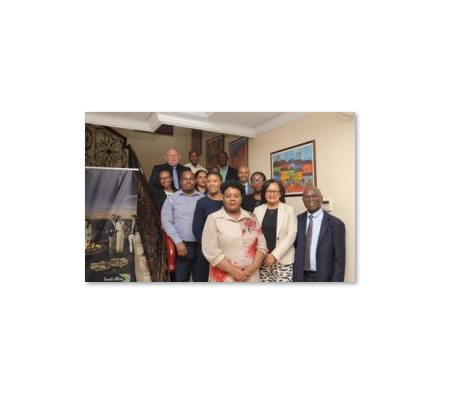
The South African delegation includes representatives from the Department of Justice and Constitutional Development, Department of International Relations and Cooperation, South African Police Service, Special Investigating Unit, National Prosecuting Authority and Legal Aid South Africa.
That multi-agency representation reflects the reality that criminal justice extends beyond policing.
Investigations need prosecutors capable of taking cases to court, international cooperation can be required to obtain evidence or pursue suspects abroad, and financial or corruption investigations can involve specialist agencies and institutions.
The digital environment is also placing new pressure on justice systems.
Technology has created opportunities for faster communication and economic activity, but it can also allow criminals to operate across borders, conceal financial transactions or target victims without being physically present in the same country.
The Congress is therefore placing the digital age at the centre of discussions about the future of crime prevention and criminal justice.
The programme includes plenary meetings, a high-level segment, thematic discussions, workshops and other engagements designed to move international cooperation from broad commitments towards practical implementation.
South Africa’s Justice Department said the gathering is also expected to consider an Abu Dhabi Declaration intended to guide international cooperation on crime prevention and criminal justice during the years following the Congress.
For countries dealing with criminal networks that operate internationally, agreements reached through forums such as the UN Crime Congress can influence how information is exchanged, how investigations are coordinated and how governments respond to emerging forms of crime.
Kubayi is expected to participate in high-level engagements during the gathering as South Africa contributes to discussions on strengthening criminal justice cooperation.
The wider challenge is ensuring that international agreements ultimately improve what happens at national level.
For communities, effective criminal justice cooperation can affect whether organised crime networks are disrupted, whether stolen or illicit money can be traced, whether perpetrators operating across borders are investigated and whether justice institutions have the tools required to respond to rapidly changing forms of crime.
The Congress also places crime prevention within the broader Sustainable Development Goals, recognising that safety, accountable institutions and access to justice contribute to social and economic development.
For South Africa, the engagement provides another platform to strengthen relationships between its justice institutions and their international counterparts while participating in the development of future global criminal-justice frameworks.
The measure of success, however, will ultimately be whether international cooperation translates into stronger investigations, more effective justice systems and greater protection for communities affected by crime.
