
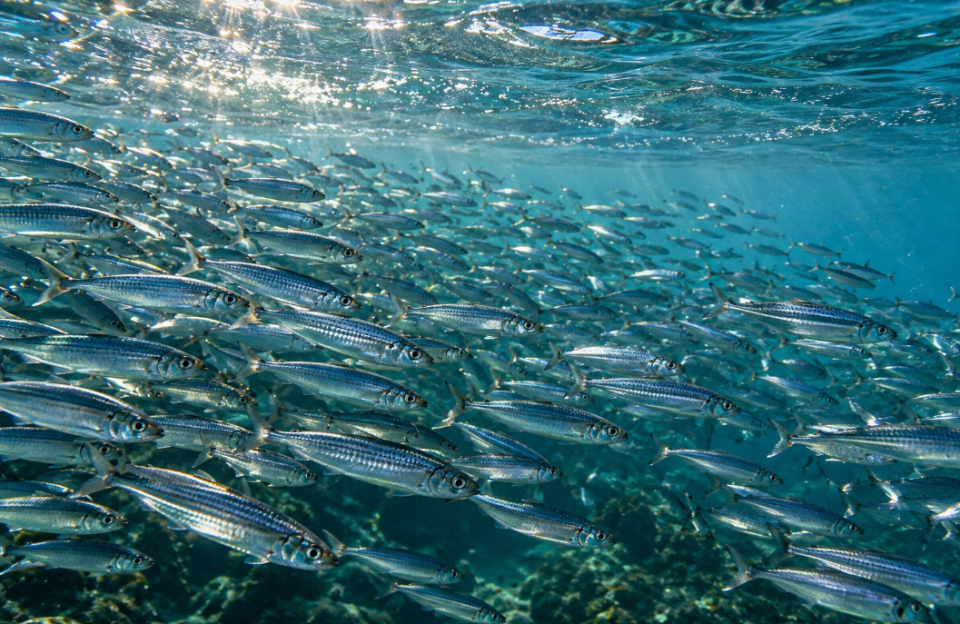
South Africa is strengthening monitoring and temporarily limiting sardine catches as scientists work to protect fish stocks following an unusual mortality event along parts of the coastline.
The Department of Forestry, Fisheries and the Environment (DFFE) has implemented precautionary recommendations from its Small Pelagic Scientific Working Group while research continues into the extent and potential impact of the event.
Laboratory testing has identified pilchard herpesvirus (PHV) in affected sardines from the Western Cape and Gqeberha area, giving scientists an important lead in understanding what has happened and informing the response.
The virus is currently considered the most likely primary cause of the mortality. Testing has not supported harmful algae or the marine biotoxins screened for as the primary cause, although environmental conditions may have contributed additional stress.
Rather than closing the sardine fishery completely, scientists have recommended a temporary precautionary limitation on catches while more information is collected.
Available evidence currently does not indicate that the mortality has reduced the sardine population sufficiently to justify a complete fishery closure.
The approach is intended to balance protection of an important marine resource with the livelihoods and economic activity supported by the sardine fishing industry.
Monitoring has expanded across affected coastal areas since the first reports emerged in the Western Cape in late July.
Reports subsequently extended along the southern Cape towards Gqeberha, East London and parts of the northern Wild Coast. Similar strandings have also been reported in Namibia, although scientists have not yet established whether they are connected to the South African event.
The DFFE is now working with Namibia to test sardine samples for PHV, adding a regional dimension to the scientific response.
Collaboration also includes provincial and local authorities, the South African Institute for Aquatic Biodiversity, Rhodes University, the fishing industry and other institutions involved in reporting, sampling and monitoring.
Importantly, no further reports of dead or dying sardines have been received since 3 September, while no strandings have been reported along the KwaZulu-Natal coast. Monitoring is continuing and authorities are not yet treating the event as concluded.
The next major step will be the October-November hydroacoustic survey, which is expected to provide the first post-event estimate of sardine biomass and distribution.
That information will help scientists establish more accurately how the sardine population has been affected and inform decisions about the management of the resource.
Current mortality estimates remain uncertain because scientists do not know how many fish may have sunk to the seabed, while estimates based on visible fish concentrations require assumptions about density and the extent of affected areas.
The department is also drawing lessons from PHV-associated sardine mortality events in Australia while recognising that South African conditions are different and require locally generated scientific evidence.
For consumers, the DFFE has emphasised that PHV is not known to infect people and that the event does not provide grounds for avoiding commercially produced canned sardines processed under regulatory oversight.
Members of the public are, however, advised not to collect, eat, use as bait or feed to animals any dead or dying sardines found on beaches or near the shore.
The continuing response places science, monitoring and precautionary fisheries management at the centre of efforts to understand the event while protecting South Africa’s sardine stocks and the communities and industries that depend on them.
