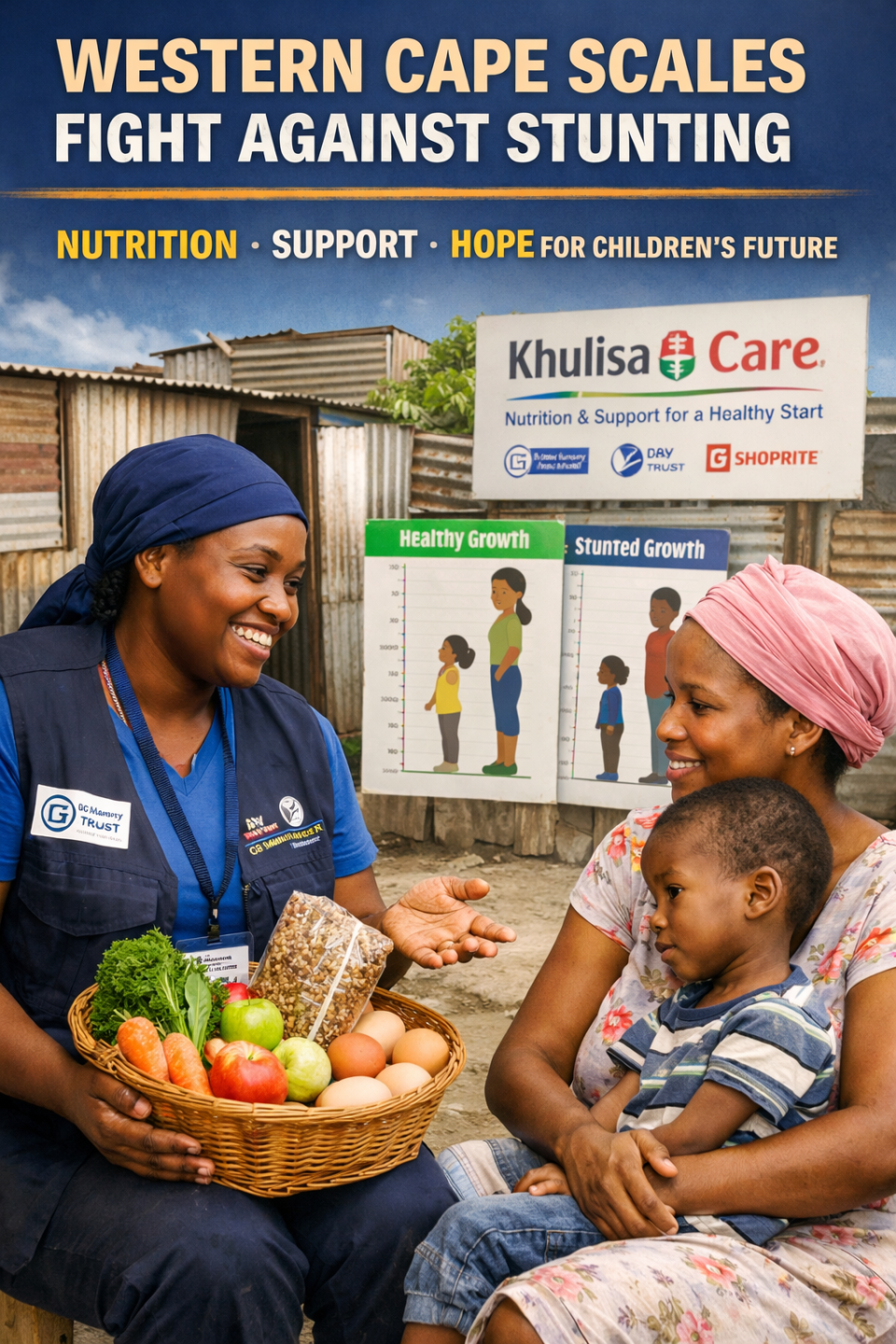
Child stunting continues trapping South African children in lifelong inequality, but targeted nutrition partnerships in Western Cape are showing early signs of measurable intervention success.
Stunting remains one of South Africa’s most urgent but under-recognised social crises, silently shaping the future of millions of children. The condition, caused by chronic malnutrition during early development, permanently affects brain growth, educational outcomes and future earning potential, reinforcing intergenerational poverty.
The Western Cape Government has welcomed renewed national focus on tackling child stunting, following its inclusion as a priority during the State of the Nation Address. The province has already begun piloting a collaborative intervention designed to address malnutrition during the critical first 1,000 days of life — the window when brain and physical development are most vulnerable.
In 2025, the Western Cape Department of Health and Wellness launched Khulisa Care, a pilot programme implemented in partnership with the DG Murray Trust and Shoprite. The initiative targets underweight pregnant women, mothers at risk of delivering low-birth-weight babies, and infants already born underweight.
The programme provides food vouchers alongside sustained support from trained community health workers, addressing both immediate nutritional needs and longer-term care. Already, 897 women in Breede Valley, Khayelitsha and Mitchells Plain are enrolled, offering early evidence that integrated nutrition and care models can improve outcomes when delivered at community level.
Western Cape Minister of Health and Wellness, Mireille Wenger, said addressing stunting requires urgency, evidence and sustained collaboration.
“Ending child stunting in South Africa will require evidence, partnership and urgency,” she said. “Through Khulisa Care, we are testing a model that combines nutrition and care in the earliest stages of life, and we are already learning important lessons from our communities and healthcare teams.”
Premier Alan Winde emphasised that scaling effective interventions quickly will be essential to national progress.
“To defeat child stunting, we must combine our resources, knowledge and partnerships across government and society,” he said. “By learning from what works and scaling effective interventions, we can secure a healthier future for our children.”
For Social TV, the Khulisa Care programme reflects a broader shift toward prevention-based social innovation — where government, civil society and the private sector align around measurable outcomes. By intervening early, the initiative addresses not only immediate health risks, but the long-term social and economic consequences of childhood malnutrition.
Stunting is not just a health issue. It is a development issue, an education issue and an economic issue. Addressing it requires sustained investment, shared responsibility and scalable solutions that reach the country’s most vulnerable children before inequality becomes permanent.