
Global leaders are being urged to protect Antarctica’s Southern Ocean as governments prepare for critical negotiations that could shape marine conservation through 2030 and beyond worldwide.
Antarctica2030, a global movement bringing together leaders around the protection of Antarctica’s Southern Ocean, is calling on governments meeting in Hobart from 19 to 30 October to approve the proposed Antarctic Peninsula Marine Protected Area and establish a clear pathway towards wider Southern Ocean protection.
The meeting of the Commission for the Conservation of Antarctic Marine Living Resources, known as CCAMLR, comes at a critical moment for international ocean conservation.
CCAMLR has already established marine protected areas around the South Orkney Islands and in the Ross Sea region. However, no new protected areas have been designated since 2016, despite a commitment made in 2009 to establish a representative system of MPAs.
Antarctica2030 believes renewed political engagement has created an opportunity for progress.
“Antarctica has a long history of successful international cooperation that offers a basis for further progress,” said José María Figueres, Chair of Antarctica2030.
“Sustained political support can help negotiators work towards consensus. Our discussions suggest there may be hope for an agreement, but much will depend on continued engagement by leaders in the lead-up to Hobart and during the meeting itself.”
The Southern Ocean plays an important role far beyond Antarctica. It helps regulate the global climate, stores carbon and influences ocean circulation across the planet.
Its ecosystems are also deeply interconnected.
Penguins, seals, whales, krill and other species depend on habitats ranging from coastal feeding areas to deep-ocean ecosystems. Protecting representative sections of those environments is intended to preserve food webs and ecological processes while reducing additional pressures on species already experiencing environmental change.
The most immediate proposal is the Antarctic Peninsula Marine Protected Area, also known as the Domain 1 MPA.
Covering approximately 456,000 square kilometres, the proposed protected area includes feeding and breeding grounds supporting penguins, seals and migratory whales. Krill sits at the centre of much of this ecosystem, providing a critical food source for numerous species.
At the same time, warming temperatures and changing sea-ice conditions are altering the region while commercial fishing activity becomes increasingly concentrated in some of the same waters.
The proposed MPA would create greater protection for important feeding and nursery areas.
Its General Protection Zone would prohibit krill fishing within coastal foraging ranges used by nesting and breeding animals. Fishing in another designated area would remain possible but would be subject to seasonal closures alongside existing CCAMLR management measures.
Antarctica2030 argues that marine protection and responsible fisheries management need to advance together.
The krill fishery reached its catch threshold months early for the second consecutive year in 2026, adding urgency to discussions about how fishing should be distributed and monitored across the region.
A proposed precautionary management approach would divide fishing activity across spatial management units, further separate catches between winter and summer seasons and strengthen ecosystem monitoring, including observation of whale populations.
Any future increase in catches, Antarctica2030 argues, should be gradual, science-based and supported by strong monitoring while progressing alongside expansion of the wider marine protected area system.
“Protecting nursery and feeding habitats serves an ecological purpose that catch limits alone cannot fulfil. Likewise, the MPA alone will not provide the precautionary management needed for sustainable krill fishery,” said Antarctica2030’s Zac Goldsmith.
“Governments have the means to conserve these areas while managing fishing responsibly. The outcome must safeguard the wider ecosystem and put those protections fully into effect.”
The debate also illustrates a wider ESG challenge: how economic activity, scientific evidence and environmental responsibility can be balanced before ecological damage becomes irreversible.
Marine protected areas represent one mechanism for doing that by limiting certain forms of human pressure while maintaining areas where scientists can monitor environmental change over time.
Beyond the Antarctic Peninsula, proposals covering East Antarctica and the Weddell Sea could significantly expand the area receiving formal conservation protection.
The Weddell Sea is particularly important because researchers have identified it as a potential climate refuge for cold-adapted wildlife. Its relatively limited human activity also provides scientists with an opportunity to study changing environmental conditions against a less disturbed baseline.
Together, the outstanding protected-area proposals would cover millions of square kilometres and contribute towards the international ambition of protecting 30% of the world’s ocean by 2030.
For Antarctica2030, however, approval of one protected area cannot become the end of the process.
The organisation wants governments at CCAMLR-45 to agree on a credible political roadmap for completing a representative Southern Ocean MPA network by 2030.
“Agreeing the Antarctic Peninsula MPA should establish momentum that carries through to the full Southern Ocean,” said Antarctica2030’s Monica Medina.
“Governments should leave Hobart with a common understanding of the decisions that follow to complete representative Southern Ocean protection, and how to deliver them by 2030. That would be a lasting contribution to ocean conservation and effective multilateral cooperation.”
The Hobart negotiations will therefore test more than governments’ willingness to establish another protected area.
They will also test whether international cooperation can translate long-standing conservation commitments into measurable action at a time when climate change, fishing pressure and biodiversity loss are placing increasing demands on some of the planet’s most important ecosystems.
Protecting Antarctica’s Southern Ocean is ultimately not only about preserving a remote wilderness. Its climate systems, biodiversity and oceans are connected to the environmental security of the wider planet.
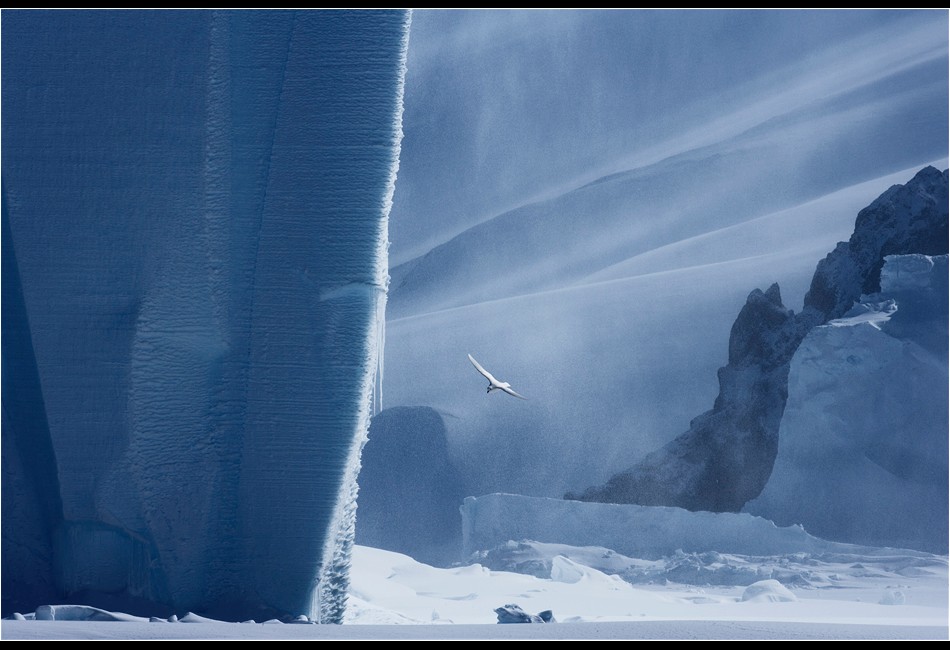
Photo © John Weller
