
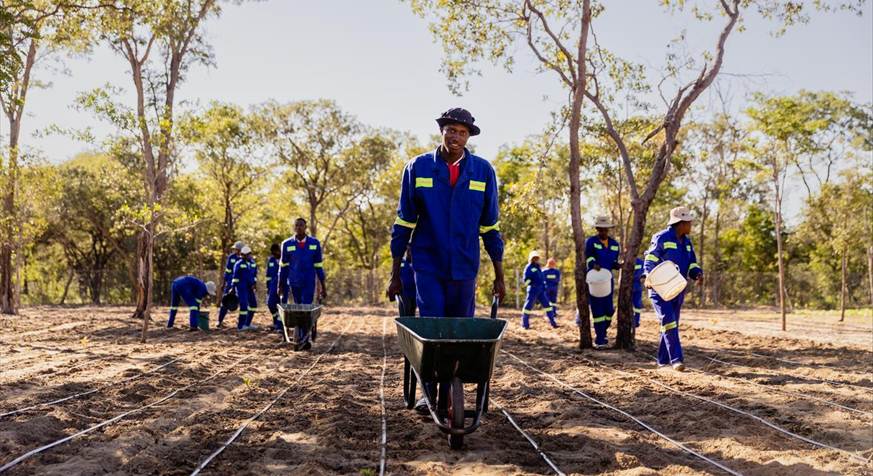
The Wilderness Impact Challenge offers USD 100,000 for solutions strengthening Africa’s conservation economy, advancing shared value through social innovation, community empowerment and sustainable ESG-aligned development.
The Wilderness Impact Challenge has issued its final call for entries, offering USD 100,000 to innovators developing practical solutions that strengthen Africa’s conservation economy while supporting sustainable livelihoods and environmental protection.
The initiative reflects a growing shift towards shared value models that recognise conservation as both an environmental and economic opportunity. By supporting solutions that improve livelihoods while protecting natural ecosystems, the Challenge aligns closely with ESG priorities, social innovation principles and long-term sustainable development goals.
Wilderness is inviting entrepreneurs, engineers, community leaders, system-builders and organisations from around the world to submit scalable solutions that enable stronger coexistence between people and nature.
According to Vincent Shacks, Wilderness Group Head of Impact, conservation outcomes improve when local communities are meaningfully included in economic opportunities linked to environmental protection.
“What we have found up to now, is that conservation progresses further when it is economically meaningful for the people closest to it. This edition highlights practical, empowerment-driven solutions that help local businesses grow, improve livelihoods, and integrate conservation into local economic systems. When communities gain opportunities through conservation, both people and wilderness benefit.”
The 2026 edition of the Challenge is anchored in Wilderness’ three core Impact pillars: Educate, Empower and Protect. This year’s focus on the Empower pillar emphasises solutions that address underlying economic barriers within conservation landscapes.
The conservation economy refers to the network of people, enterprises, skills and systems that support the protection of natural environments while enabling dignified and sustainable livelihoods. This includes value chains, services, technologies and financial mechanisms that allow communities to benefit directly from conservation-compatible activities.
By encouraging locally grounded models that can scale across Africa, the Challenge highlights how social innovation can unlock new forms of economic participation linked to biodiversity protection.
Charles Douglas, Chairman of the Wilderness Trust, highlighted the importance of developing solutions that are practical and sustainable in real-world environments.
“Conservation must evolve in step with the realities on the ground. By championing empowerment and economic participation, this Challenge provides a platform for ideas that are not only innovative, but implementable and built to last.”
The Challenge is open to individuals, teams and organisations whose ideas address real economic constraints in conservation areas where Wilderness operates. While solutions must demonstrate local relevance, successful concepts should also have the potential to expand across different conservation regions in Africa.
Increasingly, conservation initiatives are recognising that environmental protection and economic inclusion are interconnected. When communities derive direct economic benefit from protecting natural ecosystems, incentives align to support long-term sustainability.
Programmes such as the Wilderness Impact Challenge illustrate how CSI, CSR and ESG initiatives can move beyond traditional philanthropy towards models that enable participation, enterprise development and systemic change.
With the deadline of 30 April 2026 approaching, the Challenge represents an opportunity for innovators to contribute to building a more resilient conservation economy that benefits both people and nature.
More information about the Challenge and submission details can be found at www.wildernesstrust.com/impact-challenge.
