
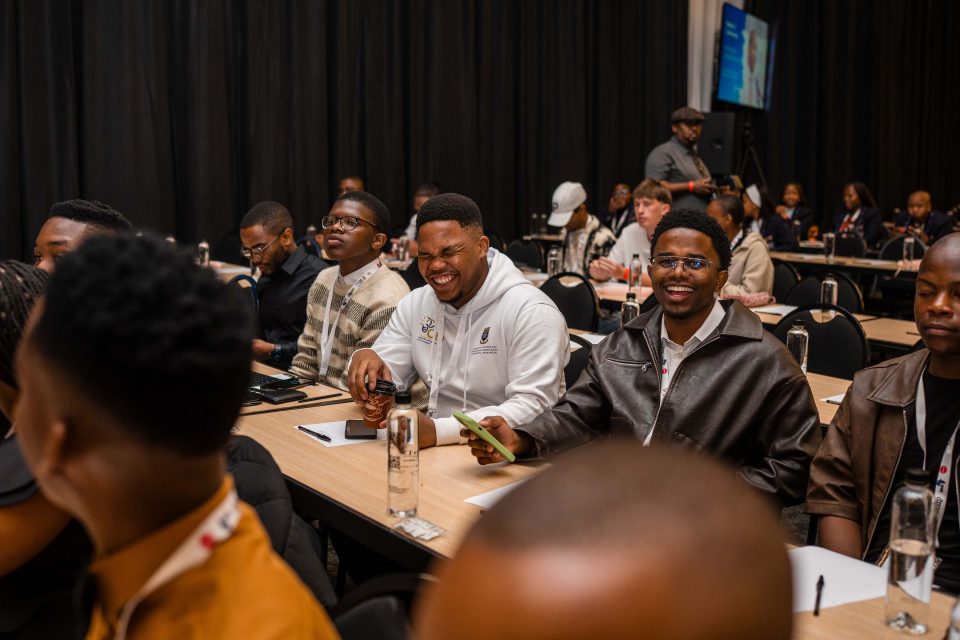
Fifteen UWC students joined more than 500 participants at the EDHE Absa Studentpreneurs Indaba, building practical skills to turn entrepreneurial ideas into sustainable businesses and jobs.
The University of the Western Cape delegation joined student entrepreneurs, university leaders, investors and entrepreneurship support professionals at the national gathering at Birchwood Hotel and OR Tambo Conference Centre in Boksburg.
Hosted by Universities South Africa through the Entrepreneurship Development in Higher Education programme, the 2026 Indaba brought together participants representing South Africa’s 26 public universities under the theme “Entrepreneurship in Action: From Vision to Implementation. From Policy to Impact.”
UWC was represented by 12 student entrepreneurs and three business consultants from its Economic Activation Office, with the delegation supported through the university’s Centre for Entrepreneurship and Innovation.
The gathering placed particular emphasis on moving student entrepreneurship beyond ideas and into businesses capable of generating income, solving problems and creating employment.
Students participated in workshops, hackathons, pitch festivals and networking sessions that provided opportunities to test ideas, engage investors and learn from other young entrepreneurs.
For universities, the growing focus on entrepreneurship reflects a wider challenge facing graduates entering a labour market where traditional employment opportunities remain constrained.
EDHE Director Dr Edwell Gumbo has argued that universities need to help students take the knowledge developed through higher education beyond lecture rooms and apply it to real-world opportunities.
That approach was reflected throughout the Indaba, where students were encouraged to view entrepreneurship not simply as an alternative career path, but as a way of creating economic opportunities for themselves and others.
Professor Thandi Lewin, Deputy Director-General for the University Education Branch at the Department of Higher Education and Training, said South Africa’s socio-economic circumstances have made the entrepreneurship agenda increasingly urgent.
She challenged the higher education sector to move from encouraging entrepreneurial ideas towards building sustainable enterprises capable of creating value, employment and opportunities.
For UWC student entrepreneur Nomqhele Hlongwane, founder of Umqhele Naturals, one of the strongest benefits of the gathering was discovering a wider community of young people facing similar business challenges.
“This Indaba has made me realise that I am not the only entrepreneur facing the issues that I am facing. There are many more others too, and that gives me a sense of community,” Hlongwane said.
That community can be particularly valuable for student entrepreneurs attempting to build businesses while simultaneously completing their studies.
Access to other founders, mentors, investors and entrepreneurship professionals gives students an opportunity to learn from challenges already experienced by others and identify resources that may help their ventures grow.
UWC master’s student Mihlali Ngubo said the experience reinforced the importance of moving beyond ideas and taking practical steps towards implementation.
“The Studentpreneurs Indaba has made me realise that, yes, we all have brilliant, big ideas, but what distinguishes entrepreneurs from ordinary people is action — taking a step,” Ngubo said.
She also highlighted the range of resources available to young entrepreneurs who know where to look for business support.
“I have also realised that there are many resources out there waiting for us to leverage them and move our ideas from our minds to reality,” she said.
Through UWC’s Centre for Entrepreneurship and Innovation and Economic Activation Office, students can access business development support, networks and opportunities intended to help move ventures from early concepts towards sustainable enterprises.
The wider EDHE programme is designed to strengthen entrepreneurship across South Africa’s higher education sector and increase the ability of students to participate economically through businesses of their own.
For the UWC delegation, the Indaba provided more than exposure to entrepreneurship theory. It created an environment where students could pitch, network, learn and see how ideas developed on campus could become businesses operating beyond it.
The longer-term opportunity is to ensure that more young South Africans leave universities equipped not only to compete for existing jobs, but also with the skills, networks and confidence required to create new ones.
