
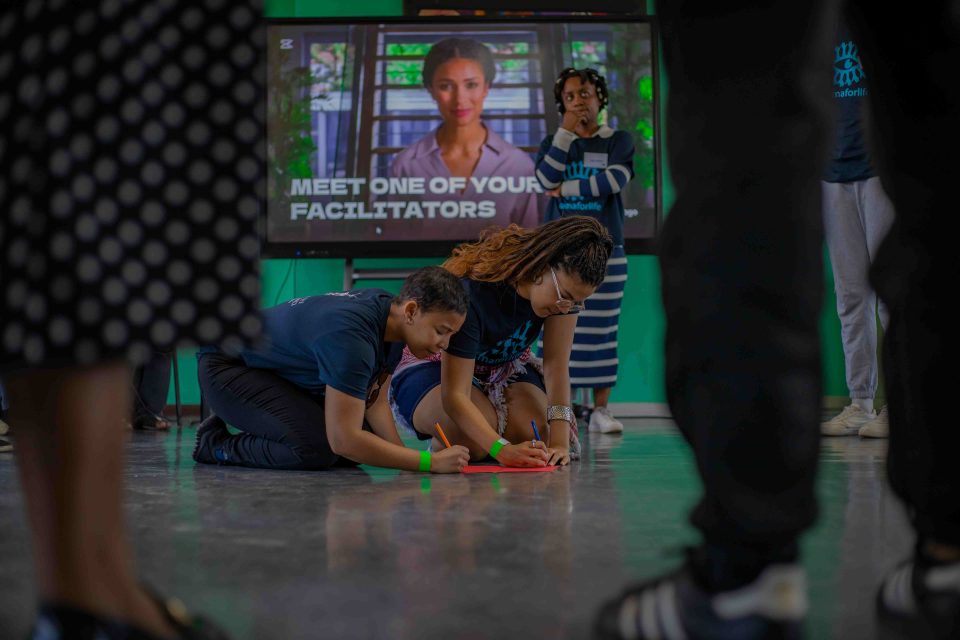
Drama for Life is bringing young people, artists, academics and activists together to explore South Africa’s history while creating space for dialogue, participation and future action.
The University of the Witwatersrand programme will host its 18th Drama for Life Conference and Festival, Footsteps on Fire: Reclaiming the Legacy of 1976 to Now, on 22 and 23 September 2026.
The two-day gathering combines performance, research, public dialogue, workshops, screenings and site-specific experiences to explore what one generation inherits from another — and what young South Africans choose to do with that inheritance.
The festival takes place during a year marking three significant South African anniversaries: 70 years since the 1956 Women’s March, 50 years since the 1976 Soweto Uprising and 30 years since the adoption of the Constitution in 1996. These milestones are also being recognised nationally during 2026.
Rather than approaching these moments purely as historical commemorations, Footsteps on Fire will use them as starting points for conversations about contemporary South Africa and the country young people want to help shape.
At the centre of the programme is a question: how does a generation inherit, perform and live its history — and how does it choose to carry that history forward?
“Footsteps on Fire is not about romanticising the past,” said Conference and Festival Director Ross-Junior Hlongwane.
“It is about understanding what we have inherited, interrogating where we are now and creating space for young people, artists, researchers and communities to imagine what comes next.”
Drama for Life will use theatre and performance as tools for participation rather than entertainment alone, creating spaces where lived experiences, memory and different perspectives can become part of wider public conversations.
Themes will include youth agency and intergenerational dialogue, democratic and constitutional participation, memory and identity, grief and healing, performance as social intervention and the exploration of alternative futures.
The programme is expected to include Mahlatsi Makgonyana, Refiloe Mohaoli, Mbali Baduza, Princy Mthombeni, Dr Ayanda Khala, Dr Mmatshilo Motsei, Themba Mkhoma, Irfan Mangera and former Cabinet member and founding COSATU Secretary General Jay Naidoo.
Day One, themed Memory, Protest and Democratic Practice, will combine performances, dialogues and site-responsive experiences.
The programme includes an opening plenary, The Fire We Inherited, research presentations, workshops and the flagship panel discussion, From Soweto to Tomorrow: What Are Young People Inheriting?
Participants will explore women’s resistance, education as resistance, the legacy of the 1976 uprising and contemporary questions around constitutional democracy.
The historical context is significant: the 1976 uprising began with students opposing Afrikaans as a medium of instruction and the apartheid system of Bantu Education. Fifty years later, the anniversary is being used nationally as an opportunity to consider the experiences and opportunities of today’s young people.
Day Two, Healing, Belonging and Collective Futures, shifts the focus more deliberately towards present-day participation and future possibilities.
Sessions include Performing Democracy: The Constitution, Power and the People and Theatre as Living Protest: Can Art Still Change the World?
The conference has deliberately moved away from a conventional format in which delegates spend two days primarily listening to speakers.
Instead, Together Moments will bring participants into shared conversations and performances, while Separate Moments allow them to choose between workshops, research presentations, screenings, performances and other experiences.
The approach is designed to make participation itself part of the event, with delegates encouraged to talk, listen, move, question and engage with one another.
For Drama for Life, the format builds on nearly two decades of work connecting applied arts, education, research, performance, healing and social transformation.
Its 18th Conference and Festival will ultimately use South Africa’s historical milestones not only to examine what previous generations left behind, but to ask what today’s young people intend to leave for those who follow.
