
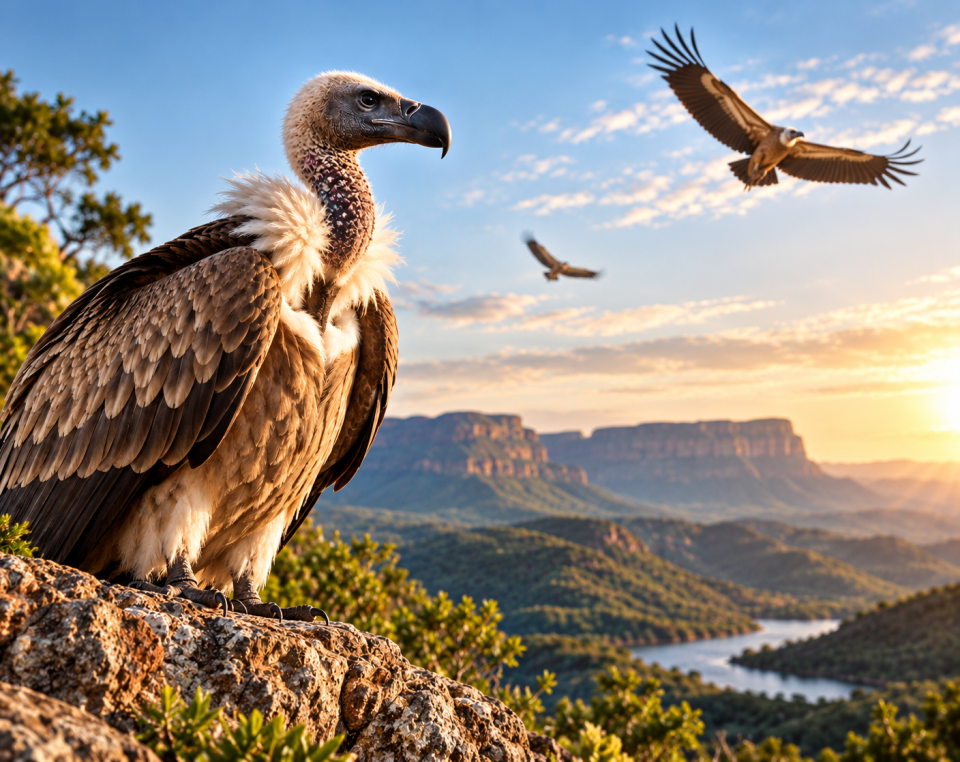
South Africa is strengthening vulture conservation through a national partnership bringing government, conservation organisations, researchers, communities and the private sector together to protect threatened species.
The Department of Forestry, Fisheries and the Environment is using International Vulture Awareness Day on 5 September to highlight the collaborative work underway to secure the future of the country’s vultures.
At the centre of these efforts is the National Multi-Species Vulture Biodiversity Management Plan, published in 2024 as a coordinated framework for addressing threats, improving scientific knowledge and supporting the recovery of vulture populations.
Implementation is coordinated through the National Vulture Task Force, bringing together expertise and resources from different sectors rather than placing responsibility for conservation on a single organisation.
Partners include the Endangered Wildlife Trust, BirdLife South Africa, VulPro, Wildlife ACT, the South African National Biodiversity Institute, Eskom and provincial conservation authorities, alongside local communities.
Their work includes preventing and responding to wildlife poisoning, monitoring vulture populations, raising public awareness and strengthening South Africa’s capacity to respond to incidents threatening the birds.
The collaborative model is particularly important because the threats facing vultures extend across several areas of society and infrastructure.
South Africa is home to nine vulture species, seven of which breed in the country. Many remain threatened by poisoning, habitat loss, illegal harvesting for trade and traditional medicine, as well as collisions and electrocutions associated with energy infrastructure.
Protecting these species also delivers wider environmental benefits.
Vultures provide an important natural ecosystem service by rapidly consuming animal carcasses. This helps remove decomposing material from the environment and can reduce opportunities for disease to spread.
The Biodiversity Management Plan is intended to strengthen cooperation around these interconnected challenges while creating a longer-term national approach to vulture recovery and conservation.
Community participation forms part of that response, particularly in identifying threats, reporting poisoning incidents and building greater understanding of the ecological value of vultures.
DFFE is encouraging South Africans to support these efforts by reporting suspected poisoning incidents, promoting responsible environmental stewardship and helping raise awareness about the role vultures play in healthy ecosystems.
International Vulture Awareness Day provides an opportunity to build public support around that work, while reinforcing the importance of partnerships between government, conservation organisations, businesses, scientists and communities in protecting South Africa’s biodiversity.
