Fifty South African women entrepreneurs and government leaders have gained practical digital skills to help them use artificial intelligence and emerging technologies in businesses and public services.
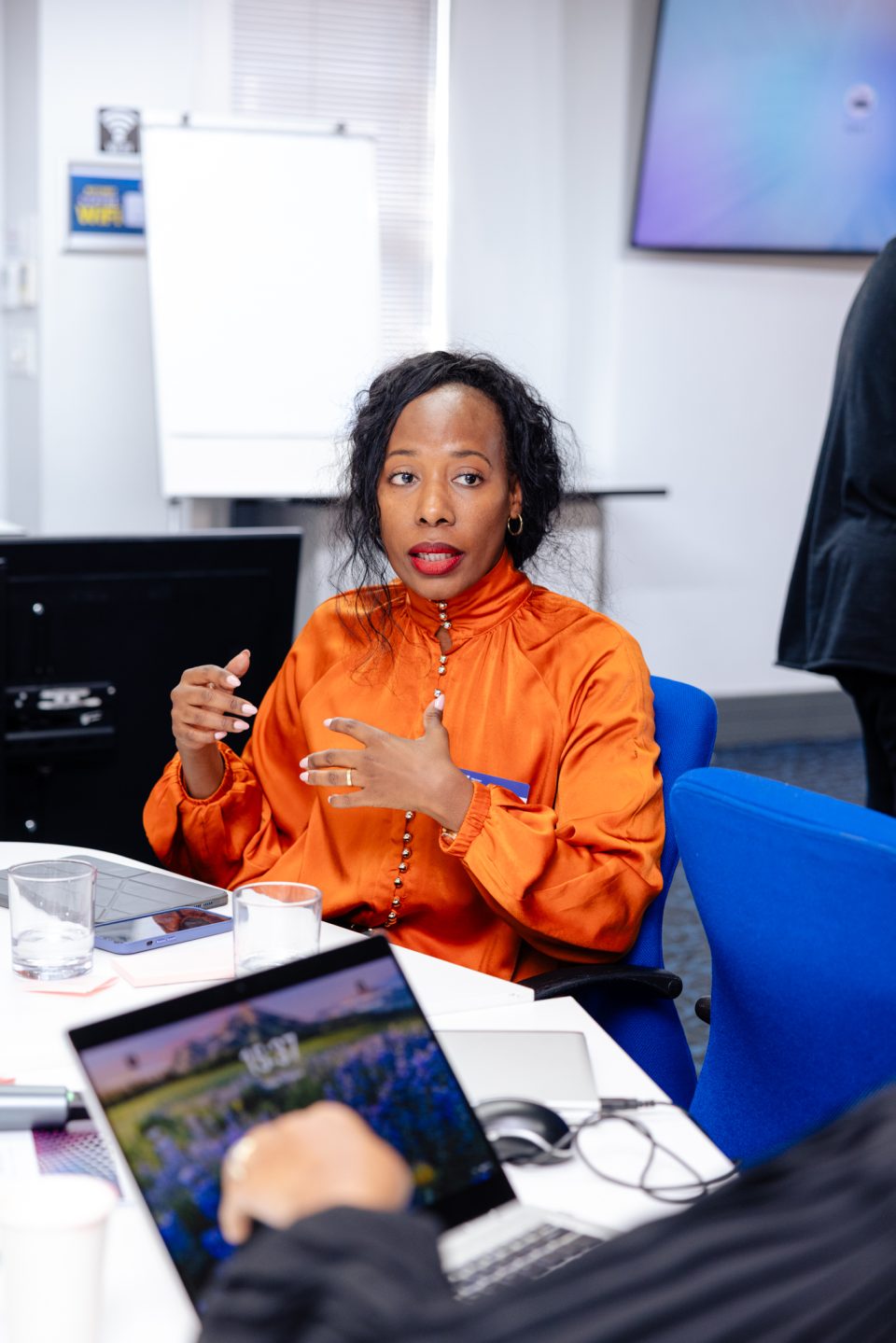
Huawei South Africa completed the sixth edition of its Women in Tech Digital Skills Training Programme, providing participants with three days of practical exposure to AI, cloud computing, 5G-Advanced and other emerging technologies.
Held under the theme “HERabytes: Small Business. Big Intelligence,” the programme brought together women business owners and representatives from the Department of Communications and Digital Technologies, Department of Employment and Labour and Department of Women, Youth and Persons with Disabilities.
Rather than approaching AI as technology participants simply needed to understand, the programme focused on how women could apply it to improve productivity, solve business challenges and identify new opportunities.
Toby Shapshak from Stuff opened the programme with a discussion on the evolution of AI and its changing role in the workplace.
“We have to remember that we are the human intelligence and that AI is a parrot,” he said. “It may be impressive, game-changing technology, but we’re the reason it exists, and we’re still in the driving seat.”
Brand builder Heidi Brauer of heidibeeee&co explored how intuition and data can work together when entrepreneurs and leaders make decisions.
“What is it about a group of women in a room? There’s an energy, a sense of possibility, a feeling of being connected and powerful, quite unlike any other group,” she said.
“I enjoyed sharing my thoughts on the importance of balancing facts with feels, and intuition with numbers, and tackling the challenges we face bringing this balance into a data-obsessed world.”
Participants then moved from understanding the technology to exploring how it could be applied within smaller businesses.
Huawei Principal Marketing Manager Nimrod Smit demonstrated the potential applications of 5G-Advanced, including its ability to support faster real-time services and decision-making.
“When we move on to 5.5G, there’s actually new capabilities that will be unlocked within the core and radio networks of your mobile service provider. Speeds will increase tenfold from a normal 5G network,” Smit said.
He said combining 5.5G with AI could allow businesses to turn data into automated action significantly faster.
Siphiwe Matore, Senior Technical Business Development Manager at Huawei, demonstrated how cloud computing can enable smaller businesses to increase capacity as demand grows and scale back when it falls.
She also encouraged participants to understand the technology behind the services they adopt, including where their business data is stored.
“Don’t think about, ‘Let me adopt cloud.’ Think, ‘What am I trying to achieve?’” Matore said.
Participants were also shown how AI could reduce the amount of time spent on repetitive administrative work.
Huawei Principal Training Engineer George Okello used recruitment as an example, demonstrating how AI could help shortlist CVs according to predetermined requirements while leaving final decisions with people.
“AI doesn’t do all the work, but it helps you do your real work faster,” he said.
The final day at Henley Business School Africa expanded the programme beyond technical skills to examine leadership in an increasingly AI-driven economy.
Led by Henley Business School Africa Executive Fellow Louise Claassen, participants explored blockchain, the Internet of Things, drones, geospatial mapping, satellite imagery, digital twins, extended reality and cloud technologies.
“Businesses need to move quickly with AI while also putting the right guardrails in place to use it safely,” Claassen said.
“There are two sides to this: understanding what AI can make possible, and being clear about the risks and responsibilities that come with it.”
The programme also placed digital inclusion and women’s economic participation within the broader conversation about technology.
Delivering the closing keynote on behalf of Acting Director-General Dr Pravina Shukla-Elay, Dineo Mmako from the Department of Women, Youth and Persons with Disabilities argued that digital access alone was insufficient.
“Digital inclusion cannot mean that everybody has a smartphone while ownership of the digital economy remains concentrated elsewhere,” Mmako said.
“Participation must eventually mean ownership. It must mean intellectual property, enterprises, procurement, investment, and it must mean that women occupy the positions where decisions about technology and capital are made.”
For participants, the programme provided opportunities to identify immediate applications within their organisations.
Simmi Pillay from the Department of Women, Youth and Persons with Disabilities said the training expanded her understanding of how AI could improve the use of data in service delivery.
Tarien Brown of Rich Rewards said the technology could strengthen business decision-making without replacing human judgement, while Zama-Africa Mkhize from boutique media agency House of Coco said her business was already integrating AI across proposal development, implementation and production processes.
Huawei Senior PR Manager for Media and Communications Vanashree Govender said the programme ultimately aims to address women’s participation in the digital economy.
“Our goal and vision are to reduce the digital gender divide and also encourage a digital-first mindset for entrepreneurs,” Govender said.
Now in its sixth edition, the initiative is increasingly focused on moving women beyond basic digital participation towards the practical skills needed to use emerging technologies within businesses, government and leadership.