
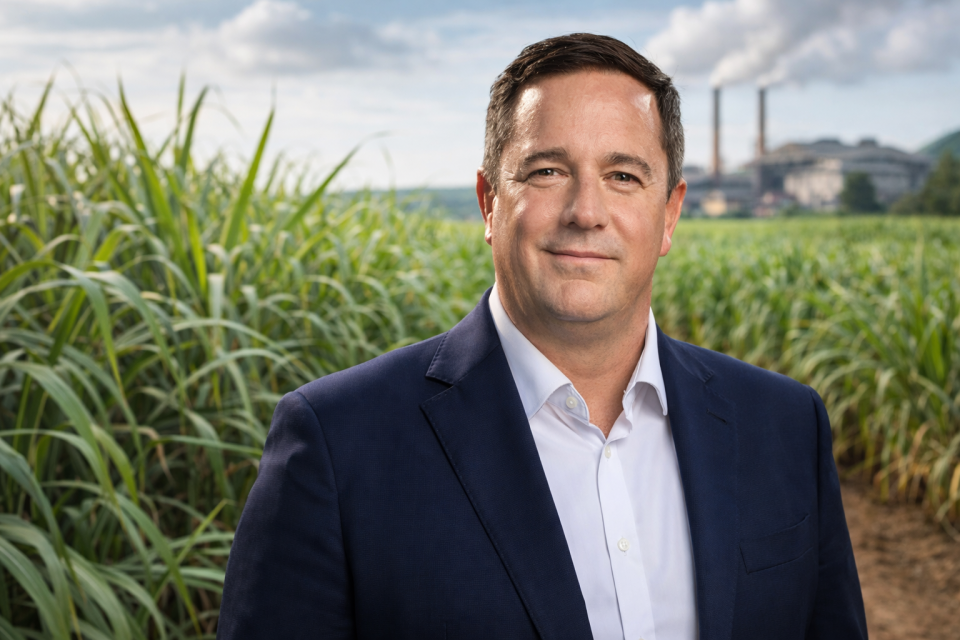
Government has intensified efforts to safeguard rural livelihoods and ensure continuity in South Africa’s sugar production sector, recognising its critical role in sustaining jobs and local economies.
The Department of Agriculture is engaging with industry stakeholders following the liquidation of Tongaat Hulett, focusing on securing operational certainty ahead of the April crushing season. The intervention aims to protect growers, workers and communities whose livelihoods depend on the sector.
Approximately 15 500 delivering growers and between 35 000 and 40 000 people rely directly on the sugar supply chain. Maintaining production continuity is essential to preserving income, supporting rural stability and protecting economic participation across affected regions.
“This is not a theoretical risk, it is an immediate economic threat to rural communities,” Minister Steenhuisen said. “If the mills do not open, farmers cannot harvest, workers cannot earn an income, and entire local economies will stall. The longer uncertainty persists, the greater the damage becomes.”
Government has emphasised the urgency of unlocking practical solutions that allow growers to continue harvesting and mills to operate, ensuring that agricultural production timelines are not disrupted.
“Government’s concern is simple: the crop cannot wait. Agricultural production works on biological timelines, not legal or financial ones. An intervention that unlocks funding and restores operational certainty is urgently required to protect both production and jobs.”
The sugar industry remains a strategic contributor to South Africa’s rural economy, supporting employment, strengthening food value chains, and enabling economic activity in vulnerable communities.
“Our objective is not to intervene in commercial negotiations, but to ensure that a viable path forward exists so that growers can deliver cane, mills can operate, and workers can earn an income. The immediate priority must be keeping the season alive.”
The Department of Agriculture confirmed it will continue facilitating engagement with stakeholders to secure continuity, reinforcing its commitment to protecting jobs, sustaining production and supporting rural economic resilience.
Government has intensified efforts to safeguard rural livelihoods and ensure continuity in South Africa’s sugar production sector, recognising its critical role in sustaining jobs and local economies.
The Department of Agriculture is engaging with industry stakeholders following the liquidation of Tongaat Hulett, focusing on securing operational certainty ahead of the April crushing season. The intervention aims to protect growers, workers and communities whose livelihoods depend on the sector.
Approximately 15 500 delivering growers and between 35 000 and 40 000 people rely directly on the sugar supply chain. Maintaining production continuity is essential to preserving income, supporting rural stability and protecting economic participation across affected regions.
“This is not a theoretical risk, it is an immediate economic threat to rural communities,” Minister Steenhuisen said. “If the mills do not open, farmers cannot harvest, workers cannot earn an income, and entire local economies will stall. The longer uncertainty persists, the greater the damage becomes.”
Government has emphasised the urgency of unlocking practical solutions that allow growers to continue harvesting and mills to operate, ensuring that agricultural production timelines are not disrupted.
“Government’s concern is simple: the crop cannot wait. Agricultural production works on biological timelines, not legal or financial ones. An intervention that unlocks funding and restores operational certainty is urgently required to protect both production and jobs.”
The sugar industry remains a strategic contributor to South Africa’s rural economy, supporting employment, strengthening food value chains, and enabling economic activity in vulnerable communities.
“Our objective is not to intervene in commercial negotiations, but to ensure that a viable path forward exists so that growers can deliver cane, mills can operate, and workers can earn an income. The immediate priority must be keeping the season alive.”
The Department of Agriculture confirmed it will continue facilitating engagement with stakeholders to secure continuity, reinforcing its commitment to protecting jobs, sustaining production and supporting rural economic resilience.
