
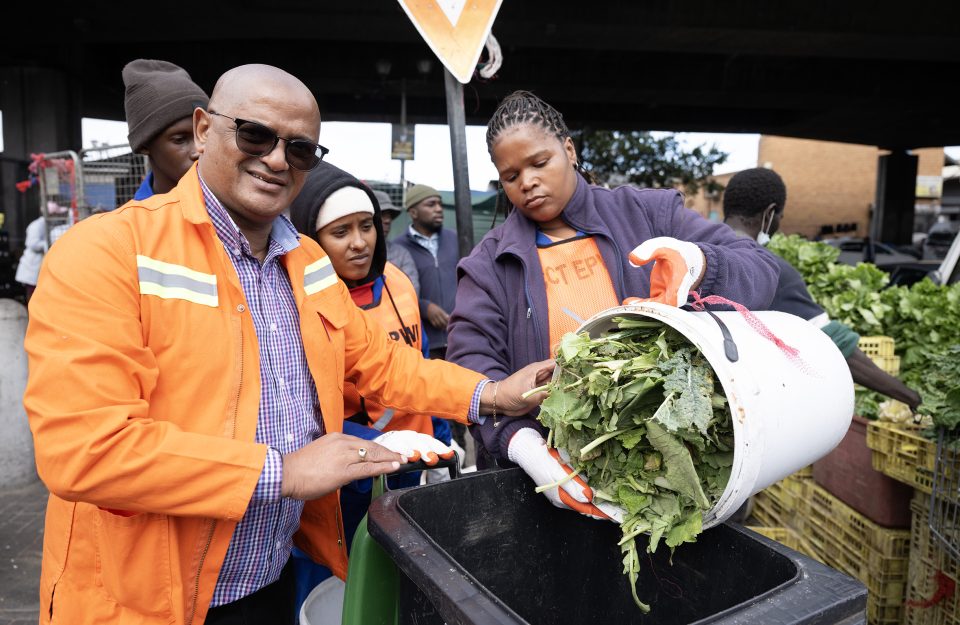
The festive season brings families together around shared meals, celebration, and abundance. But it also brings an often-overlooked challenge: food waste. The good news is that across the city, households are stepping up, supported by practical, people-centred solutions from local government.
The City’s Urban Waste Management Directorate has been rolling out food-waste minimisation programmes, including compost containers and community-based initiatives that help residents manage organic waste more responsibly. These efforts form a key part of the City’s broader waste-reduction strategy, and the response from communities has been encouraging.
Why reducing food waste really matters
Reducing food and organic waste is not just about managing household bins. It is about protecting the environment and securing a sustainable future for the city.
Provincial Government has banned organic waste from landfills, making household participation essential for the City to remain compliant with this directive. When food decomposes in landfills, it releases harmful greenhouse gases that contribute to climate change. Food waste also accelerates the depletion of landfill space, increasing pressure to establish new landfill sites.
Composting at home helps reduce the amount of waste in household bins, extends the lifespan of landfills, reduces rodents and pests, and turns organic waste into nutrient-rich compost that supports plant growth and healthier soil.
Community action that’s making a difference
This year, the City distributed compost bins to more than 10 communities, empowering residents to use food scraps and spoiled food more responsibly. The positive uptake of the programme shows that when communities are given the right tools and support, sustainable habits can quickly take root. Composting, however, is just one of several ways households can reduce food waste.
Simple, practical ways to reduce food waste at home
Planning meals around the number of guests expected and buying only what is needed can significantly reduce waste. Buying fruit and vegetables closer to when they will be used, storing food correctly to extend freshness, and dishing only what can be eaten also make a difference. Leftovers can be transformed into new meals rather than being thrown away, helping households save money while reducing waste.
Change starts at home
“It’s easy to feel that our individual household efforts don’t make a difference, but real change begins in our homes,” said the City’s Mayoral Committee Member for Urban Waste Management, Alderman Grant Twigg.
He encouraged residents celebrating this festive season to be mindful of how they consume and dispose of food, adding that reducing organic waste sent to landfills benefits the entire city.
As families and communities come together to celebrate, the festive season offers an opportunity to rethink how food is valued. By wasting less and caring more, residents can play a meaningful role in building a cleaner, healthier, and more sustainable city for everyone.
