
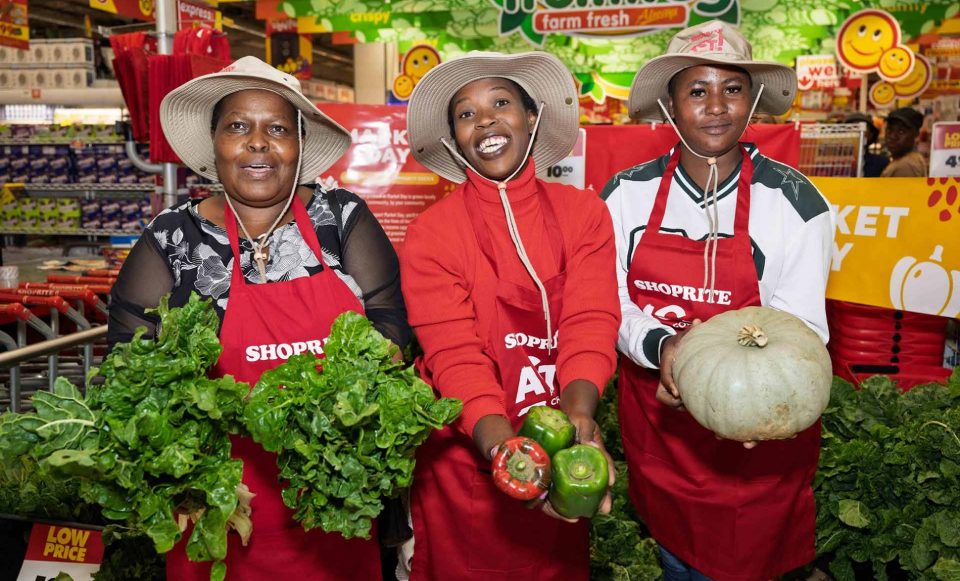
Shoprite has turned supermarket aisles into a platform for social impact, with its latest Market Day giving small-scale farmers and community gardeners the chance to sell their fresh produce directly to customers. For many of the nearly 60 participating gardens across Southern Africa, the event was more than a sales opportunity — it was a test of resilience, a lesson in retail, and a vital boost to local food security.
The initiative is part of Shoprite’s Act For Change programme, which supports more than 4 000 home gardens and over 260 community food gardens across South Africa, Lesotho, Botswana and Namibia. By creating access to mainstream retail spaces, the supermarket giant is helping emerging farmers move beyond subsistence, offering exposure to real-world markets and strengthening their role in local economies.
Participants described the day as a turning point. For the Siyaphambili Women’s Hub in KwaZulu-Natal, where 50 women have worked their land for three years, Market Day offered a chance to prove that small gardens can feed families while generating income. In the Free State, members of the Rural Women Assembly Agroecological Hub said the platform brought visibility and recognition to elderly gardeners whose work sustains households and supports vulnerable neighbours.
By blending business with community development, Shoprite is showing how retail giants can address food insecurity while building economic opportunity. For customers, the event meant fresher produce and a direct connection to the people growing it. For farmers, it was evidence that their work matters — not only at home, but at scale.
Market Day is now a reminder that social investment need not be confined to donations or sponsorships: it can be built into everyday business models, turning commerce into a tool for resilience.
