
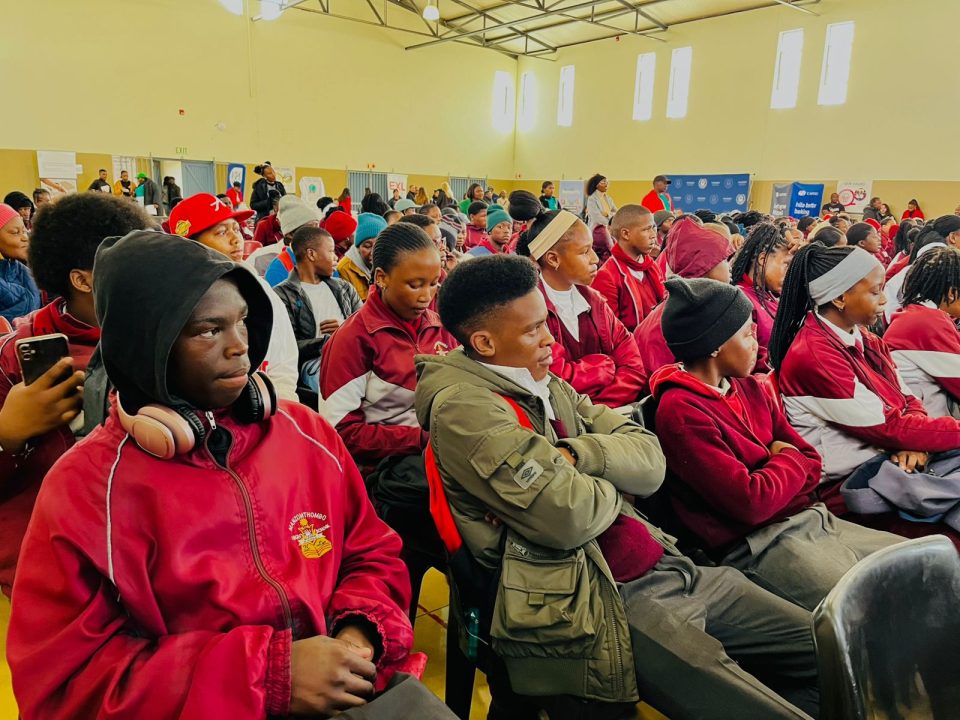
Afrika Tikkun’s latest matric results are showing what becomes possible when long-term support, strategic partnerships and dignity-led investment intersect to unlock potential in South Africa’s most underserved communities.
The organisation’s Matric Class of 2025 has achieved a 94% pass rate through its after-school programme, outperforming the national average by more than six percentage points and improving on its own 2024 results. For communities facing entrenched poverty, food insecurity and under-resourced schools, the outcomes represent more than academic success — they signal a working model for breaking generational inequality.
Beyond the overall pass rate, 61% of learners qualified for Bachelor’s degree admission, maintaining last year’s benchmark despite a national decline in Bachelor-level passes. Across 1 061 learners from Afrika Tikkun centres and outreach partner schools in Alexandra, Diepsloot, Orange Farm, Braamfontein and Mfuleni, the Class of 2025 achieved 443 distinctions, almost doubling the previous year’s total.
Behind the numbers are young people who have navigated daily instability while still meeting the demands of one of South Africa’s most challenging academic milestones. Afrika Tikkun’s leadership emphasises that these results are made possible by refusing to treat education in isolation from lived realities.
The organisation’s Cradle-to-Career 360° model provides continuous support from early childhood through to post-matric pathways. Alongside academic tutoring, learners receive access to psychosocial services, nutrition support, leadership development, arts and sport programmes, career guidance and family interventions — the stabilising factors that make sustained learning possible.
Afrika Tikkun says this holistic approach recognises a fundamental truth often overlooked in education policy: learning cannot thrive where hunger, trauma and household crisis go unaddressed. By creating safe, structured and supportive environments, the programme helps learners build both academic capability and personal resilience.
Support does not end at matric. High-performing learners transition into Afrika Tikkun’s Skills Development Programme, where bursaries funded by corporate partners enable access to tertiary education or specialised training aligned with labour market needs. This creates a direct bridge between education outcomes and economic participation.
The organisation positions its 2025 results as evidence of shared value rather than charity. Corporate partners, donors, NGOs and government each play distinct roles, but impact is amplified when efforts align around long-term youth development rather than short-term interventions.
With youth unemployment exceeding 60%, Afrika Tikkun argues that its model functions as both social response and economic strategy. Government sets the policy framework, business provides investment and access to opportunity, and civil society delivers on-the-ground expertise and continuity. When these sectors collaborate, young people are equipped not only to pass exams, but to contribute meaningfully to South Africa’s future workforce.
As the Class of 2025 prepares to enter universities, colleges and workplaces, their achievements stand as proof that coordinated investment, sustained support and collaboration can turn potential into progress — even in the most challenging environments.
