
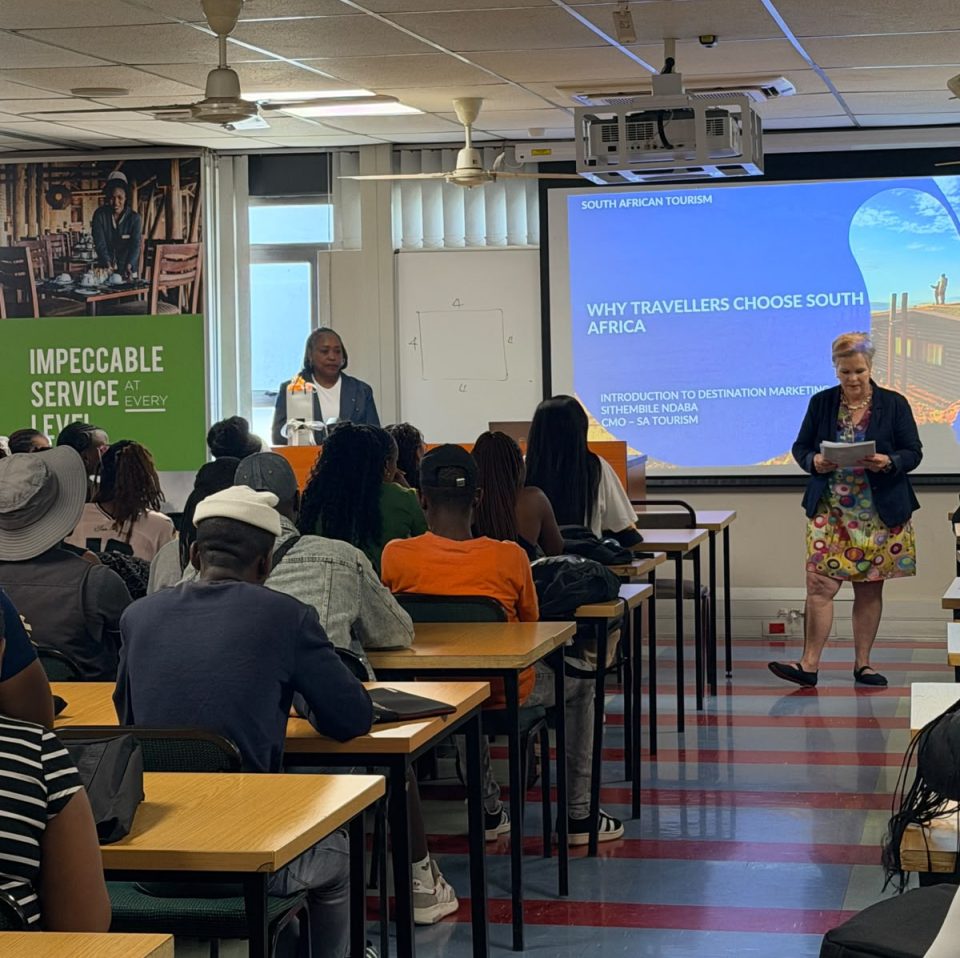
A tourism masterclass gave UJ students direct access to industry insight, helping them understand destination marketing, traveller expectations and their future role in South Africa’s tourism.
South African Tourism Chief Marketing Officer Sithembile Ndaba joined students at the University of Johannesburg’s School of Tourism and Hospitality for an industry masterclass presented in collaboration with Social TV.
The session centred on the question, “What makes travellers choose South Africa?” and gave students an opportunity to look beyond traditional destination advertising to understand the decisions and experiences that influence how visitors choose, experience and remember the country.
Ndaba took students through the thinking behind positioning South Africa in an increasingly competitive international tourism market, including how changing traveller expectations, research, digital platforms and content influence destination choice.
“Travellers may be drawn to South Africa by our landscapes, wildlife and culture, but their decision is also shaped by how clearly we communicate our value and how consistently we deliver on the promise,” Ndaba said.
“Tourism is ultimately about people. The welcome, knowledge, creativity and service offered by our tourism professionals determine how visitors experience and remember our country.”
The masterclass encouraged students to consider the entire visitor journey, from the moment a traveller discovers South Africa online to booking, arrival, accommodation, activities and interactions with people working across the tourism sector.
For students preparing for careers in hospitality and tourism, the discussion demonstrated that South Africa’s tourism brand is shaped not only by national marketing campaigns but by thousands of individual experiences delivered across the country.
A hotel employee, chef, tour operator, entrepreneur, destination marketer or experience designer can all influence whether visitors recommend South Africa or choose to return.
Ndaba encouraged students to see themselves as active participants in the future of the tourism industry rather than simply as graduates preparing to enter the workforce.
“Students entering this industry are becoming custodians of the South African experience,” she said.
“Their ideas, standards and understanding of the modern traveller will influence whether visitors choose South Africa, recommend it and return.”
The engagement also exposed students to the wide range of opportunities available across tourism, including hospitality, marketing, events, technology, travel services, entrepreneurship and experience development.
For the University of Johannesburg, bringing industry professionals into the learning environment provides students with an opportunity to connect academic theory with the decisions businesses and tourism organisations make every day.
Professor Nicola Wakelin-Theron of UJ’s School of Tourism and Hospitality said practical industry case studies play an important role in preparing students for their future careers.
“Our students need opportunities to connect what they learn in the classroom with the decisions, challenges and opportunities shaping the tourism industry,” Wakelin-Theron said.
“Practical case studies help them understand how strategy is applied, how destinations compete and how their future roles can contribute to the growth of South African tourism.”
She said direct engagement with industry leaders makes learning more immediate and relevant for students preparing to enter the sector.
The masterclass also highlighted the importance of young professionals entering tourism with an understanding of technology and changing consumer behaviour.
Travellers increasingly discover destinations through digital content, social media, online reviews and booking platforms, making digital knowledge an important part of tourism careers.
At the same time, technology cannot replace the human experience that ultimately determines how visitors feel about a destination.
For Social TV, the engagement forms part of an effort to connect young people with professionals who can provide practical knowledge, career insight and a clearer understanding of how industries operate.
“The value of an engagement like this lies in giving students access to the thinking behind the industry,” said Social TV’s Samm Marshall.
“When young people hear directly from leaders who are shaping major national brands, they gain context, confidence and a stronger understanding of where they can contribute.”
The masterclass demonstrated how collaboration between universities, industry and national institutions can help prepare students for a tourism sector that continues to evolve.
For the students, the session was ultimately about more than understanding how South Africa attracts visitors.
It was about recognising that the next generation of tourism professionals will help determine the experiences those visitors have once they arrive.
