
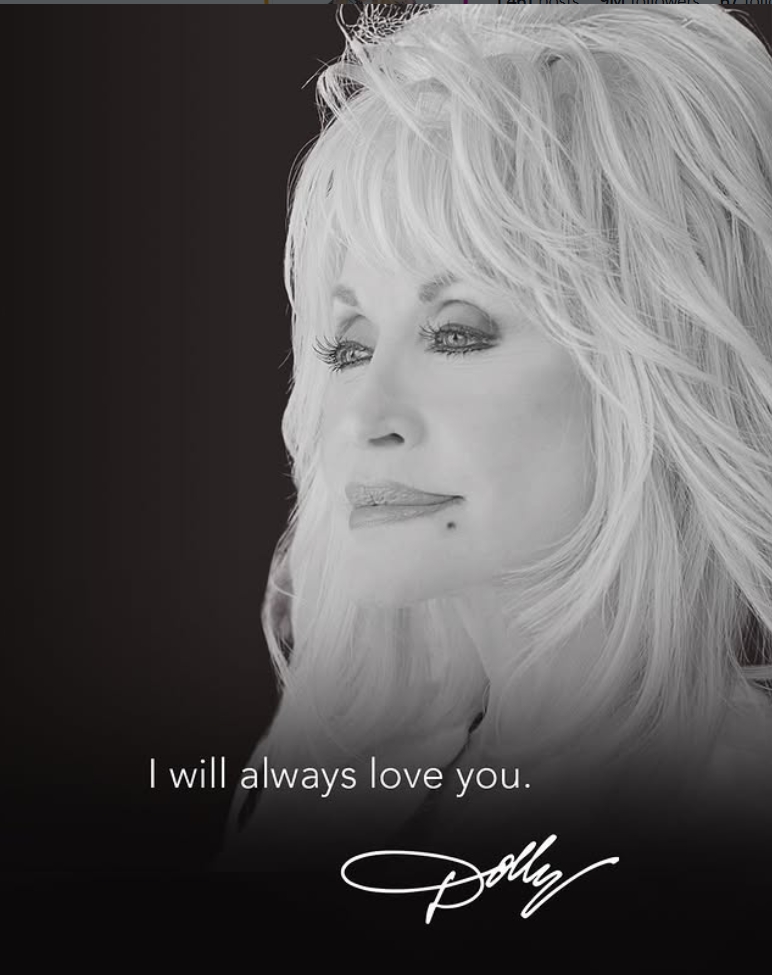
Dolly Parton, who died on Tuesday at the age of 80, leaves behind a philanthropic legacy that placed books in children’s homes, supported families after disasters and helped fund medical research.
For more than half a century, Parton was one of the most recognisable figures in American music. She wrote thousands of songs, built businesses, starred in films and became an international cultural figure, but much of the wealth and influence generated by that career was also directed towards education, healthcare, disaster relief and conservation.
Her philanthropy was closely connected to her upbringing in Sevier County, Tennessee, where she grew up as one of 12 children. Her father, Robert Lee Parton, could not read or write, something Parton would later identify as the inspiration for one of the largest projects of her life.
In 1988, she established the Dollywood Foundation, initially focusing on improving educational outcomes for children in her home county.
One of its first major initiatives was the Buddy Program, launched in 1990 as the community struggled with high school dropout rates. Seventh- and eighth-grade students partnered with a “buddy”, and Parton promised each participating student $500 if they successfully graduated.
According to the Dollywood Foundation, dropout rates among the participating classes fell from 35% to 6%.
Five years later, Parton created the programme that would become synonymous with her philanthropy.
Dolly Parton’s Imagination Library began in Sevier County in 1995, inspired by her father’s inability to read and write. Registered children receive a free, age-appropriate book every month from birth until their fifth birthday, meaning a child enrolled from birth can build a collection of 60 books before starting school.
What began as a programme for children in one Tennessee community expanded through partnerships with local organisations and eventually became an international initiative operating across five countries.
The programme grew without requiring families to pay for the books. The Dollywood Foundation covers overhead costs and negotiates book pricing, while local partners raise funding for books and delivery in their communities.
By 2003, the Imagination Library had mailed its one-millionth book. In the years that followed, that figure grew into hundreds of millions of books distributed to children around the world.
Parton also expanded her educational giving through scholarships.
The Dolly Parton Scholarship was established in 2000 and today provides a $15,000 scholarship to a graduating senior at each of five high schools in Sevier County.
Her support for her home community extended into healthcare.
In 2007, Parton helped raise $1 million for the Sevier County Hospital Birthing Unit, leading to the creation of the Dolly Parton Center for Women’s Services and expanding healthcare resources for women and families in the region.
Nine years later, disaster brought another major intervention.
Wildfires swept through Sevier County in November 2016, destroying homes and leaving families facing the difficult process of rebuilding their lives.
Parton asked the Dollywood Foundation to establish the My People Fund.
The programme provided direct financial assistance to families whose primary homes had been lost in the fires. More than $12 million was ultimately distributed, while additional support provided scholarships for graduating students whose homes had been destroyed.
Her businesses and entertainment connections also became part of the response, helping mobilise money and public attention for the affected communities.
That pattern continued when other disasters struck.
Following Hurricane Helene in 2024, Parton and brands associated with her contributed more than $2 million towards relief and recovery efforts in North Carolina and Tennessee.
Her philanthropy also reached medical science.
During the COVID-19 pandemic, Parton donated $1 million to Vanderbilt University Medical Center to support coronavirus research. The contribution became particularly notable when research supported by her donation was connected to work that contributed to the development of Moderna’s COVID-19 vaccine.
Her relationship with Vanderbilt extended beyond the pandemic.
Parton supported paediatric healthcare and cancer programmes associated with Monroe Carell Jr. Children’s Hospital at Vanderbilt and later made another $1 million contribution towards paediatric infectious-disease research.
Her involvement in children’s healthcare was personal as well as philanthropic, following treatment received by her niece for leukaemia.
Parton’s environmental work developed through another long-running partnership.
In 1990, the American Eagle Foundation entered into a partnership with the Dollywood Company to develop an eagle education, breeding and rehabilitation centre.
Eagle Mountain Sanctuary opened at Dollywood the following year, with Parton participating in the opening ceremony and the release of a bald eagle.
For 35 years, the partnership supported bald eagle conservation, environmental education and the care of birds that could not be returned to the wild.
In August 2026, just days before Parton’s death, the American Eagle Foundation and Dollywood announced the next phase of that relationship, with the sanctuary’s non-releasable bald eagles moving permanently to the foundation’s conservation campus in Kodak, Tennessee, while educational activities at Dollywood continue.
Parton herself also participated directly in conservation activities. In 2008, she helped release a rescued bald eaglet named Liberty after it had been rehabilitated by the American Eagle Foundation.
Her support touched a wide network of organisations and programmes over the decades, including the Dollywood Foundation, Dolly Parton’s Imagination Library, the Buddy Program, the Dolly Parton Scholarship, My People Fund, Vanderbilt University Medical Center, Monroe Carell Jr. Children’s Hospital at Vanderbilt, the American Eagle Foundation and healthcare institutions in her home region.
Her businesses, including Dollywood, were frequently part of that work rather than existing separately from it.
Proceeds from her 2017 children’s album I Believe in You, for example, benefited the Dollywood Foundation and its educational programmes.
The scale of the Imagination Library became particularly significant because Parton created something capable of continuing beyond her own lifetime.
Thousands of local organisations became partners. Governments, funders and early-childhood organisations became involved. Books continued arriving at children’s homes every month whether their parents could afford them or not.
The same longevity can be seen elsewhere in her work.
Scholarships established decades ago continue to be awarded. The foundation she created in 1988 continues operating. Healthcare facilities continue serving families. Conservation organisations continue caring for wildlife.
And communities that experienced devastating disasters received assistance at moments when rebuilding appeared overwhelming.
Parton’s career generated enormous wealth, but her philanthropy was rarely defined simply by writing a cheque.
She built programmes.
She attached her businesses to causes.
She brought other organisations into partnerships.
She responded when communities close to her were in trouble.
And she repeatedly returned to education, particularly childhood literacy.
The origin of her largest initiative remained remarkably personal.
A daughter who grew up watching her father live without the ability to read created a programme so other children could grow up surrounded by books.
More than three decades after the first children received those books in Tennessee, Dolly Parton’s Imagination Library continues delivering them around the world.
Her music will remain part of her legacy.
So will Dollywood, the films, the costumes and the songs that made her one of America’s most recognisable entertainers.
But in millions of homes, there is another reminder of Dolly Parton.
It is a book with a child’s name on it.
Watch our Social Impact Spotlight explainer exploring Dolly Parton’s extraordinary philanthropic legacy: Dolly Parton Gave Away More Than You Knew
