
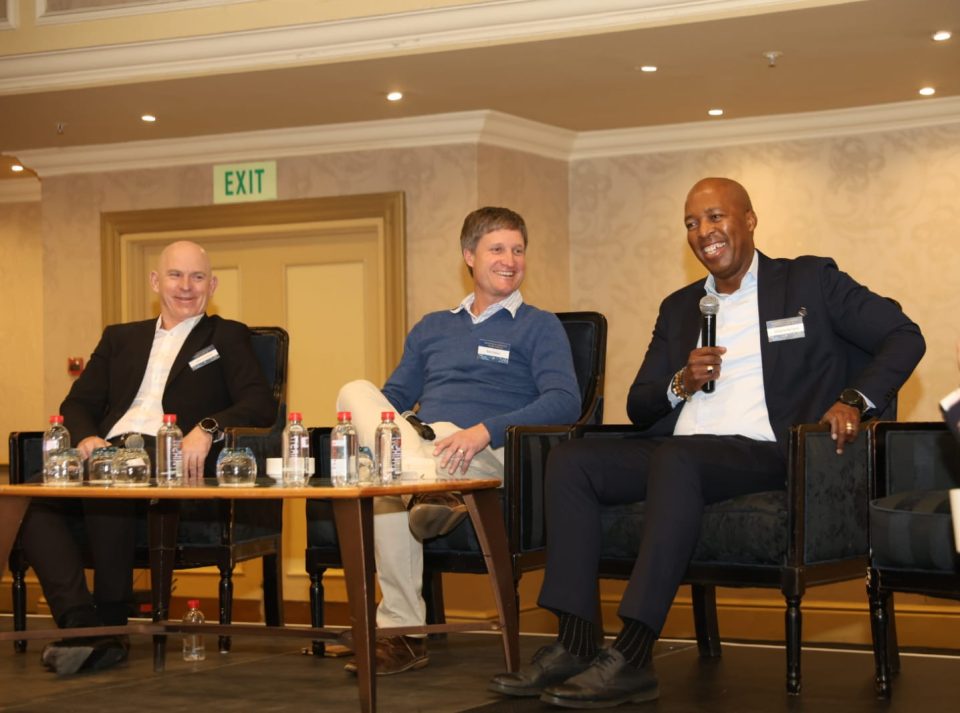
The world is changing faster than the hospitality industry can plan for it, and the businesses that will thrive are the ones that build the agility to adapt, rather than waiting for certainty. This was the central thread running through the fourth annual Hospitality Industry Think Tank, held on 31 July 2026 at Emperors Palace in Johannesburg.
Now firmly established as a flagship gathering for Southern Africa’s tourism value chain, the Think Tank was opened with a keynote address by Johnny Goldberg, Chairman of Global Business Solutions. Goldberg unpacked artificial intelligence, innovation, and the transformation of hospitality, leaving delegates with one enduring message: AI won’t replace your job, but someone using AI will. Five panel discussions followed, bringing together voices from across hotel operations, technology, industry associations, sustainability and youth development.
All proceeds from the day, including the evening’s Oracle-themed Gala Dinner, go toward Touching Dreams, the non-profit company that channels industry support into community empowerment, conservation, and youth employment initiatives, including Reach for a Dream, the Endangered Wildlife Trust, and the Touching Dreams Think Big Academy.
Drawing on the day’s keynote and panel discussions, here are six key takeaways for hospitality and tourism players to consider:
1. Leadership means creating hope and anticipating change
The opening panel, facilitated by Dimitris Manikis from Wyndham Hotels & Resorts, and featuring Johnny Goldberg, Mokwena Morulane from Cresta Hotels, Nick Dickson from Dream Hotels & Resorts, and Jacob Messina from StaynTouch, explored what it takes to lead through uncertainty in an industry evolving at unprecedented pace. The panel agreed that businesses that anticipate change will always be better positioned than those that simply react to it. Leadership was framed as an act of creating hope, even when the road ahead is uncertain. A powerful theme throughout was Ubuntu, the essence of African hospitality. The panellists stressed the importance of showcasing the continent’s unique warmth, strengthening regional collaboration and unlocking the potential of African tourism through authenticity and community.
2. AI is enhancing hospitality, not replacing it – but the industry needs to catch up
Both the keynote and the technology panel returned to a consistent message: people using AI will move ahead of those who aren’t. Johnny Goldberg noted that Artificial General Intelligence may be closer than many realise, yet only a small percentage of hotels currently have an AI strategy in place, underlining the urgency for the industry to catch up. Rather than a threat, delegates heard AI framed as a way to free up time for the human touch that hospitality can’t outsource: more personalised service, better guest insight, and meaningful interactions that build loyalty. Everyone agreed that hospitality is one industry that will always need human interaction, and as AI advances across all industries, it may ultimately give people more time to travel, presenting a huge opportunity for hospitality providers.
On the technology panel, Samantha Williams from Profitroom Ltd., Sarah Marron from Aven Hospitality, Janine Louw from Profitroom Ltd., Jacob Messina from Stayntouch, and Chris Snyman from Dream Hotels & Resorts, explored how AI is also changing how guests discover hotels. They discussed how properties absent from AI-driven recommendations risk losing bookings before a guest even reaches their website. However, the panellists agreed that while discovery earns attention, trust, authentic content and an effortless booking journey are still what convert that shortlist into a booking.
3. Sell the destination, not just the room
With room revenue representing only a fraction of what tourists actually spend, the technology panel challenged hoteliers to think beyond occupancy. They explained that a fully connected guest journey, including spa treatments, dining, tours, and curated local experiences, should be bundled into one seamless booking rather than sold as afterthoughts. Panellists were clear that technology should never add friction: the winning formula is a frictionless, personalised journey built on rich content, authentic reviews, and genuine local flavour. When this is paired with effective change management, staff and guests will adopt new systems rather than resist them.
4. Industry associations are the collective voice the sector needs – if members show up for them
Facilitated by Dave Milne from Peermont Hotels and TBCSA, the associations panel brought together David Frost from SATSA, Michael Hagemann from FEDHASA, Miguel Martins from SASTRA, and Shaun Lamont from VOASA, for a candid conversation about advocacy and collaboration ahead of South Africa’s municipal elections. The panel pointed to visa reform, the Trusted Tour Operator Scheme, destination safety initiatives and international marketing campaigns as proof that when associations work together, rather than in silos, they deliver real progress.
But the panel stressed that membership alone doesn’t create value, and hospitality businesses were challenged to contribute expertise and sit on committees rather than leave the advocacy to others. Stronger public-private partnerships, built on greater transparency and ongoing dialogue with government, were flagged as critical to unlocking the sector’s full potential. The panel also agreed that the industry grows further by “growing the pie rather than fighting over the slices,” and that there needs to be alignment on a single compelling marketing message to attract tourists to South Africa.
5. Resilience starts with data – you can’t manage, insure or fund what you can’t measure
The sustainability panel, facilitated by Dimitri Syrris (Baotree) with Nick Konstandoudakis (SATIB), Deborah O’Connor (BDO), Fabio Nava (CBRE Excellerate), and Carl Coetzee (ERO), moved the climate conversation from principle to practice. Credible ESG data was positioned as the foundation of good decision-making, unlocking access to growing pools of sustainability-linked green finance and enabling more transparent reporting. With floods, droughts and wildfires all increasing, the panel urged operators to shift from reacting to disasters toward proactively preparing for them. They pointed to maintenance, fire prevention and water management as some of the most effective risk mitigation tools available. Just as importantly, the panel reminded delegates that resilience isn’t only a technology problem: training teams and embedding a culture of preparedness matters just as much as the systems put in place. They also highlighted how these risks rarely respect property boundaries, making collaboration with neighbouring properties and local authorities essential.
6. Investing in young people is investing in the industry’s own future
The final panel, facilitated by Chris Godenir from Touching Dreams, turned to the impact the event has on communities. Sponsorships, tickets and donations tied to the Think Tank and its Gala Dinner feed directly into Touching Dreams’ Think Big Academy, the hospitality learnership programme for unemployed South Africans aged 18 to 28. After an initial intake of 20 learners in 2025, the programme has scaled up to place 100 learners into workplaces across the country for its 2026/27 cycle. Nonkululeko Sithole (Dream Hotels & Resorts), Natasha-Lee Shunmugam (Touching Dreams) and Sipho Claassen (Boundless Group) joined current Think Big Academy learners, Mureesha Smith and Lesedi Molefi, on stage to share how the programme has created pathways to education, skills and meaningful employment.
Across all five panels, one thread tied the day together: no single hotel, brand or association can navigate today’s pace of change alone. Whether the challenge is AI, climate risk, increased global uncertainty or youth unemployment, the industry’s best chance of turning disruption into opportunity lies in collaborating across companies, associations and government to grow the sector for everyone.
