
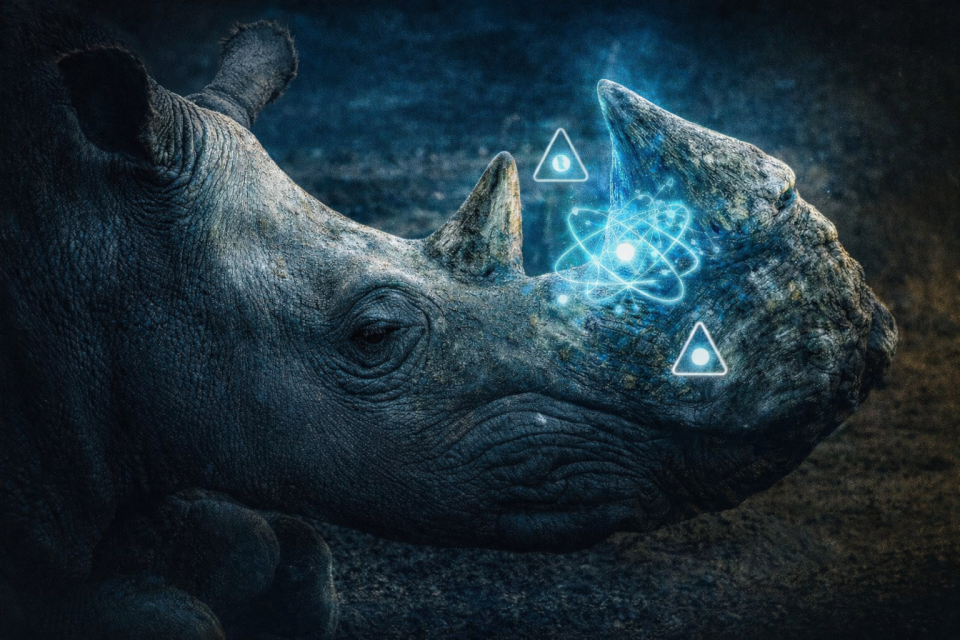
South Africa’s battle against rhino poaching has entered a new technological phase, with nuclear science now being used as a potential deterrent against illegal wildlife trade.
Researchers from the University of the Witwatersrand have developed the RhISOTOPE Project, an initiative that introduces carefully controlled radioactive isotopes into rhino horns. The goal is not to harm the animal, but to make the horn detectable by radiation scanners at airports, harbours, and international border posts.
How the Technology Works
Rhino horns are composed of keratin — the same protein found in human fingernails. Scientists insert trace amounts of radioactive material directly into the horn structure. These isotopes are regulated at levels considered safe for the rhino and safe for conservation personnel, while still being strong enough to trigger detection systems designed to identify illicit radioactive materials.
If a poached horn is transported internationally, radiation detection infrastructure already present in many countries can flag it. This shifts the strategy from chasing poachers in the bush to disrupting trafficking networks further down the supply chain.
From Research to Field Application
The concept began as a research initiative in the early 2020s, with laboratory modelling and safety assessments forming the foundation of the project. By 2024 and 2025, pilot injections had been carried out under controlled conditions, moving the initiative from theoretical exploration to practical implementation.
While some online posts suggest the strategy has already ended poaching, conservation experts emphasise that it is a developing intervention. Wildlife crime networks remain sophisticated and adaptable, and long-term effectiveness will depend on scale, international cooperation, and continued monitoring.
A Strategic Deterrent
The project reflects a broader evolution in conservation strategy. Rather than relying solely on armed patrols and reactive enforcement, it attempts to weaken the economics of illegal trade by making rhino horn harder — and riskier — to move across borders.
If trafficking becomes more detectable and legally perilous, the profitability of poaching may decline. The approach does not replace existing conservation measures but adds a scientific layer to the anti-poaching toolkit.
The Conservation Context
South Africa remains home to the majority of the world’s rhino population. Although poaching figures have fluctuated over the past decade, the threat persists, driven largely by demand in illicit international markets.
The introduction of nuclear tagging signals a new chapter in conservation — one where advanced science is integrated into biodiversity protection efforts.
As the project progresses through further trials and potential expansion, it stands as an example of how innovation is being mobilised in the ongoing effort to safeguard one of Africa’s most iconic species.
