
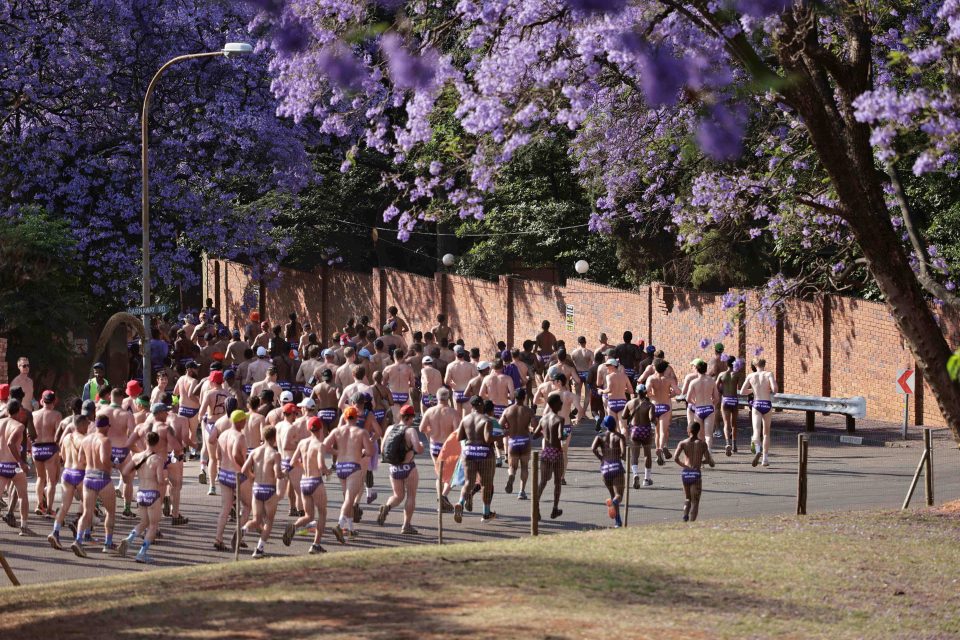
Thousands of South African men will run in purple speedos this October, using visibility, humour and solidarity to promote early detection of male cancers nationwide again.
The 2026 Hollard Daredevil Run takes place on Friday, 23 October, with the main Johannesburg event starting at Zoo Lake at 15:00 and additional runs planned at locations around the country.
Now in its seventeenth year, the annual campaign uses one of South Africa’s most recognisable fundraising images — thousands of men running five kilometres in purple speedos — to start conversations about prostate and testicular cancers.
This year’s campaign carries the tagline “Lekker Balls. Lekker Life”, continuing the event’s deliberately bold approach to subjects that many men still find difficult to discuss openly.
Behind the humour is a straightforward health message: men need to understand their risks, pay attention to changes in their bodies and seek medical advice rather than delaying potentially important checks.
“We know that thousands of men running in purple speedos gets people’s attention. What matters is what we do with that attention,” said Adél Kriel, Hollard South Africa’s Head of Experiential Marketing.
“There is bravery in putting on a purple speedo in public, but behind this bold campaign is a very serious message: know your risks, know your body and don’t put off getting checked. It could save your life.”
Money raised through participation supports CANSA and the Prostate Cancer Foundation, helping fund awareness initiatives, Prostate-Specific Antigen screening and support for patients.
For Hollard, the campaign has grown beyond a once-a-year road run into a platform designed to make men’s health easier to discuss within families, workplaces, universities and communities.
That conversation matters because embarrassment, fear and a reluctance to seek medical attention can prevent men from discussing symptoms or asking questions about their health.
The Daredevil Run attempts to remove some of that discomfort by making the conversation highly visible, deliberately unconventional and collective rather than private.
Thousands of men taking part together also creates what organisers describe as a sense of brotherhood around the campaign, allowing participants to support one another while raising awareness about illnesses that can carry significant emotional and physical consequences.
The event is open to experienced runners and people who simply want to support the cause. Organisers are encouraging colleagues, friends, students and family members to enter together, raise funds and use their participation to begin conversations about men’s health.
“This October, purple is more than a colour. It’s a conversation starter, but its real impact comes when that conversation extends beyond race day into families, workplaces and communities,” Kriel said.
“The more people who take part, the further that message can reach. You don’t have to be a runner. You just have to be willing to show up for this important cause.”
The campaign’s impact also depends on converting awareness into action.
While the sight of runners in purple speedos creates immediate attention, Hollard wants participants and supporters to leave the event more informed about prostate and testicular cancers and more willing to speak to healthcare professionals when they have concerns.
The wider objective is therefore not simply to attract large numbers of participants, but to contribute to a culture in which men’s health is discussed more openly and early detection is understood as a practical part of looking after oneself.
The 2026 Johannesburg run will again take place at Zoo Lake, while details of participating locations elsewhere in South Africa will be communicated through the Daredevil Run’s social media platforms.
With less than a month remaining, organisers say entries and purple speedos are already being taken up as participants prepare for the nationwide event.
For seventeen years, the Daredevil Run has demonstrated that a deliberately unconventional idea can create space for a serious public-health conversation.
On 23 October, the purple speedos will once again attract attention. The measure of their impact, however, will be how many conversations, health checks and potentially life-saving decisions continue after the runners leave the road.
