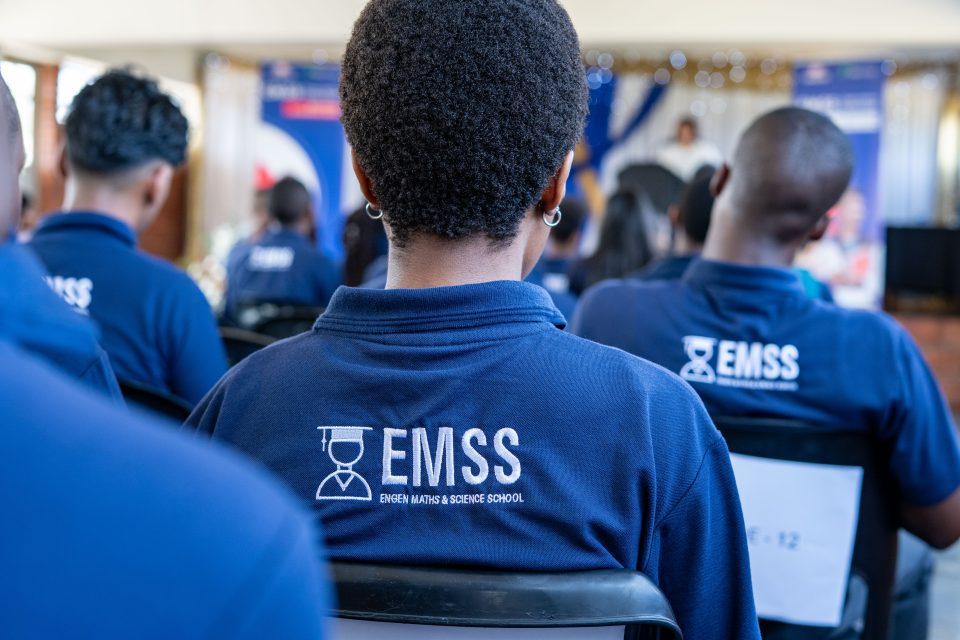
Engen’s maths and science programme is strengthening learner performance, confidence and access to STEM pathways, reaching 699 young people across four South African provinces this year.
Learners in Gauteng, KwaZulu-Natal, the Eastern Cape and Western Cape have been recognised for academic achievement, improvement and commitment through the Engen Maths & Science Schools Year-End Awards.
The awards form part of the Engen Maths & Science Schools programme, known as EMSS, which provides additional Mathematics and Physical Sciences support to learners in Grades 10 to 12.
Delivered by Engen in partnership with Raizcorp and Advantage Learn, the programme combines structured academic support, mentorship and blended learning to help learners strengthen subjects that can determine access to university programmes and future careers in science, technology, engineering and mathematics.
The programme reached 699 learners across 42 schools during 2026, extending academic support to young people across four provinces.
The Western Cape had the largest participation with 269 learners from 10 schools, followed by KwaZulu-Natal with 207 learners from 11 schools. Gauteng supported 137 learners from 11 schools, while 86 learners from 10 Eastern Cape schools participated.
For Engen, the programme represents a longer-term social investment in South Africa’s education and skills pipeline.
Mathematics and Physical Sciences remain important gateway subjects for many tertiary qualifications and technical careers, meaning stronger performance can expand the range of opportunities available to learners after school.
The programme therefore goes beyond recognising high marks.
Learners were honoured in three categories — Top Learner, Most Improved Learner and Most Engaged Learner — placing value on academic achievement as well as progress, participation and sustained effort.
Grade 12 top learner recognition went to Palesa Msimanga in Gauteng, Migyle Naidoo in KwaZulu-Natal, Khanya Yeye in the Eastern Cape and Chuma Benyana in the Western Cape.
Other learners were recognised for improvement and engagement, acknowledging that educational progress is not measured only by who finishes with the highest result.
That distinction strengthens the social impact of the initiative by recognising learners who continue improving, participate consistently and demonstrate commitment to their own development.
Allon Raiz, founder and CEO of Raizcorp, said the awards celebrate the determination required to succeed as much as the final academic results.
“These learners have shown what can be achieved through consistent effort, the right support, and belief in their own potential,” Raiz said.
“By recognising achievement, improvement and engagement, we celebrate not only results, but also the dedication and determination it takes to succeed.”
The programme also gives learners exposure to former EMSS participants, with each provincial awards event including an address from an alumnus as well as a Grade 12 top learner.
That creates an important mentorship dimension, allowing current participants to see how academic support can connect with further study and future career opportunities.
For South Africa, strengthening the pipeline into STEM fields carries wider economic importance.
Technical and scientific skills are needed across sectors including engineering, energy, technology, manufacturing, infrastructure, healthcare and emerging industries.
Corporate investment in school-level Mathematics and Physical Sciences can therefore contribute to both individual opportunity and the development of skills required by the economy.
Olwethu Mdabula, CSI Manager at Engen, said supporting education is an investment in the country’s future.
“Through the EMSS programme, we aim to give learners the academic support, confidence and opportunities they need to realise their potential in mathematics and science,” Mdabula said.
“Our collaboration with Raizcorp strengthens this impact by recognising learners’ achievements and encouraging them to pursue further studies and careers in STEM fields.”
The programme demonstrates how corporate social investment can move beyond once-off educational donations towards sustained academic intervention.
Structured learning resources, mentorship and digital learning opportunities give learners continued support while they work towards improving their Mathematics and Physical Sciences performance.
The involvement of Advantage Learn adds blended and digital learning opportunities, while Raizcorp contributes to the broader learner development and recognition model.
For participating learners, that combination can help strengthen subject knowledge while building confidence about what may be possible after matric.
It also illustrates the value of partnerships between business and education-focused organisations.
Engen provides the corporate investment, while specialist partners contribute learning support and development expertise, creating a model designed around longer-term learner outcomes.
The social value extends further when young people are able to translate stronger school performance into tertiary education, scarce-skills training and employment opportunities.
That is particularly important for learners who may have academic potential but do not always have access to the additional tuition, digital tools and mentorship that can strengthen their chances of succeeding in demanding STEM subjects.
“The dedication shown by this year’s learners is a reminder of what can be achieved when talent is supported, and opportunity is created,” Mdabula said.
The 2026 awards ultimately celebrate individual learners, but the bigger story is about building a stronger pathway between school, further education and future economic participation.
By supporting hundreds of learners across four provinces, EMSS is using corporate social investment to strengthen academic foundations while encouraging young South Africans to see themselves as future scientists, engineers, technologists and problem-solvers.
For the learners receiving certificates this year, the recognition marks an achievement.
For South Africa, the longer-term impact will be measured by how many of those young people are able to turn stronger Mathematics and Physical Sciences foundations into further study, meaningful careers and opportunities to contribute to the country’s future.