President Cyril Ramaphosa has called for South Africa’s youth skills system to prioritise jobs over certificates, as government and business strengthen pathways into sustainable employment nationwide.
Speaking at the SA Youth National Leadership Convening, Ramaphosa called for a “skills revolution” that would more closely connect education and training with workplace experience and employment.
The President said youth unemployment remained an economic, social and human challenge, despite years of investment in training, education and employment programmes.
He called for government, business, educational institutions and social partners to work together to remove barriers preventing young people from entering the labour market.
“We must stop treating a lack of experience as a lack of ability,” Ramaphosa said.
He said young people frequently found themselves unable to secure their first job because employers demanded previous experience, while they could not acquire that experience without first being given an opportunity.
Ramaphosa urged employers to recognise potential, attitude, determination and willingness to learn, while creating more opportunities for young people to enter workplaces, receive training and demonstrate their abilities.
He also called for reforms to the skills development system, including SETAs, saying South Africa needed to move away from training programmes that produced qualifications without clear routes into employment.
“We must focus and embark on the skills revolution where young people will be trained for jobs, not for certificates,” Ramaphosa said.
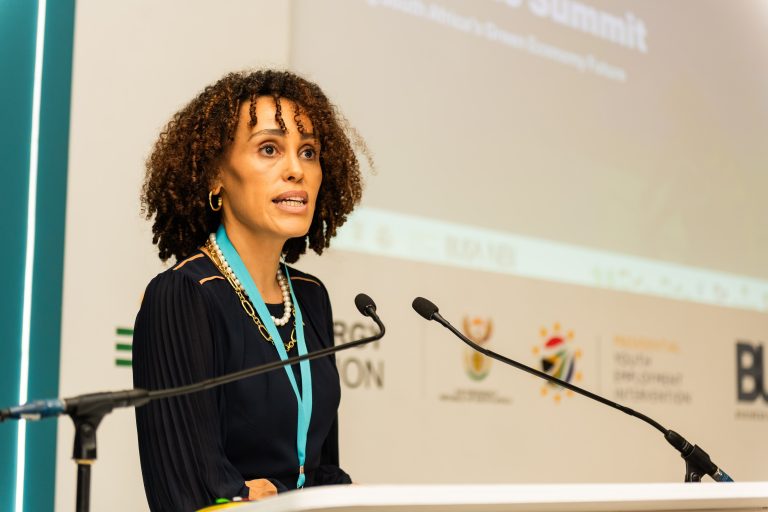
The call came as Harambee Youth Employment Accelerator CEO Kasthuri Soni revealed that SA Youth has supported 4.7 million young people and unlocked more than two million earning opportunities for young South Africans.
Opening the convening, Soni said young people had consistently expressed a willingness to work, learn and contribute but needed greater access to opportunities.
“They are ready to work. Willing to learn. Able to contribute. And determined to build better futures for themselves and their families,” Soni said.
“All they are asking for is a fair chance: a chance to gain experience, grow their skills, prove what they are capable of, earn income and create lives of dignity and purpose.”
She said the response needed to extend beyond promises and good intentions to earning pathways that were visible, accessible and viable.
SA Youth is the pathway management infrastructure of the Presidential Youth Employment Intervention and brings earning, learning and self-employment opportunities together through a zero-data platform.
Soni said the network enables young people to identify their next opportunity while also giving employers access to young talent.
She highlighted Orange Farm entrepreneur Adelia Nqubuka as an example of how different interventions can combine to create economic opportunities.
Nqubuka joined SA Youth in 2024 while looking for ways to strengthen her construction and facilities management business.
Through SA Youth, she secured Solar PV training with NepoWorx, gaining practical green-economy skills and progressing towards industry credentials.
Allan Gray Makers subsequently connected her with business advice and market opportunities.
Nqubuka now employs three permanent staff members and creates additional temporary employment as projects become available. She has also co-founded a WhatsApp community where young entrepreneurs share tenders, training opportunities and business support.
“Adelia entered the system looking for an opportunity. Today, she is creating opportunities for others,” Soni said.
Soni said Harambee’s experience over 15 years had shown that young people’s economic journeys were not linear and required different forms of support at different stages.
She called for greater coordination between organisations rather than separate programmes operating independently.
Government could provide policy direction, public investment and reach, while business could contribute employment demand, markets, opportunities and capital. Social partners could provide networks, innovation and support.
“No one sector or actor can solve youth unemployment alone,” Soni said.
Business Unity South Africa President Mxolisi Mgojo also committed organised business to greater action on youth employment.
Mgojo said work undertaken through the B20 had brought together more than 1,000 business leaders from around the world to develop recommendations for inclusive growth, including expanding economic participation and ensuring skills development responded to labour-market demand.
He said business would support demand-driven curricula, expand work-integrated learning, develop agile industry-recognised credentials and establish clearer routes from training into employment and enterprise.
Employers should also bring more jobs, workplace experience and enterprise opportunities into the youth employment ecosystem, he said.
Mgojo called for businesses to use procurement, supply chains and sector partnerships to expand economic participation and provide young entrepreneurs with greater access to markets, finance and networks.
“Business is prepared to walk the talk and move decisively from commitment to delivery,” Mgojo said.
The digital economy was among the areas identified at the convening where closer alignment between training and labour-market demand could create additional opportunities for young people.
Discussions highlighted demand for skills including software engineering, applications and systems integration, alongside the need for more agile training programmes capable of responding to changing industry requirements.
Workplace experience also emerged as a priority, with young people often completing qualifications or skills programmes only to encounter employers seeking candidates who already have practical experience.
Ramaphosa said temporary public employment opportunities should increasingly become pathways towards further training, entrepreneurship and permanent employment.
He said businesses should also work more closely with universities, TVET colleges and other training institutions to ensure the skills being developed correspond with what industries require.
The President pointed to the National Youth Employment Intervention, SA Youth, the Youth Employment Service and other initiatives as existing mechanisms through which government, business and civil society can connect young people with opportunities.
Soni said the foundations were already in place, but greater scale was now required.
“Our task now is to strengthen what is working, close the gaps that remain and connect our efforts at far greater scale,” she said.
The convening placed the next phase of youth employment efforts on expanding those pathways, increasing workplace opportunities and strengthening the connection between skills development and actual labour demand.
Soni called on participating organisations to make commitments that could translate into additional earning opportunities for young people.
“Let today be the catalyst for bold commitments, shared accountability, and collective action that expands pathways to earning for millions of young South Africans.”