
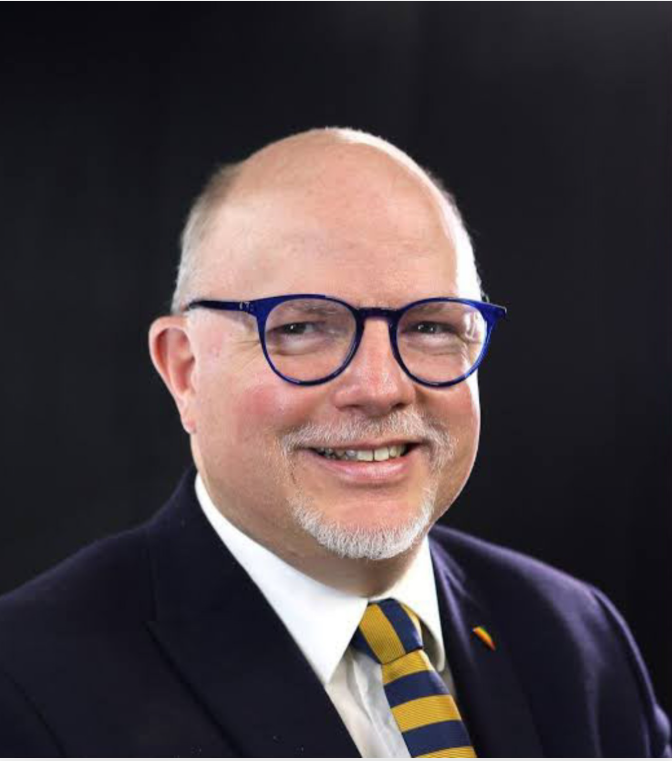
Professor Robert Balfour is positioning UWC as a university where access, research, skills and partnerships translate into measurable social and economic impact for South Africa today.
For Professor Robert Balfour, Rector and Vice-Chancellor of the University of the Western Cape, the role of a university cannot end when a student receives a qualification.
UWC carries a powerful history of widening access to higher education, particularly for people historically excluded from opportunity. Under Balfour’s leadership, the question now becomes what that access ultimately enables.
Does it lead to employment? Does it create entrepreneurs? Does research solve real problems? Can universities build stronger relationships between students, communities and industry? And can education continue serving people long after they have left a traditional classroom?
These questions sit at the centre of a changing higher education environment in which universities are increasingly expected to demonstrate their contribution to society beyond enrolment numbers, research publications and graduation statistics.
For Balfour, lifelong learning is becoming an important part of that conversation.
UWC’s exploration of micro-credentials provides one example. These shorter, focused learning opportunities allow people to develop specific, career-relevant skills without necessarily undertaking another full qualification.
“Micro-credentials have to be formally recognised. They need to be distinctly packaged. The idea of portability and stackability is that you can take the credential from one institution to another and have it recognised as part of lifelong learning,” Balfour said.
His emphasis on portability and stackability raises a much broader question about the future of education.
For generations, higher education largely followed a linear model: study, qualify, enter the workplace and build a career. But technological change, new industries and evolving skills requirements increasingly mean that learning cannot end in a person’s twenties.
People may need to return to education repeatedly throughout their working lives.
That changes the responsibility of universities.
Instead of serving people primarily at the beginning of their careers, institutions such as UWC can potentially become lifelong education partners, providing recognised learning opportunities as individuals move between jobs, industries and different stages of life.
For South Africa, that flexibility has particular significance.
The country continues to face high unemployment while employers simultaneously report shortages in certain specialised skills. Creating stronger connections between education and actual workforce demand could help address both challenges.
It also creates an important shared-value opportunity between universities and business.
Corporate involvement in higher education has traditionally included bursaries, donations, infrastructure and other forms of corporate social investment. Those interventions remain important, but Balfour’s broader vision opens the possibility of partnerships that extend further.
Businesses can work alongside universities to identify skills shortages, develop talent pipelines, support applied research, create workplace experience and provide pathways into employment.
Universities bring academic expertise, research capability and access to emerging talent. Industry brings an understanding of changing markets, technology and workplace requirements.
When those resources are combined, the relationship moves beyond sponsorship towards shared value.
There is also a social-capital dimension to the role universities play.
Two students can leave university with similar qualifications but very different access to professional networks, mentors, employers and opportunity.
For students without established networks, a university can become an important bridge into spaces they may otherwise struggle to access.
Creating those connections can be as significant as providing academic knowledge.
Balfour’s leadership therefore places UWC within a wider conversation about what transformation in higher education should mean.
Access remains fundamental, but access without successful completion, meaningful opportunity and economic participation cannot represent the full measure of transformation.
The same principle applies to research.
Universities generate enormous amounts of knowledge, but the social value of that research increases when it leaves academic journals and contributes to solutions in communities.
Healthcare access, clean energy, employment, technology and inequality are among the areas where universities can combine research with implementation and partnership.
This is where social innovation becomes particularly important.
Communities should not simply be treated as recipients of university interventions. Their lived experience can help identify problems, shape research questions and influence the solutions developed around them.
For Balfour, UWC’s history provides a natural foundation for that approach.
An institution created within a deeply unequal society and later associated with challenging exclusion now has an opportunity to redefine what widening access means for another generation.
Today, access might mean entering university.
Tomorrow, it could also mean returning at 35 to acquire a new skill, gaining a recognised micro-credential while employed, accessing a professional network previously unavailable or turning university research into a business that creates jobs.
The measure of a modern university may consequently become much broader.
Academic excellence will remain essential, but universities will increasingly be judged by their ability to respond to the societies around them.
For Balfour, the next chapter of UWC is therefore not only about what happens on campus.
It is about what happens because the university exists: the lives changed, skills developed, partnerships created, research translated into solutions and opportunities generated beyond its gates.
That may ultimately be one of the most important tests of higher education’s relevance in South Africa.
