
Vodacom has consolidated eight foundations under one African strategy, targeting 50 million lives by 2030 through connected health, education and digital skills programmes across the continent.
Vodacom Group has established a new pan-African Foundation structure designed to move its social-impact work beyond separate country programmes and towards initiatives that can be scaled across multiple African markets. Vodacom
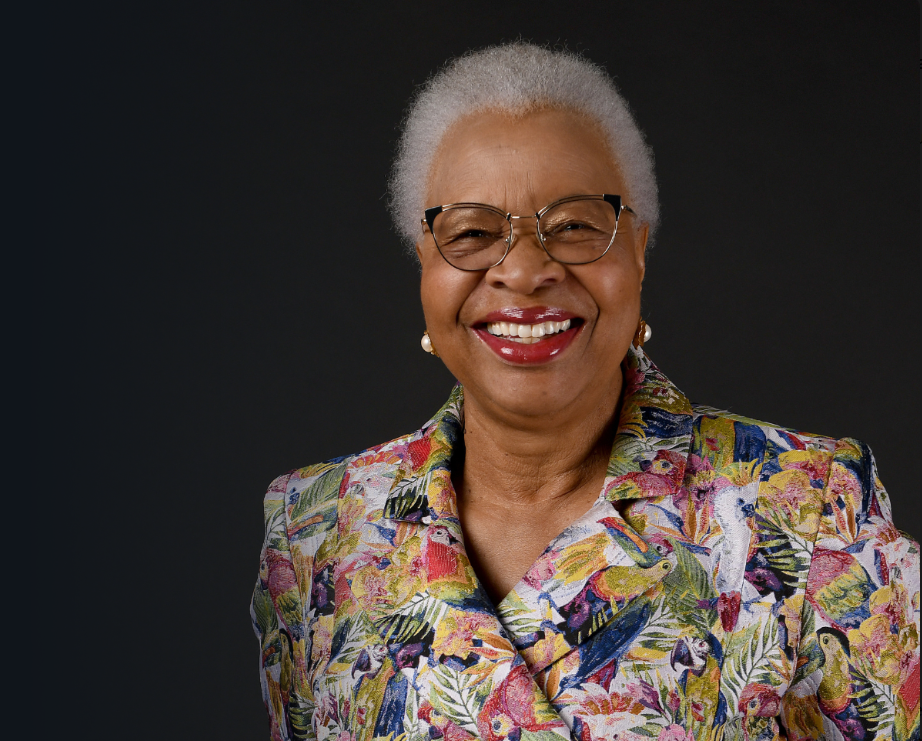
The Vodacom Foundation has appointed a seven-member board chaired by economist and former United Nations Under-Secretary-General Dr Vera Songwe, bringing together experience in development, public policy, technology, sustainability, governance and social investment. Vodacom
The shift is significant because it places a measurable target at the centre of Vodacom’s social investment strategy: positively impacting 50 million lives by 2030.
Rather than approaching health, education and employment as separate challenges, the Foundation intends to use Vodacom’s connectivity, technology and partnerships to develop programmes capable of operating across several countries.
“Africa has a unique opportunity to harness technology and connectivity to address pressing developmental challenges,” Songwe said.
“Our ambition to positively impact 50 million lives by 2030 is bold, and we are committed to helping turn that ambition into scalable, sustainable impact across the continent.” Vodacom
The strategy will concentrate on three areas: connected health, connected education and digital skilling.
In health, the Foundation intends to support digitally enabled maternal-care systems that connect community screening, pregnancy monitoring, frontline healthcare workers and emergency referral services.
The approach recognises that technology can help close gaps between patients and healthcare systems, particularly in communities where distance, transport and shortages of medical personnel can affect access to care.
Digital platforms can allow health workers to identify risks earlier, maintain patient information and coordinate referrals when women need higher levels of care.
Education forms the second pillar.
Vodacom plans to use technology to strengthen teaching and improve learning outcomes, particularly in remote and understaffed classrooms where educators may have limited access to specialist support.
A flagship initiative, Classroom Compass, will provide teachers and learners with digital classroom tools, teacher coaching, artificial-intelligence-assisted planning and real-time information intended to identify where additional educational support is needed. Vodacom
The potential impact goes beyond placing devices in classrooms.
The strategy focuses on using data and technology to help teachers understand where learners are struggling, adapt lessons and access support that may otherwise be unavailable in under-resourced schools.
Vodacom has a long history of using its technology capabilities within social-investment programmes. In South Africa alone, its Foundation says it has invested more than R1.6 billion since its launch in 1999 across programmes focused on education, gender empowerment and broader social development. Vodacom
Its third priority, digital skilling, connects the Foundation’s work directly with employment and economic participation.
Programmes are expected to include skills aligned with labour-market demand, internships, workplace-placement pathways, entrepreneurship support and career acceleration. Vodacom
That focus is increasingly important as digital capability becomes a requirement across industries rather than only within technology companies.
Young people entering sectors ranging from financial services and retail to agriculture, logistics and manufacturing increasingly require digital skills to compete for employment or build businesses.
The Foundation’s approach aims to create clearer connections between training and economic opportunity.
Vodacom Group CEO Shameel Joosub said the regional structure should allow the Foundation to expand programmes that have demonstrated impact while strengthening partnerships across markets.
“Our strengthened leadership and regional approach will help us scale what works, deepen partnerships and use technology to create measurable, lasting impact for millions of people across Africa,” he said. Vodacom
The new board also includes Graça Machel, whose work has focused extensively on women, children, education and economic empowerment, alongside Vodacom executives Ayman Essam, Anna Isaac and Gerhard van Niekerk.
Mashudu Ndou, who has more than 16 years of experience in sustainability and social impact, will serve as Executive Head of the Foundation, while Joosub serves as a trustee. Vodacom
The Foundation plans to work with governments, co-funders, technical organisations and implementation partners rather than attempting to deliver programmes independently.
That partnership model will be central to whether the 50-million-life ambition can translate into sustainable impact.
Technology can expand the reach of health services, classrooms and training programmes, but long-term results depend on local institutions, skilled practitioners and systems capable of continuing programmes after initial implementation.
The consolidated Foundation structure provides Vodacom with an opportunity to take successful programmes developed in individual markets and adapt them for other countries rather than repeatedly building initiatives from the beginning.
Vodacom currently operates mobile networks across several African markets and has positioned digital inclusion as a central part of its wider business purpose. The Group describes its purpose as connecting for a better future, with empowering people forming one of its core pillars. Vodacom
The social-impact opportunity lies in using that existing infrastructure for more than commercial connectivity.
A mobile network can become a channel for maternal healthcare. Digital platforms can connect teachers with educational resources. Connectivity can provide young people with skills and employment pathways that would otherwise remain inaccessible.
The Foundation’s 2030 target will ultimately be measured not simply by the number of people who interact with its programmes, but by whether those interventions improve health outcomes, strengthen learning and help participants move into sustainable economic opportunities.
For Vodacom, bringing eight Foundations together creates the scale.
The challenge now is turning that scale into measurable change for 50 million people across Africa.
